
Close Menu
Fund Focus News
    Facebook X (Twitter) Instagram
    Trending
    • Mid-cap, small-cap mutual fund AUM jumps to ₹8.26 lakh crore, clocking up to 40% CAGR in 5 years; SIP inflows rise 15% YoY amid volatility
    • Consumption funds: Hold if you can withstand volatility, invest for 5 yrs | Personal Finance
    • Specialised Investment Funds face first real stress test in volatile markets, deliver mixed early returns
    • Bank of Maharashtra Pays ₹8 Crore Interest on Basel III Tier II Bonds
    • Asian Stocks, Government Bonds Fall as Middle East Conflict Escalates
    • 3 ETFs Built for the Volatile Market We’re Seeing in March 2026
    • SEBI formalises same-day borrowing for mutual funds; AMC to bear cost
    • Key Takeaways from SEBI’s Consultation Paper on Nomination for Shares and Mutual Funds
    Facebook X (Twitter) Instagram
    Fund Focus News
    • Home
    • Bonds
    • ETFs
    • Funds
    • Investments
    • Mutual Funds
    • Property Investments
    • SIP
    Fund Focus News
    Home»Bonds»Quantum secret of hydrogen bonds in liquid water revealed for the first time
    Bonds

    Quantum secret of hydrogen bonds in liquid water revealed for the first time

    October 26, 2024


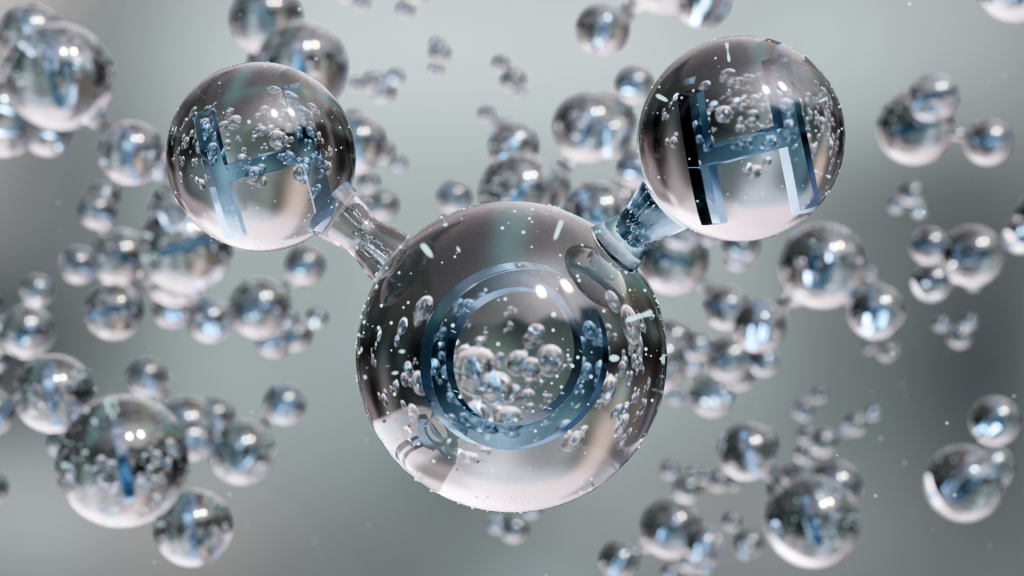
    The hydrogen bonds that form water molecules are responsible for the many properties that make water a unique liquid. However, even today scientists don’t fully understand the science behind these bonds.

    This is because these H-bonds have a very short lifetime as they constantly form and break due to the motion of water molecules.

    For instance, the typical lifetime of a hydrogen bond in liquid water is one millionth of a millionth of a second. This dynamic behavior makes it difficult to capture and study their interactions accurately.

    However, researchers at the Swiss Federal Institute of Technology Lausanne (EPFL) claim to have developed a new method that can allow scientists to study the electronic and nuclear quantum effects of liquid water’s hydrogen bonds in depth.

    This new method called correlated vibrational spectroscopy (CVS), can finally reveal what factors make the hydrogen-bond networks in water such a strong and mysterious force.

    Understanding H-bond through CVS

    Not all water molecules are involved in hydrogen-bond network interactions. CVS first identifies and separates the interacting and no-interacting molecules. This is done by shooting ultra-fast laser pulses on water molecules.

    These quick bursts of light create tiny movements in the water’s atoms, which then emit visible light. The pattern of this light reveals how the molecules are arranged, and the color of the light shows how the atoms inside and between the molecules are moving.

    “Current spectroscopy methods measure the scattering of laser light caused by the vibrations of all molecules in a system, so you have to guess or assume that what you are seeing is due to the molecular interaction you’re interested in,”  Sylvie Roke, one of the study authors and a professor at EPFL, said.

    However, in the case of CVS, different types of water molecules exhibit different vibrational patterns. These distinct patterns reveal how a particular molecule moves along H-bonds — allowing researchers to directly measure things like how much charge is shared between the hydrogen and oxygen atoms that form the H-bonds and how strong the bonds are.

    “This charge-sharing is a key feature of the three-dimensional ‘H-bond’ network that gives liquid water its unique properties, but quantum phenomena at the heart of such networks have thus far been understood only through theoretical simulations,” the study authors note.

    For the first time, scientists have an experimental method to investigate this phenomenon and various other aspects of the H-bond in liquid water.

    The use of CVS goes beyond water

    Correlated vibrational spectroscopy (CVS) enables scientists to study changes water molecules experience on a quantum scale. For instance, it is already known that when OH⁻ (hydroxide) ions are added to water, it becomes basic, and the addition of protons makes water acidic.

    “With CVS, we can now quantify exactly how much extra charge hydroxide ions donate to H-bond networks (8%), and how much charge protons accept from it (4%) – precise measurements that could never have been done experimentally before,” Mischa Flór, first author of the study, and a doctoral student at EPFL, said.

    However, CVS isn’t just limited to revealing the details of H-bond networks in water molecules. The study authors suggest that it can also be used to study other chemicals at the molecular scale.

    Hopefully, in the future, CVS will help scientists unravel many mysteries associated with other liquids as well as other chemical and physical systems.

    The study is published in the journal Science.


    Source link

    Share. Facebook Twitter Pinterest LinkedIn Tumblr Telegram Email

    Related Posts

    Bank of Maharashtra Pays ₹8 Crore Interest on Basel III Tier II Bonds

    March 23, 2026

    Asian Stocks, Government Bonds Fall as Middle East Conflict Escalates

    March 22, 2026

    Equities, Bonds, Commodities, Currencies et al: How They Fare Three Weeks into the US-Iran War

    March 21, 2026
    Leave A Reply Cancel Reply

    Top Posts

    The Shifting Landscape of Art Investment and the Rise of Accessibility: The London Art Exchange

    September 11, 2023

    Charlie Cobham: The Art Broker Extraordinaire Maximizing Returns for High Net Worth Clients

    February 12, 2024

    The Unyielding Resilience of the Art Market: A Historical and Contemporary Perspective

    November 19, 2023

    Consumption funds: Hold if you can withstand volatility, invest for 5 yrs | Personal Finance

    March 23, 2026
    Don't Miss
    Mutual Funds

    Mid-cap, small-cap mutual fund AUM jumps to ₹8.26 lakh crore, clocking up to 40% CAGR in 5 years; SIP inflows rise 15% YoY amid volatility

    March 23, 2026

    India’s mid- and small-cap mutual fund segments have seen a sharp expansion in assets over…

    Consumption funds: Hold if you can withstand volatility, invest for 5 yrs | Personal Finance

    March 23, 2026

    Specialised Investment Funds face first real stress test in volatile markets, deliver mixed early returns

    March 23, 2026

    Bank of Maharashtra Pays ₹8 Crore Interest on Basel III Tier II Bonds

    March 23, 2026
    Stay In Touch
    • Facebook
    • Twitter
    • Pinterest
    • Instagram
    • YouTube
    • Vimeo
    EDITOR'S PICK

    Premium coastal investment opportunity hits the market at £2.75m

    December 3, 2025

    Japanese Bond Yields Drop As Central Bank Talks Loom

    July 19, 2024

    SIP Discontinuation Trends Rise in 2025: When to Stop Your SIP | Savings and Investments News

    November 10, 2025
    Our Picks

    Mid-cap, small-cap mutual fund AUM jumps to ₹8.26 lakh crore, clocking up to 40% CAGR in 5 years; SIP inflows rise 15% YoY amid volatility

    March 23, 2026

    Consumption funds: Hold if you can withstand volatility, invest for 5 yrs | Personal Finance

    March 23, 2026

    Specialised Investment Funds face first real stress test in volatile markets, deliver mixed early returns

    March 23, 2026
    Most Popular

    🔥Juve target Chukwuemeka, Inter raise funds, Elmas bid in play 🤑

    August 20, 2025

    💵 Libra responds after Flamengo takes legal action and ‘freezes’ funds

    September 26, 2025

    ₹10,000 monthly SIP in this mutual fund has grown to ₹1.52 crore in 22 years

    September 17, 2025
    © 2026 Fund Focus News
    • Get In Touch
    • Privacy Policy
    • Terms and Conditions

    Type above and press Enter to search. Press Esc to cancel.