
Close Menu
Fund Focus News
    Facebook X (Twitter) Instagram
    Trending
    • New mutual fund classification rules introduced: How schemes will be structured
    • Mutual Fund Calculator: How Delaying Your SIP By 5 Years Can Shrink Your Retirement Corpus By Nearly Rs 2 Cr?
    • SEBI broadens rules for $384 billion stock funds to add gold
    • High-Potential Gilt Funds in 2026
    • Where to invest Rs 1 lakh right now – gold, silver, stocks, mutual funds? 7 wealth and fund managers decode the correct mix
    • EFG Hermes rolls out five mutual funds on ONE App for retail investors
    • What Savvy Investors Need to Know About Trading ETFs
    • Business News Today: Stock and Share Market News, Economy and Finance News, Sensex, Nifty, Global Market, NSE, BSE Live IPO News
    Facebook X (Twitter) Instagram
    Fund Focus News
    • Home
    • Bonds
    • ETFs
    • Funds
    • Investments
    • Mutual Funds
    • Property Investments
    • SIP
    Fund Focus News
    Home»ETFs»ETFs Vs Index Funds: Which Is Better? Know Key Differences, Benefits And Expense Ratios
    ETFs

    ETFs Vs Index Funds: Which Is Better? Know Key Differences, Benefits And Expense Ratios

    February 22, 2025


    Last Updated:February 23, 2025, 11:33 IST

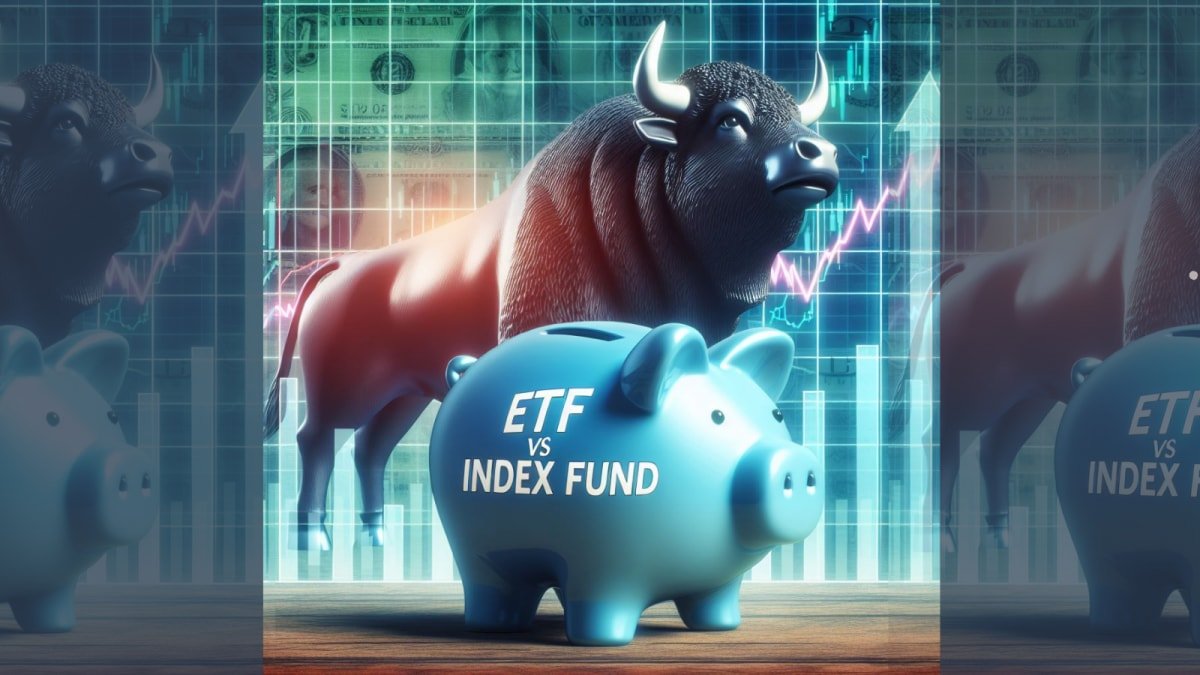
    ETFs Vs Index Funds: Passive investment options like ETFs and Index Funds are getting traction from investors especially when the market isn’t offering good returns. Let’s get to know what they are and their pros and cons.

    ETF Vs Index Fund: What they are and how differ with each other.

    ETF Vs Index Fund: What they are and how differ with each other.

    ETF Vs Index Fund: The Indian stock market is under pressure due to a flight of foreign institutional investors (FIIs). In the past few months, stocks have given investors almost flat or negative returns, with benchmark indices Nifty and Sensex facing sharp corrections.

    “A combination of negative factors such as relentless FII selling, falling rupee, expensive valuations and the US threat of reciprocating tariff levies continue to drive investors away from Indian equities,” according to Prashanth Tapse, Senior VP (Research), Mehta Equities.

    At this juncture, Indian investors’ inclinations are shifting towards other investment options known as passive investment like Index Funds and Exchange-Traded Funds (ETFs).

    Passive investment options like Index Funds and Exchange-Traded Funds (ETFs) are attracting significant interest from Indian investors.

    What Are ETFs And Index Funds?

    Both ETFs and Index Funds aim to mirror the performance of specific market indices. While their objectives are similar, they differ significantly in their structure, trading mechanisms, and associated costs.

    ETFs Vs Index Funds: A Closer Look At Key Differences:

    Minimum Investment: ETFs don’t have any minimum investment. You can purchase even one share. On the other hand, Index Funds usually have a minimum investment amount.

    Trading: ETFs are traded on stock exchanges like individual stocks, allowing investors to buy or sell them throughout the trading day at market prices. Conversely, Index Funds are priced and traded only once a day at their Net Asset Value (NAV) at the market’s close.

    Flexibility: ETFs offer investors the advantage of capitalising on intraday price movements, making them suitable for active trading strategies. Index Funds, however, lack this flexibility as they are bought or sold only at the end of the trading day.

    Demat Account: Investing in ETFs requires a demat account as they are listed on stock exchanges. Index Funds, structured as mutual funds, do not necessitate a demat account, making them accessible for investors seeking indirect market exposure without the need for a demat account.

    Systematic Investment Plans (SIPs): Index Funds can be purchased through SIPs, allowing investors to invest small amounts regularly over a predetermined period. ETFs, in most cases, do not offer this feature, which might not be ideal for investors preferring a disciplined investment approach.

    Expense Ratios: ETFs generally have lower expense ratios than Index Funds due to their passive management style, minimising operational costs. This makes ETFs attractive for long-term investors aiming to minimise costs while gaining market exposure.

    In conclusion, both ETFs and Index Funds serve as valuable tools for passive investing in India, each with its advantages and limitations. The choice between the two depends on individual investment goals, risk tolerance, liquidity needs, and preferred investment approach.

    Disclaimer: Investors are advised to carefully consider these factors and consult with a SEBI-registered investment advisor for personalised guidance to make well-informed investment decisions.


    Source link

    Share. Facebook Twitter Pinterest LinkedIn Tumblr Telegram Email

    Related Posts

    What Savvy Investors Need to Know About Trading ETFs

    February 25, 2026

    Business News Today: Stock and Share Market News, Economy and Finance News, Sensex, Nifty, Global Market, NSE, BSE Live IPO News

    February 25, 2026

    Tradr Launches 2X Single-Stock ETFs On CleanSpark, Centrus, Coherent – Cleanspark (NASDAQ:CLSK)

    February 24, 2026
    Leave A Reply Cancel Reply

    Top Posts

    The Shifting Landscape of Art Investment and the Rise of Accessibility: The London Art Exchange

    September 11, 2023

    Charlie Cobham: The Art Broker Extraordinaire Maximizing Returns for High Net Worth Clients

    February 12, 2024

    The Unyielding Resilience of the Art Market: A Historical and Contemporary Perspective

    November 19, 2023

    SEBI broadens rules for $384 billion stock funds to add gold

    February 26, 2026
    Don't Miss
    Mutual Funds

    New mutual fund classification rules introduced: How schemes will be structured

    February 26, 2026

    India’s capital markets regulator has updated the framework governing how mutual fund schemes are classified…

    Mutual Fund Calculator: How Delaying Your SIP By 5 Years Can Shrink Your Retirement Corpus By Nearly Rs 2 Cr?

    February 26, 2026

    SEBI broadens rules for $384 billion stock funds to add gold

    February 26, 2026

    High-Potential Gilt Funds in 2026

    February 25, 2026
    Stay In Touch
    • Facebook
    • Twitter
    • Pinterest
    • Instagram
    • YouTube
    • Vimeo
    EDITOR'S PICK

    ‘Come Get a Sip’ of podcaster Norris Jay’s ’23 rise to fame

    August 28, 2024

    Leonardo DiCaprio, 49, sips red wine with girlfriend Vittoria Ceretti, 26, in Portofino before she puffs a cigarette as they are joined by Tobey Maguire and Emily Skinner

    July 29, 2024

    ETFs enjoying current A-share bull market run

    August 26, 2025
    Our Picks

    New mutual fund classification rules introduced: How schemes will be structured

    February 26, 2026

    Mutual Fund Calculator: How Delaying Your SIP By 5 Years Can Shrink Your Retirement Corpus By Nearly Rs 2 Cr?

    February 26, 2026

    SEBI broadens rules for $384 billion stock funds to add gold

    February 26, 2026
    Most Popular

    🔥Juve target Chukwuemeka, Inter raise funds, Elmas bid in play 🤑

    August 20, 2025

    💵 Libra responds after Flamengo takes legal action and ‘freezes’ funds

    September 26, 2025

    ₹10,000 monthly SIP in this mutual fund has grown to ₹1.52 crore in 22 years

    September 17, 2025
    © 2026 Fund Focus News
    • Get In Touch
    • Privacy Policy
    • Terms and Conditions

    Type above and press Enter to search. Press Esc to cancel.