
From a controversial $3bn scheme to transform Belgrade to contentious gated developments in Bosnia and gleaming resorts in the tourist destination of Montenegro, Middle Eastern investments in the Balkans are hitting the headlines.
While they are getting attention — not all of it positive — these projects make up a relatively small part of the regional property market. Nonetheless, they are indicative both of the strengths of the Balkans as an investment destination and the challenges the sector faces.
While some argue darkly that Gulf investors’ interest in the Balkans is driven by strategic or religious motives, Ivan Cakarevic, managing director of Rooftop Capital, a property investment and brokerage company, believes the underlying attraction of the Balkans is more prosaic. “It is a favourable crossroads location, a cost-competitive labour force and aspirations to EU membership make this region an attractive investment case,” he says.
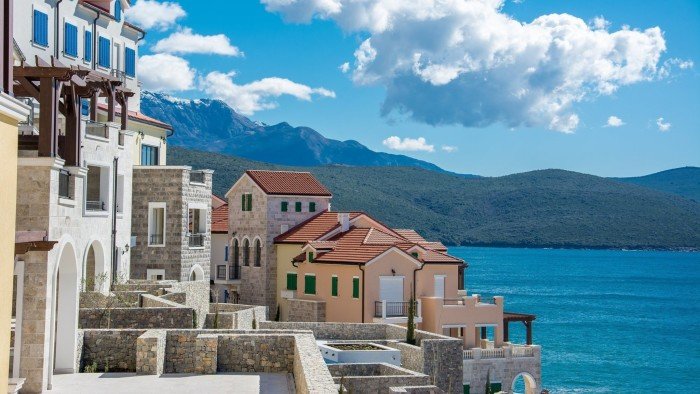
With picture-perfect Venetian cities, soaring mountains dropping down to an azure sea and a relaxed way of life, Montenegro’s tourism industry has come a long way in the last 10 years. The tiny country is expected to have the world’s third fastest-growing tourism industry between 2015 and 2025, according to the World Tourism and Travel Council.
So it comes as no surprise that Montenegro has started to attract Middle Eastern money. In May last year, the Investment Corporation of Dubai (ICD), the emirate’s investment arm, purchased the Porto Montenegro resort for an estimated $200m.
It has been joined by Lustica Bay, a €1.1bn resort that is majority owned by Egyptian entrepreneur Samih Sawiris. Goran Andrejic, a sales broker for Lustica Bay, says two more Arab-backed resorts — the long-delayed Plavi Horizonti (Blue Horizons) and Montrose Montenegro are both now pushing ahead. The former had been held up by land ownership disputes, an all-too-common issue for property investors in the region.
“Many disused military facilities have coastal locations and land size very suitable for tourist resorts,” he says.
Montenegro is not the only country in the region looking to make up for lost time by drawing in Arab investment. Since it was unveiled in 2014, Belgrade Waterfront has been the most high-profile Gulf real estate investment in the western Balkans. The $3bn project on a 1m sq m site by the River Sava in the Serbian capital is backed by Abu Dhabi-based developer Eagle Hills, headed by Mohamed Alabbar, the billionaire founder of Emaar, a big property company based in Dubai.
Belgrade Waterfront’s backers say it will finally allow the city to “reclaim the river” after decades of neglect and make the Serbian capital once again the locus of investment and business in the region. But the project is shrouded in controversy focusing on how Eagle Hills was selected without tender and the way the government changed laws to permit the development.

Campaigners also question whether a Gulf-style design is suited to a district with so many historic buildings. Overnight demolition of buildings standing in the way of plans did not improve the project’s image, especially when they were reportedly at the hands of masked men with baseball bats.
While construction on the first phase of development is nearing completion, the project seems to be progressing more slowly than expected. Eagle Hills did not respond to requests to comment.
The attention lavished on Belgrade Waterfront means that many have overlooked significant investments from another Middle Eastern source — Israel. Srdjan Vujicic, director of real estate operations at property company Coreside, estimates that 80 per cent of Middle Eastern real estate investment in the region is from Israel.

Israeli investors in the country include retail-focused developers BIG CEE and Aviv Arlon, as well as AFI Group and Shikun & Binui.
“Israeli investors have focused on the development of retail parks and shopping centres,” says James Gunn, director of Poseidon Group, a property investor with 10 years’ experience in the region.
“Recently, new investors from China and the Middle East have been attracted by good quality assets that are now more realistically priced. But we can also expect an increase in interest from western European institutional investors.”
Mr Gunn also notes a high level of demand from South African businesses facing currency risk and economic instability at home. In February 2016, the Johannesburg-based investor Reit Hyprop acquired a 60 per cent stake in Belgrade’s landmark Delta City mall, as well as a mall of the same name in Podgorica, Montenegro’s capital. The remaining 40 per cent stakes were bought by one of Hyprop’s non-executive directors. In October, Hyprop followed this with the acquisition of a mall in Skopje, Macedonia. New Europe Property Investments, another South African investor, recently acquired Zagreb’s Arena Centar mall.
Bosnia has also been subject to a flurry of dealmaking by Gulf investors, particularly in residential and holiday property and malls. Among the higher-profile investments are the Sarajevo City Centre — a mall with adjoining hotel and office space developed by Saudi Arabia’s Al Shiddi Trading. In September 2016, ground was broken on Buroj Ozone, a €2.3bn tourist resort near Sarajevo backed by UAE-based investors.
Bosnia, where around half the population is Muslim, has become increasingly popular with Arab tourists in recent years, capitalising on its lush natural beauty and relatively low costs. Investors have followed and property companies advertising in Arabic have sprung up, particularly in Ilidza, a spa suburb of Sarajevo.
Despite the tourism dollars and construction investment coming to Bosnia’s struggling economy, these developments have not been universally welcomed. Some Bosnians complain of a culture clash with visitors and creeping conservatism in the communities concerned. But the government’s Foreign Investment Promotion Agency says that concerns are overblown, with Gulf countries overall not featuring in the top 10 investors in the country.
“Some Gulf countries are among the top investors in the EU and they are welcomed there,” FIPA says in a statement. “Capital doesn’t know religion, borders, it only knows profit. So therefore you should not think that Gulf countries invest here due to the Muslim people, they invest because they can make a profit in Bosnia and Herzegovina.”