
The capital markets regulator has slashed the brokerage fees that mutual funds can charge and approved new rules to simplify public-lisiting disclosures, among other measures, to protect retail investors and improve compliance.
The Securities and Exchange Board of India (Sebi) cut brokerage costs that mutual funds can charge investors to 6 basis points (bps) from the current 12bps in the cash market, according to the decisions announced after the regulator’s board meeting on Wednesday.
For the derivatives segment, brokerage limits have been reduced to 2bps from the current 5bps.
The Sebi board also scrapped the additional 5bps charged over the exit load or the fee levied when investors redeem their investments.
The revised provisions are effective 1 April 2026.
In October, the market regulator recommended an overhaul of brokerage and transaction fees that investors pay over and above the total expense ratio (TER), to ensure that unitholders are not charged for the same service twice.
Sebi had suggested cutting brokerage fee cap from 0.12% to 0.02% for cash-market trades and from 0.05% to 0.01% for derivatives transactions.
The TER represents the annual expenses a mutual fund levies, covering fund management fees, administrative costs, brokerage and other operational charges. It is deducted from the fund’s returns, directly affecting investors’ earnings.
Expense ratio limits, now called base expense ratios, will exclude all statutory levies such as securities transaction tax (STT), commodities transaction tax (CTT), and goods and services tax (GST). TER will now be a sum of BER, brokerage, regulatory levies and statutory levies.
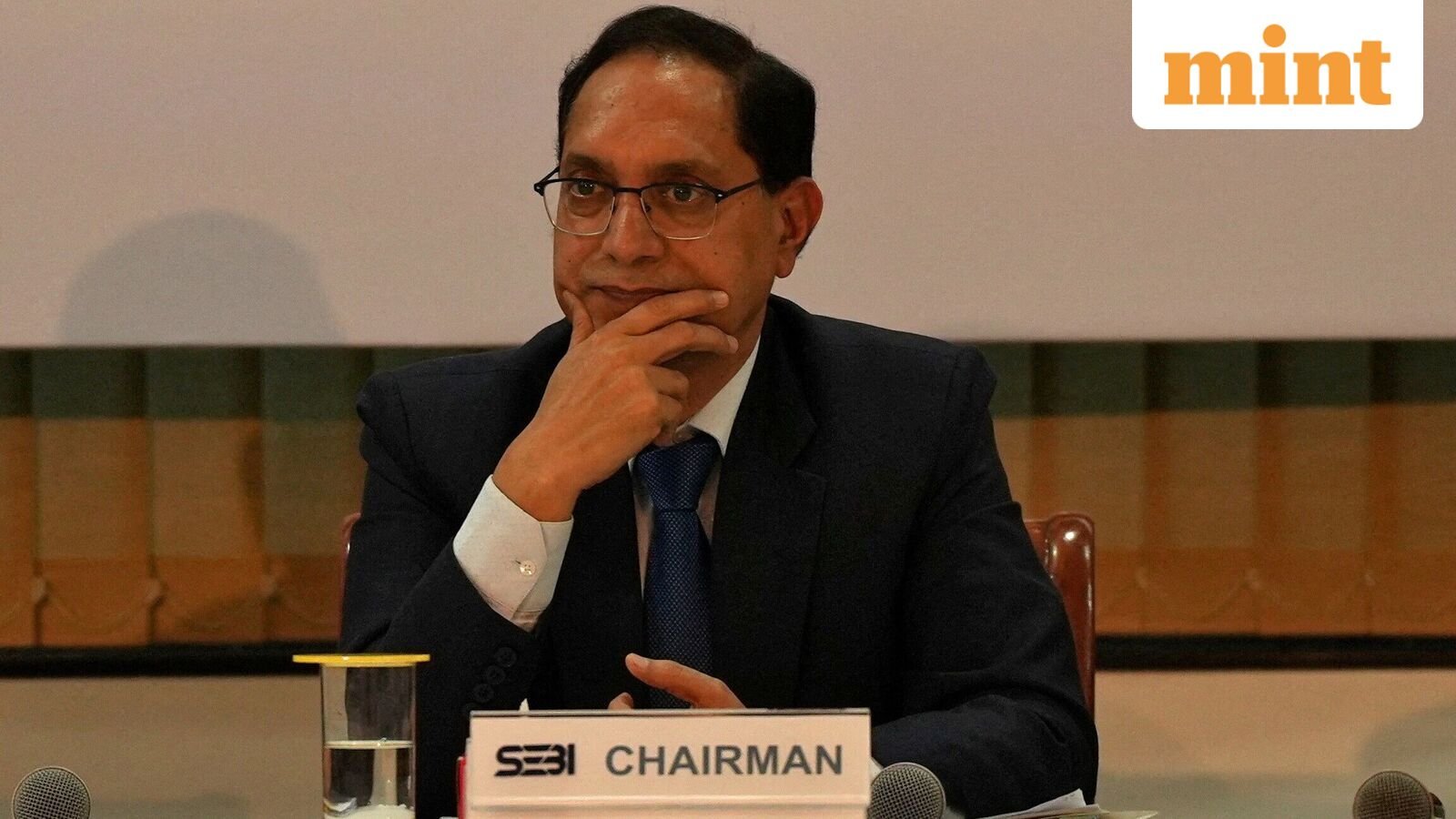
“If you want to attract people to your mutual fund, you can even offer lower than this. Our present proposal is a balanced version,” said Sebi chair Tuhin Kanta Pandey. “It is not, I would say, as radical as it was proposed in the beginning,” he said, adding that the focus is on transparency and making the charges more visible to the investor.
The reduction in fee caps is expected to hit the margins of asset management companies, which may pass on the costs to distributors.
“Smaller AMCs will not be happy as they will have to negotiate with the broker for block deals and research,” said an AMC official on the condition of anonymity. Such AMCs are at a relative disadvantage due to the size of their AUM, he said.
Exchanges first-line regulators for stockbrokers
The stockbroker regulations, which have remained unchanged since 1992, have been organized into 11 chapters with some provisions being deleted and others being integrated as chapters to ease readability.
Stock exchanges will now be the first-line regulators for stockbrokers. This means that stockbrokers will report non-compliance and furnish financial statements to exchanges.
Sebi has also rationalized the criteria for stock brokers to be identified as qualified stockbrokers. This is aimed at ensuring that brokers meeting criteria, such as a large number of active clients, are covered for improved supervision and compliance.
A better pre-IPO snapshot
The Sebi board also cleared amendments to the Issue of Capital and Disclosure Requirements (ICDR) Regulations, which govern how companies raise capital through the stock market, to introduce a draft abridged prospectus. This will offer a focused, concise and standardized summary of offer documents at the draft red herring prospectus (DRHP) stage. The draft abridged prospectus will be accompanied by an abridged prospectus at the red herring prospectus (RHP) stage.
With this move, Sebi has done away with its earlier recommendation of an offer summary, a brief, standardised version of companies’ pre-IPO documents, DRHP and RHP.
“A rationalized abridged prospectus, available early in the IPO process, will make it much easier for investors to quickly understand the fundamentals, such as the business, financials and key risks, without having to sift through hundreds of pages or rely on informal sources,” said Makarand Joshi, founder, MMJC and Associates, a corporate compliance firm.
Pledged share lock-in
The Sebi board also approved a proposal to allow pledged shares to be treated as locked in for the prescribed period, even if depositories are unable to technically impose a lock-in due to the pledge. If a pledge is invoked, the shares transferred to the pledgee will remain locked in for the balance period; on release, they will remain locked in with the pledger.
The proposal seeks to resolve operational challenges issuers face during IPOs, as current depository systems do not permit locking in pledged shares, often complicating compliance with post-listing lock-in requirements.
Other decisions
The Sebi board has also approved amendments to regulations 39 and 40 of the Listing Obligations and Disclosure Requirements (LODR) regulations. This includes a proposal to remove the requirement of Letter of Confirmation (LOC) by listed companies to investors.
The market regulator tweaked the timeline to transfer unclaimed funds to the Investor Education and Protection Fund/ Investor Protection and Education Fund. Issuers of non-convertible securities will now need to transfer the unclaimed amount after completion of seven years from the date of maturity of the security. This replaces multiple transfers when interest or dividend repayment is due.
Issuers of debt securities will now be able to offer incentives such as additional interest or a discount to the issue price to certain categories of allottees, such as senior citizens and women, to boost their participation in the debt market.
Credit rating agencies have been allowed to rate financial instruments falling under the purview of other financial sector regulators (FSR), even if rating guidelines have not been provided by the respective FSR. Earlier, CRAs were constrained from rating unlisted debt securities due to the absence of guidelines.
Additionally, the threshold for High Value Debt Listed Entities (HVDLE) has been raised to ₹5,000 crore from ₹1,000 crore. The move is aimed at easing corporate bond issuance for non-bank lenders, housing finance companies and asset reconstruction companies.
The market regulator also said it would take more time to deliberate on the recommendations made by the high-level committee on conflict of interest, disclosure, and recusal norms for Sebi officials.
Sebi officials have raised concerns about privacy with public disclosures of assets and liabilities. There are also concerns about restricting an official’s spouse from trading in the stock market. For the latter, Sebi is also considering if pre-approvals would be sufficient, said the Sebi chairman.