
The AI trade has spread beyond stocks, but bond investors should do what they can to avoid it.
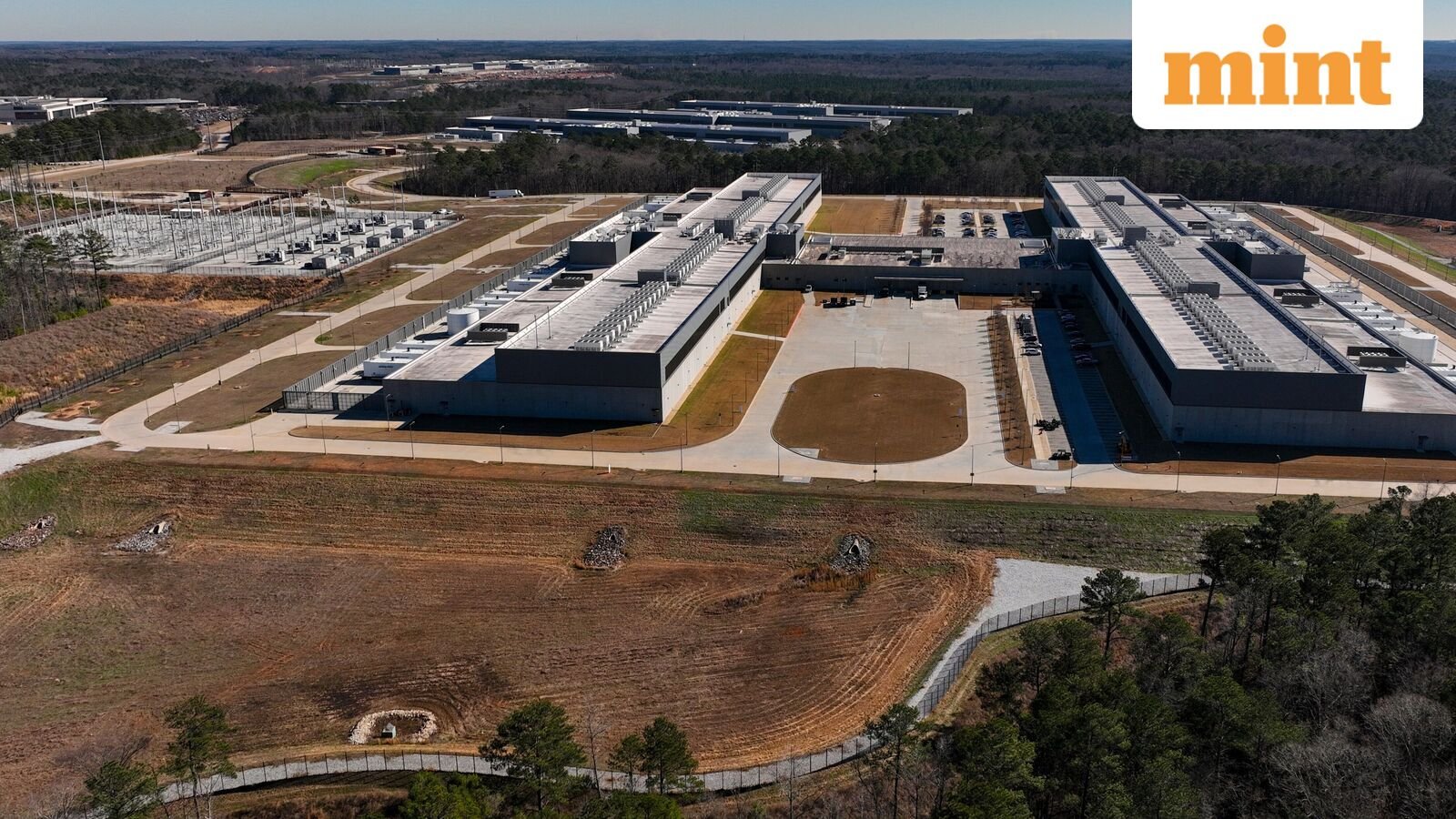
Artificial intelligence has been a winner for equity investors. An equal-weight basket of Amazon.com, Meta Platforms, Oracle, Microsoft, and Alphabet shares—the five main “hyperscalers”—rallied an average of 23% last year, outperforming the S&P 500’s 16% rise. But as the demand for more computing power has risen, so has the need for cash to build out data centers and fill them up with specialized chips, industrial-grade liquid cooling, and networking systems.
After first using free cash to fund their AI spending, these hyperscalers or large-scale data center operators have turned to debt, issuing over $120 billion in high-grade bonds last year, about seven times more than the year before, and the amount should continue to grow.
Bonds, however, aren’t stocks. When an investor buys a share of a company, they are expecting capital appreciation, and perhaps dividends—and the gains are potentially unlimited. Bond investors, by contrast, are generally expecting a fixed return—the interest they are being paid—and some small appreciation, while taking on the risk, however small, of a total wipeout in the case of default.
That would be unlikely for these tech companies, but for most fixed-income investors, stability and predictability take precedence over hot themes such as AI.
“We expect to get our money back,” says Ryan Jungk, an investment-grade portfolio manager at Newfleet Asset Management. “And so all this extra risk/extra reward is not what we want necessarily from our highest-quality issuers.”
The good news for buyers is that yields look more appealing than they did back in mid-September—premiums on hyperscaler bonds over ultrasafe Treasuries have jumped as much as 0.6 percentage points, while broad high-grade spreads rose less than 0.05 point—but these tech bonds also have far greater risks. Oracle saw its gauge for default risk hit a 16-year high late last year amid projections for higher capital expenditures and a new disclosure of an additional $248 billion in lease commitments, much of it likely from OpenAI.
While Goldman Sachs and J.P. Morgan, among others, expect megacap tech stocks to dominate this year, the same isn’t true for tech bonds, which are underweighted by Morgan Stanley, Barclays, Deutsche Bank, and J.P. Morgan. The expected flood of new tech debt is a frequent complaint despite the pristine quality of some of these bonds; Bank of America strategists estimate borrowing in the sector could hit as much as $950 billion over three years.
It’s that flood—and not default risks—that worry many analysts. Microsoft’s gross debt is only 0.22 times its earnings before interest, taxes, depreciation, and amortization, or Ebitda, which means it could theoretically pay all its debt in under three months. Alphabet has the next best ratio at 0.49 times, while Amazon’s leverage ratio is 0.56 times and Meta’s is 0.57 times. Even including lease commitments barely moves the needle, except for Amazon, whose leverage ratio rises above a still unconcerning 1.
Oracle is the outlier at 4.1 times Ebitda, but the other four have plenty of room for more capital. If they raised their leverage ratios to one times Ebitda by 2030, it would generate $852 billion in new debt, notes Nate Liddle, a senior fixed-income analyst at Columbia Threadneedle Investments. That level of issuance would more than double the tech sector’s share, including Amazon and Meta, from 10.5% to about 22%, muscling up close to banking, which accounts for 23% of the value of investment-grade debt.
There’s room on their balance sheets, Liddle says, but not enough capacity in the market to handle it.
Large sector increases have led to big trouble in the past. In 2014, investors enthused about U.S. energy production handed out billions to oil-and-gas companies at cheap rates. Fracking gained so much momentum so quickly that energy became an ever increasing part of the speculative-grade debt market—until the companies couldn’t pay back investors. Similar dynamics led to a raft of telecom defaults in the early 2000s and the builder bust in the mid-2000s spurred by broad excitement around home-price appreciation.
“When a sector of a market goes from very small to very large, those are the environments where you can have excessive risks build up,” says Robert Cohen, head of DoubleLine’s global developed-credit team. “You have to be on alert.”
Still, the bonds offer enough yield to draw fund managers who are looking to beat their low-risk, government-focused benchmarks. While a 10-year U.S. Treasury note yields 4.17%, Microsoft’s 10-year bonds yield 4.22%, Amazon’s yield 4.69%, Meta’s yield 4.92%, and Alphabet’s yield 4.69%. Even Oracle, with 10-year yields of 5.78%, doesn’t have a history of default.
For many investors, a little extra yield over Treasuries feels like a manageable risk. “Ultimately, there’s going to be some mal-investment, something’s not going to work out in economic fashion,” says Janet Rilling, a senior portfolio manager at Allspring Global Investments. She recently bought 10-year and 30-year Meta bonds for the firm’s Core Plus exchange-traded fund and mutual fund, and purchased Oracle five- and 10-year bonds in September. “It’s our job to select the winners.”
While Ed Al-Hussainy, a portfolio manager at Columbia Threadneedle, says the additional spread is “so fantastic” for fund managers mandated to buy investment-grade bonds, he is looking elsewhere, particularly at mortgage-backed securities issued by the likes of Ginnie Mae, Fannie Mae, and Freddie Mac. Among corporates, bank bonds are almost universally loved on Wall Street. They’re the opposite of tech, “given elevated capital levels and the prospect for less issuance in 2026,” says Newfleet’s Jungk.
Ultimately, the massive speculative capital spending is delivering the exact opposite of what a bond investor requires: safety, certainty and frugality. If you’re enthused about AI, stick to the stock market.
Write to Karishma Vanjani at karishma.vanjani@dowjones.com