
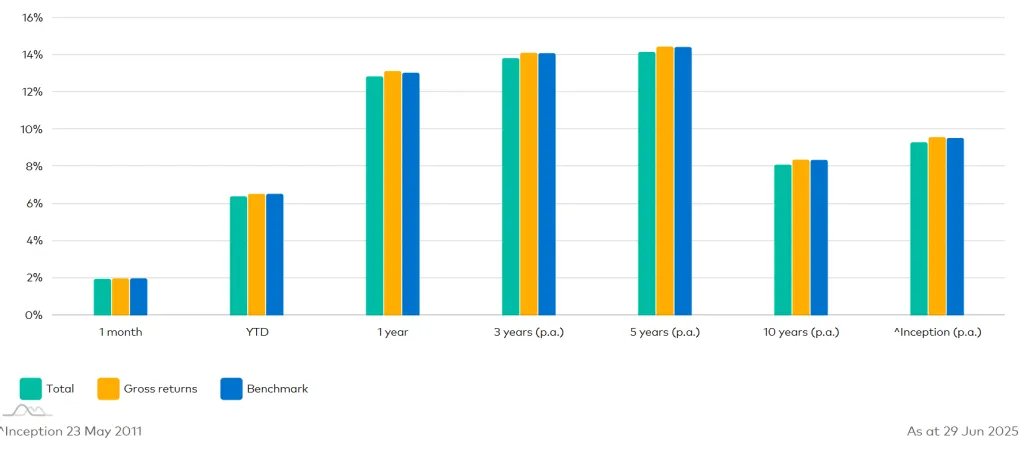
ASX Dividend ETFs are growing in popularity, and it is no surprise. ETFs in general are a fantastic way for Australian investors to diversify their portfolios, and those that capture dividends are high on the list for income minded investors.
Exchange Traded Funds (ETFs) first appeared in 1993 as an improved investment opportunity for investors looking for diversification offered by passive income investing following a market index, such as the US S&P 500. Prior to that time investors were limited to investing in Mutual Funds.
Mutual funds are bought and sold directly from the company managing the fund or from online or full-service brokers. While mutual funds offer the same diversification with index investing, ETFs offer significant advantages. Mutual funds can only be bought or sold at the end or the trading day, while ETFs trade like stocks and can be bought or sold anytime during the day. The price of a mutual fund does not change until trading ends while ETF prices fluctuate with the price of the index or the stocks within the fund ETFs typically have lower fees associated with the fund.
With hundreds of ETFs now available on the ASX, there are a lot more options to pick through, with separating the best from the rest becoming increasingly difficult.
The market for ETFs now allow you to select those that track sectors, countries, bonds, or characteristics like dividend yields and high growth or value stocks. This time around, we are going to take a look at two of the best dividend ETFs, comparing SYI vs VHY.
Top Australian Brokers
Get Ahead of the Market
Smarter investing starts with better information. The Bull Premium gives you everything you need to grow your wealth and build your future. You will get:
- Early access to 18 Share Tips – delivered 3 days early
- A comprehensive weekly market outlook
- An exclusive complete investing course
Sign up today and get your first week free
ASX Dividend ETFs Compared – SYI vs VHY, The Details
| Ticker (ASX:) | VHY | SYI |
|---|---|---|
| Fund | Vanguard Australian Shares High Yield ETF | State Street SPDR MSCI Australia Select High Dividend Yield ETF |
| Issuer | Vanguard | State Street |
| Benchmark | FTSE Australia High Dividend Yield Index | MSCI Australia Select High Dividend Yield Index |
| Inception | 23 May 2011 | 28 Sep 2010 |
| Domicile | Australia | Australia |
| Distribution frequency | Quarterly | Quarterly |
| Management cost | 0.25% p.a. | 0.20% p.a. |
| Beta (EODHD) | 0.89 | 0.87 |
VHY is the slightly more expensive fund, while SYI is cheaper by 5 bps. VHY tracks the FTSE Australia High Dividend Yield Index; SYI tracks the MSCI Australia Select High Dividend Yield Index, which State Street describes as targeting relatively high dividend income with quality characteristics.
Taking a look through the dividend history of each, the trailing 12-month cash distributions are:
- VHY: A$6.1917 per unit over the last 12 months, about 7.60% of the latest close
- SYI: A$3.7107 per unit over the last 12 months, about 12.13% of the latest close
That makes SYI the stronger recent cash-income payer, but it was also much lumpier because a very large June 2025 distribution did a lot of the work.
The portfolio construction difference matters. On the State Street page, SYI shows 58 holdings and a heavy Financials tilt of about 62%, with its top holdings dominated by the big banks plus Macquarie. VHY’s largest positions include BHP, CBA, NAB, WBC, and ANZ, so it is also income-oriented and concentrated, but it mixes in more mining exposure at the top end than SYI.
Vanguard Australian Shares High Yield ETF (ASX: VHY)
VHY is the largest high dividend yield ETF on the ASX, making liquidity one of the funds advantages, along with low cost and portfolio selection. VHY tracks the FTSE Australia High Dividend Yield Index but is selective on component stocks it includes.
Vanguard’s selection criteria focus on forecasted, not historical, dividend yields. To minimise risk VHY does not allow more than forty percent of holdings from one industry. The top ten holdings from the total of around seventy are available on the Vanguard website, and include all four of Australia’s big four banks, BHP, RIO, Telstra, and Macquarie.
The VHY has been on the /ASX since 2011. The ASX website lists the fund’s annual yield at 8.61%, while other sources have the yield at 8.66%.
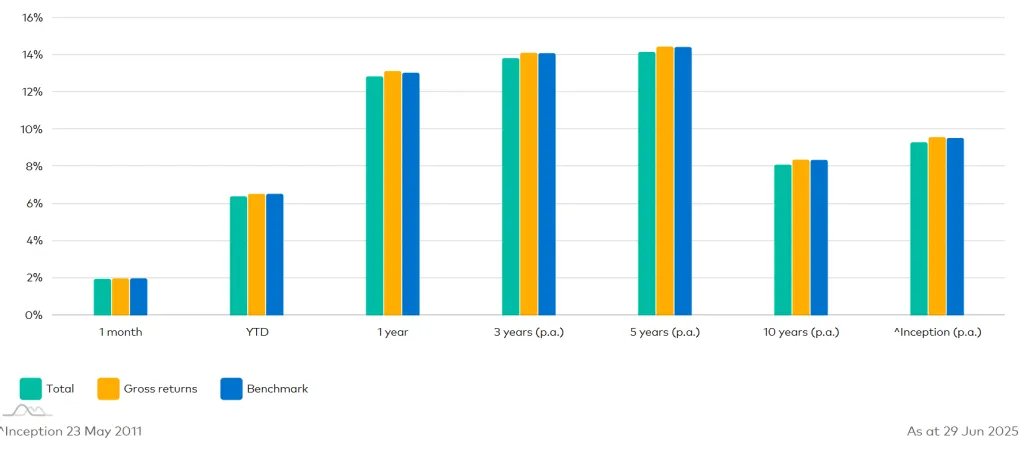
VHY total returns per annum since inception:
SPDR MSCI Australia Select High Dividend Yield Fund (ASX: SYI)
SYI has only 32 holdings in its portfolio, tracking a different index, the MSCI Australia Select High Dividend Yield Index.
In contrast to VHY, the SYI focuses on stocks paying higher dividend yields than the broader market, fully franked. Liquidity is a major advantage of ETFs, so SYI merits a place on the best dividend ETFs on the ASX as the second largest in assets under management after VHY.
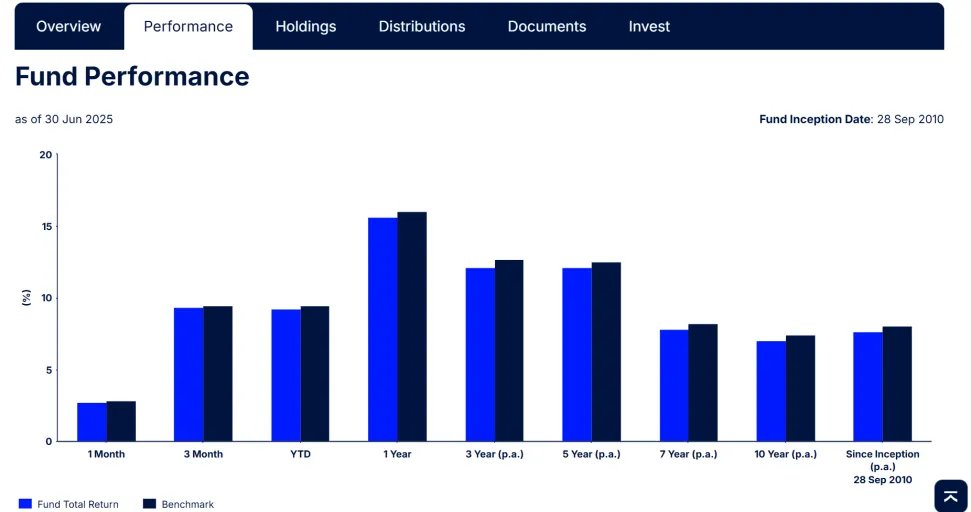
SYI’s total returns trail its benchmark index by small margins. The ASX website lists the fund’s Annual Yield at 12.74%.
SYI total returns per annum since inception:
VHY vs SYI In Short
If you are looking to take a position in one of the top dividend ETFs on the ASX, but are still looking for a simpler comparison, this is a short summary of what we have found.
- Why you might choose VHY – if you want a classic Vanguard high-dividend Australian equity ETF and are fine paying a bit more for it.
- Why you might prefer SYI – if your priority is maximizing recent cash yield and slightly lower fees, knowing the portfolio is very bank-heavy and distributions can be uneven.
On risk, the two are broadly similar from beta alone, so the bigger practical difference is more the portfolio concentration and yield mix, not headline volatility. If you are still in doubt as to which may be most suitable, a financial advisor would be your best option.