
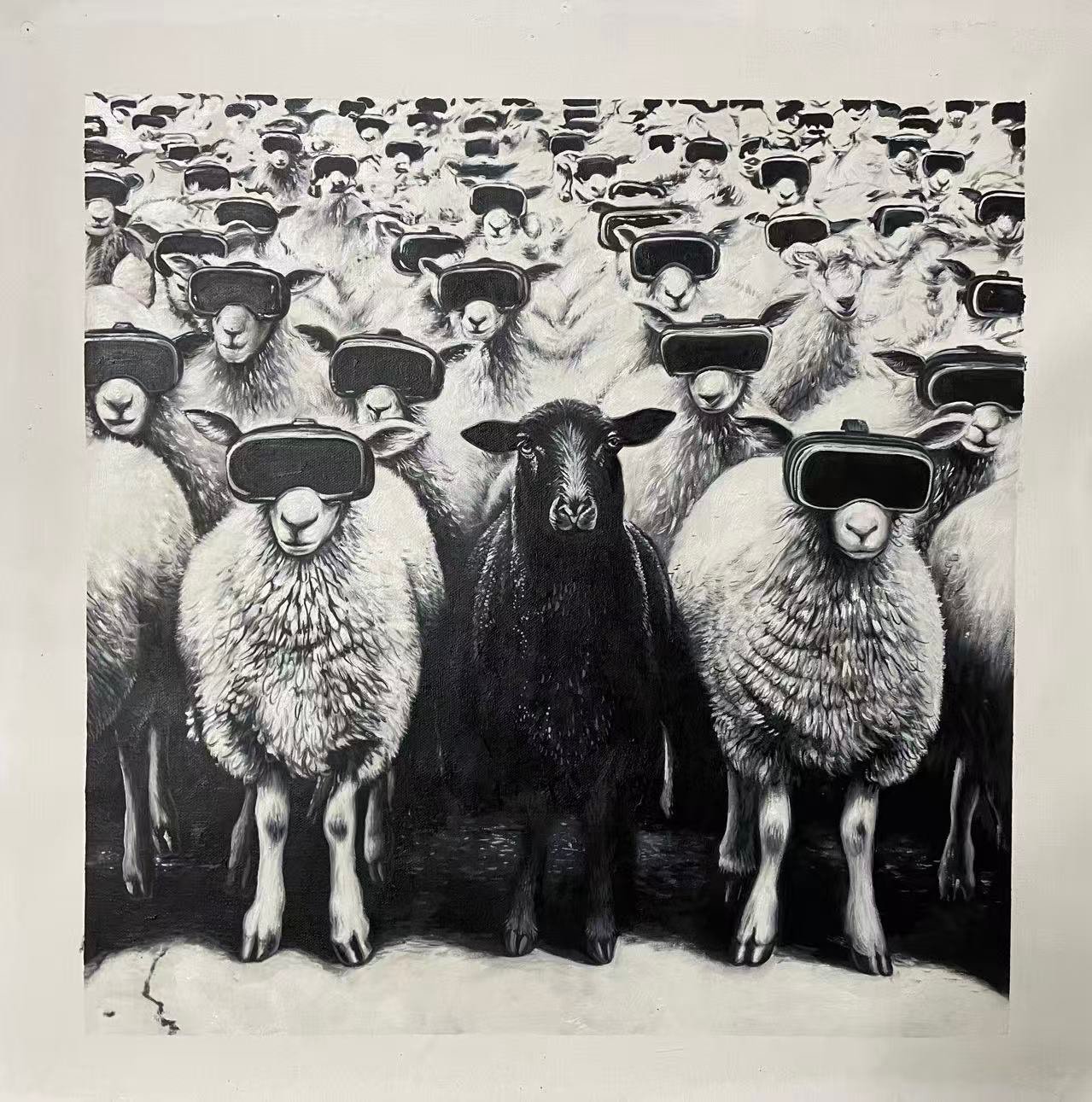
By Keith Jones, Art Correspondent
For decades, anonymity has been one of the most powerful currencies in contemporary art. It created distance. It created intrigue. And in the case of Banksy, it helped construct one of the most recognisable artistic identities in the world without ever relying on a visible face. That dynamic now appears to be shifting.
Recent media coverage, including investigations published by major outlets such as CNN, has once again brought the question of Banksy’s identity into sharper focus. While debates around confirmation continue, what matters is not whether the mystery is fully resolved. What matters is that the perception of anonymity is weakening. And in the art market, perception often moves faster than fact.
When Anonymity Changes, So Does Value
Anonymity has never been a marketing tool alone. It is a structural asset. It allows the work to exist without biography. It removes the artist from the narrative while amplifying the myth around them. For collectors, it introduces an intangible layer of cultural value that cannot be replicated through traditional branding.
When that anonymity begins to erode, something shifts. Not necessarily overnight. But gradually. The conversation moves away from the work and toward the individual. The myth becomes more defined. And in some cases, the sense of distance that once elevated the work begins to close. This does not erase value. But it changes the conditions around it.
A Vacuum in the Market
As attention intensifies around Banksy’s identity, a space has quietly begun to open. The market for anonymous, culturally relevant, street-influenced fine art has not disappeared. If anything, demand for that category has continued to grow. What has changed is the landscape.
There are very few artists operating at scale within that space. Fewer still who combine anonymity, cross-over between street and fine art, and structured market control. Mr Phantom now sits directly within that intersection. And as one narrative becomes more defined, another begins to attract attention.
The Phantom Shift
Since the 27 February exhibition, market activity surrounding Mr Phantom has shown measurable movement. Several advisors and collectors report valuation increases in the region of 15–20% across key works, driven by a combination of exposure, limited availability, and renewed interest following the exhibition.
This is not unusual after a successful show. What is different is the timing. The increase is occurring alongside a broader cultural conversation about anonymity itself. As Banksy’s position becomes more visible, Mr Phantom’s continued anonymity becomes more pronounced. This contrast is difficult to ignore. One artist moving toward visibility. Another remaining deliberately out of reach.
Behaviour in Real Time
The most telling indicator is not commentary. It is behaviour. In recent weeks, enquiries for Mr Phantom works have increased, holding periods among existing collectors have extended, and off-market discussions have become more frequent.
Several buyers have begun to position acquisitions not only around the work itself, but around the narrative shift taking place within the wider market. The idea is simple. If anonymity is becoming rarer at scale, its value may increase for those who still retain it.
The “Banksy Effect”
Market analysts have begun informally referring to this as the “Banksy Effect.” Not in the sense of direct comparison, but in terms of consequence. When a dominant figure within a category undergoes a structural change, capital and attention tend to redistribute. Collectors begin looking for adjacent opportunities that carry similar characteristics under different conditions.
In this case, cultural relevance, anonymity, and limited supply. Mr Phantom meets all three. That does not make him a replacement. But it does position him within the same conversation.
A Market Already Tightening
Compounding this shift is the internal structure of the Phantom market itself. Supply remains restricted. Works are not widely available. Distribution continues to be controlled. On top of this, there are strong indications that the next series will not be released immediately. A development period of up to 18 months is widely expected, during which new supply entering the market will remain minimal.
This creates pressure. Because demand is not pausing. It is increasing.
The Role of Anticipation
Markets do not move solely on present conditions. They move on expectation. Rumours surrounding the next body of work suggest a significant escalation in both scale and ambition. Larger works. More defined themes. A step forward rather than a continuation.
Whether those expectations are realised remains to be seen. But the anticipation alone is influencing behaviour. Collectors are not only evaluating what exists. They are positioning for what may come.
Pricing Under Pressure
When demand increases and supply contracts, pricing rarely remains static. It adjusts. In the case of Mr Phantom, early signs of repricing are already visible. Works that were acquired prior to the most recent exhibition are now being reassessed in light of both market performance and broader narrative shifts.
If current conditions hold, several outcomes become plausible. Accelerated movement in primary pricing, increased activity within secondary transactions, and widening gaps between early and later acquisitions. This is consistent with markets entering a more competitive phase.
Not a Replacement, But a Moment
It would be overly simplistic to frame this as one artist replacing another. The art world does not operate in straight lines. Banksy’s position remains historically significant. That does not change. What is changing is the environment around him.
And within that environment, new figures emerge, not as substitutes, but as responses to evolving conditions. Mr Phantom appears to be one of those figures.
A Pivotal Window
The next 12 to 18 months may prove to be one of the most important periods in the development of Mr Phantom’s market. Not because of volume, but because of absence. No immediate series release. Limited available works. Increasing attention.
This combination creates a narrow window. For collectors, it becomes a question of timing. For the market, it becomes a question of direction.
Final Perspective
Anonymity has always carried weight in contemporary art. It shapes perception. It influences demand. And at times, it defines entire markets. As the narrative around Banksy continues to evolve, the importance of anonymity is being reconsidered in real time.
Within that shift, Mr Phantom’s position becomes more visible precisely because he remains unseen. That paradox is where the current momentum sits. Not in certainty, but in contrast. And in the art market, contrast often precedes movement.