
(Bloomberg) — Treasuries bounced after a slide fueled by concerns over the economic fallout of the war in Iran, with traders resuming bets on a rate cut in 2026 as Federal Reserve Chair Jerome Powell eased fears about any imminent impacts of higher energy prices on inflation.
The bond market trimmed what’s expected to be its worst monthly selloff since 2024 as Powell said longer-term inflation expectations appear to be in check, with traders erasing wagers on a rate hike. The S&P 500 fell 0.4% as a rout in chipmakers offset gains in most major groups. US oil topped $100.
Inflation expectations seem to be “well anchored beyond the short term,” Powell said Monday during an event at Harvard University. He added that officials may need to respond to the impact from the conflict, but that it’s not the case yet.
“Fed chair Powell’s calm tone along with overdue market focus on the growth risks from higher-for-longer oil are helping to fuel a turn in rates pricing,” said Krishna Guha at Evercore. “The probability of one or more cuts is much higher than the probability of a hike.”
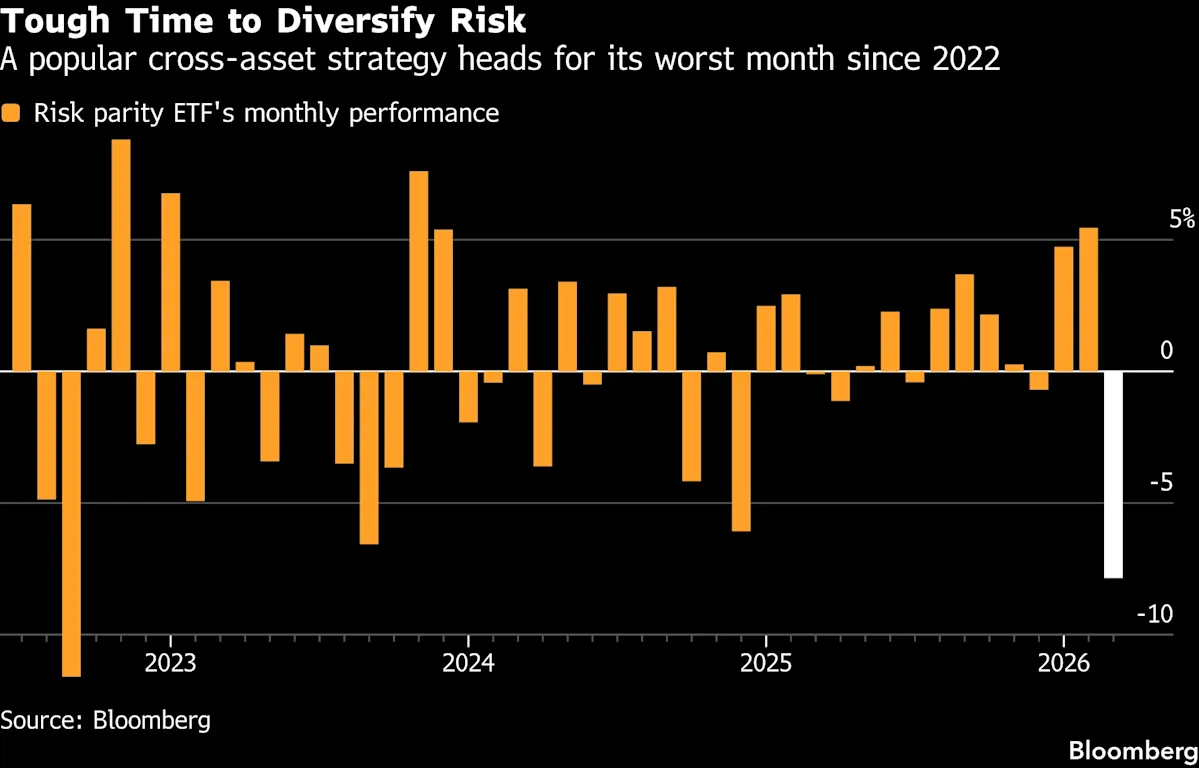
The war in the Middle East has upended global markets and triggered concern about a simultaneous spike in inflation and slowdown in economic growth. The conflict has severed a crucial route for energy supplies, boosting oil prices and driving stocks toward their worst month since 2022.
The White House threatened further escalation of attacks on Iran, including critical civilian energy infrastructure, as the fifth week of war shows little sign of a letup.
President Donald Trump earlier on Monday posted on social media that if Tehran doesn’t re-open the Strait of Hormuz, “we will conclude our lovely ‘stay’ in Iran by blowing up and completely obliterating” electricity plants, oil facilities and “possibly” desalination infrastructure.
History shows most geopolitical shocks tend to have a relatively short-lived impact on the market, but without clear evidence of an endgame for the war, stocks will find it difficult to see past the current volatility, according to Chris Larkin at E*Trade from Morgan Stanley.
“The market continues to be headline-driven as the Trump Administration has delivered a variety of messages surrounding de-escalation and re-escalation of the war in Iran,” said Chris Senyek at Wolfe Research. “As such, we maintain our defensively positioned posture.”
There’s growing evidence that the selling that recently hit equities “is getting closer to its ending stages,” said Michael Wilson at Morgan Stanley, who cited the example of previous “growth scares” that were not accompanied by a recession or a rate hike.