
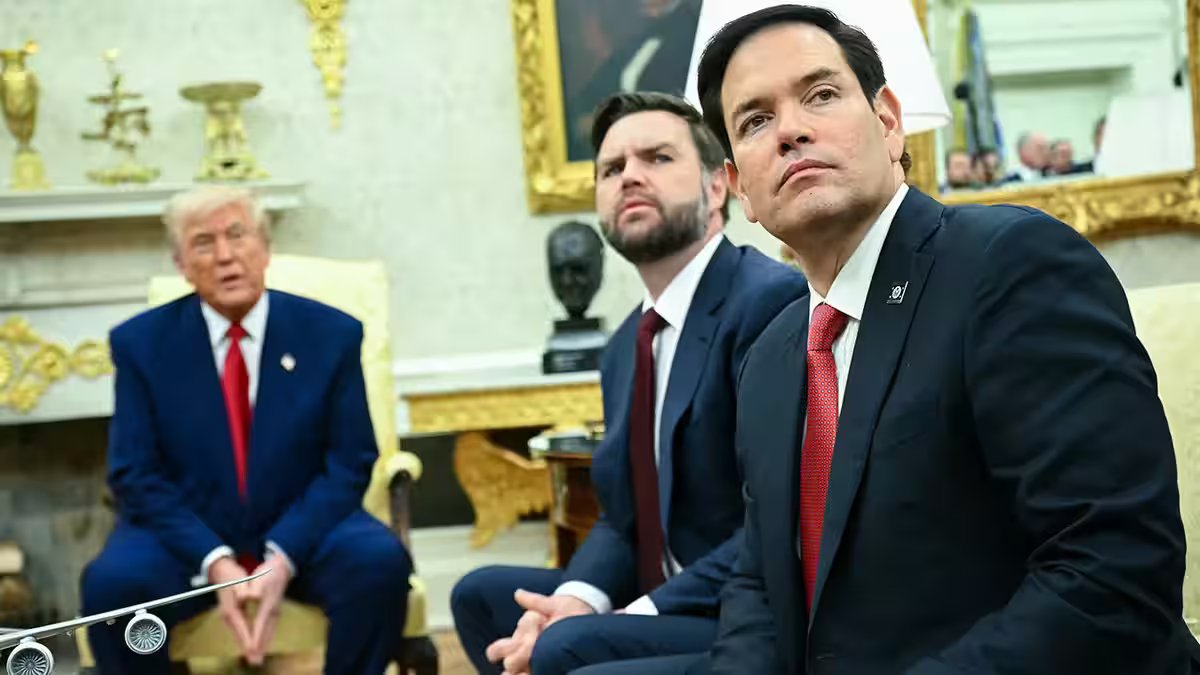
Growing signs of friction inside President Donald Trump’s second administration have intensified following the sudden resignation of Director of National Intelligence Tulsi Gabbard.
Although her departure was officially linked to her husband’s health condition, multiple reports suggest she had increasingly been sidelined from key foreign policy discussions, particularly amid disagreements over the administration’s approach to Iran.
Her exit has also fueled speculation that Vice President JD Vance has become increasingly isolated in foreign policy decision-making as divisions deepen over the US role in West Asia.
The scrutiny has intensified as both Vance and Secretary of State Marco Rubio are increasingly viewed as potential contenders for the 2028 Republican nomination, particularly after the two took turns leading White House press briefings in recent weeks
Iran policy exposes fault lines
The clearest divide appears to center on Iran and the broader question of US military involvement overseas. Trump’s harder line on Tehran, including military coordination with Israel and recent strikes linked to the regional conflict, has highlighted competing approaches within his team.
While Vance has publicly backed administration policy, reports indicate he remains more aligned with the “America First” non-interventionist approach and has been cautious about deeper US military engagement abroad.
The shifting balance has reportedly opened space for Secretary of State Marco Rubio to gain influence within the administration. Rubio is increasingly seen as representing a more traditional Republican foreign policy outlook that supports a stronger global military posture.
Political observers say the differences have also triggered early speculation over who could shape the future of Trump-era Republican politics.
White House briefing room becomes 2028 stage
With attention already turning toward the 2028 presidential race, both Vance and Rubio have found themselves at the center of growing succession chatter.
The White House press briefing room has unexpectedly become a testing ground. With press secretary Karoline Leavitt on maternity leave, both Vance and Rubio separately stepped in to lead high-profile briefings, creating fresh comparisons between the two figures viewed as possible contenders for the Republican nomination.
Vance spent nearly an hour taking questions from reporters and later pushed back when asked about his future ambitions. “I’m not a potential future candidate. I’m a vice president,” Vance said.
Despite downplaying presidential speculation, many in Washington view the appearances as part of an early “shadow primary” the subtle positioning that often begins years before a formal presidential campaign starts.
Trump keeps succession debate alive
While both Vance and Rubio have publicly avoided discussing 2028 ambitions, Trump himself has repeatedly fueled the conversation.
At a White House event, he openly tested support for both men. “Who likes JD Vance?” Trump asked before following up with: “Who likes Marco Rubio?”
After both drew strong reactions from the crowd, Trump remarked, “Sounds like a good ticket,” calling them “a dream team.” Days later, Trump praised Rubio’s performance in the briefing room and later offered a balanced assessment of both men.
“I think they both did great…I watched both of them. Both very good men — really are.”
For now, neither Vance nor Rubio has entered the race. But as foreign policy divisions deepen and political positioning becomes more visible, the contest over Trump’s future political legacy may already be taking shape inside the White House.