
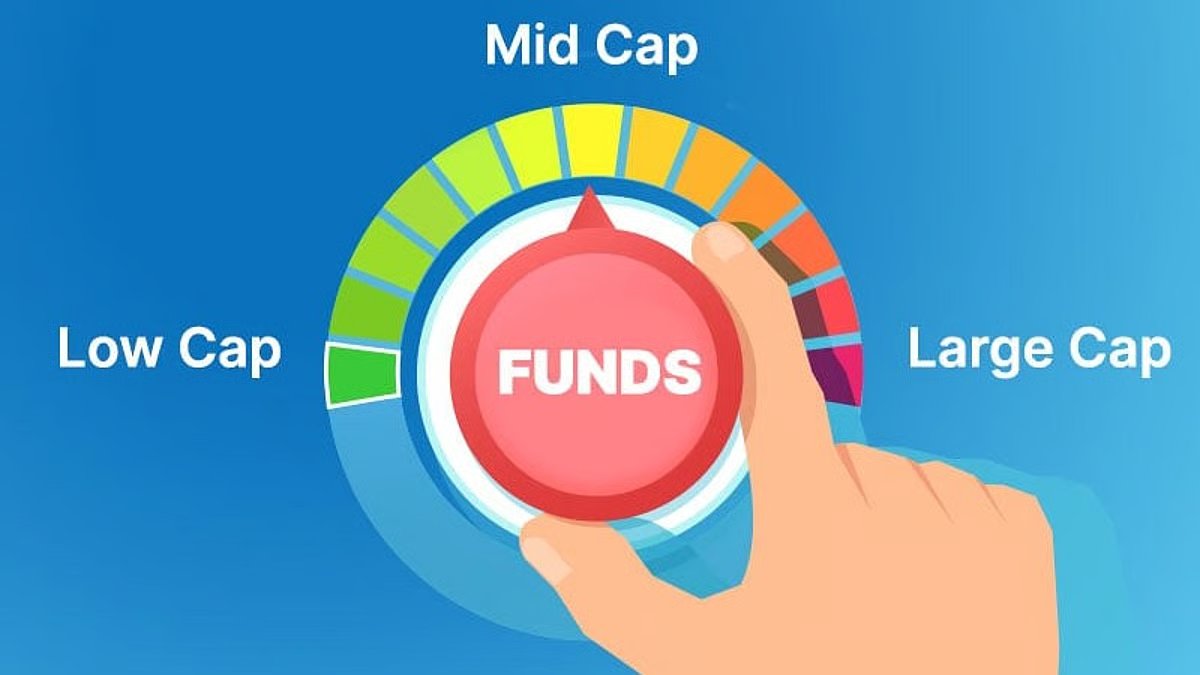
Retail investors are continuing to pump money into mid-cap and small-cap mutual funds despite higher valuations, suggesting that while they are seeking long-term growth, recent category performance is playing a key role in their investment decisions, says Aditya Agarwal, Co-Founder of Wealthy.in.
“Recent flows suggest both are happening, but performance-chasing is clearly a meaningful part of the story,” Agarwal tells Fortune India. While mid- and small-cap funds provide access to companies with longer earnings growth runways than mature large-cap businesses, investor behaviour indicates that recent returns and compelling market narratives have become powerful drivers of fresh allocations. “Investors are not merely buying growth in the abstract; they are buying the parts of the market that have delivered the strongest returns,” he says.
Momentum continues despite broader slowdown
The persistence of inflows underlines the trend. Even as overall equity mutual fund inflows fell sharply to ₹22,908 crore in May 2026, mid-cap and small-cap funds together attracted ₹9,331 crore, accounting for nearly 41% of total equity inflows. Small-cap funds received ₹4,946 crore while mid-cap funds garnered ₹4,385 crore.
The momentum strengthened in June. Equity fund inflows recovered to ₹28,973 crore, with mid-cap funds emerging as the biggest beneficiaries, attracting ₹6,090 crore. Small-cap funds also continued to witness healthy inflows.
According to Agarwal, this resilience suggests investors are increasingly anchoring decisions to category performance rather than treating these funds purely as long-term strategic allocations. “The persistence matters,” he says. “If flows continue favouring mid- and small-caps even when overall sentiment weakens, it indicates that performance narratives are increasingly influencing investor behaviour.”
Assets under management tell the same story
The expansion in assets under management (AUM) further reflects growing retail appetite for higher-risk segments.
As of May 2026, small-cap fund AUM stood at ₹4.04 lakh crore, up 20.3% year-on-year while mid-cap fund AUM reached ₹4.88 lakh crore, rising 19.5% over the same period.
Over the past three years, AUM has surged 162.9% in small-cap funds and 138.6% in mid-cap funds.
While a portion of the increase reflects market appreciation, Agarwal says sustained inflows alongside rising asset values indicate a deliberate shift by retail investors towards the higher-beta end of the equity market. “The retail investor is certainly adding genuine long-term growth exposure,” he says. “But the intensity and concentration of flows strongly suggest that recent performance has become the trigger for that allocation.”
When diversification becomes concentration
For investors, the bigger concern is not whether to own mid- and small-cap funds, but how much exposure is appropriate.
According to Agarwal, diversification turns into concentration risk once these segments begin to dominate a portfolio. “A useful rule of thumb is that mid- and small-cap exposure diversifies a portfolio when it broadens sources of return. It becomes concentration risk when it starts driving overall portfolio outcomes,” he says.
In practical terms, he believes the tipping point is generally reached when combined mid- and small-cap exposure exceeds roughly 50% of an investor’s equity allocation, especially if it overtakes the core large-cap allocation.
On paper, a portfolio may appear diversified because it holds multiple schemes. In reality, however, it could simply represent multiple bets on the same market style, higher-beta domestic growth stocks.
Unlike large-cap companies, smaller businesses typically carry higher volatility, lower liquidity and deeper drawdown risks. Excessive allocation therefore leaves investors heavily dependent on continued earnings growth and favourable market liquidity. “That works well during bull markets but can reverse sharply when liquidity tightens or risk appetite declines,” Agarwal cautions.
The hidden liquidity risk
Recent fund flow data reinforces this concentration. Mid- and small-cap funds accounted for around 41% of total equity inflows in May, despite overall equity inflows slowing significantly. June witnessed another strong round of inflows into these categories.
Agarwal also points to SEBI’s market-cap classification, under which mid-cap companies rank 101-250 by market capitalisation, while small-cap companies include all firms ranked 251 and below.
“Investors are not simply moving one step down from blue-chip companies,” he says. “They are moving into the long tail of the listed market where liquidity and earnings visibility are naturally lower.”
Liquidity risks become particularly evident during periods of market stress. Referring to AMFI’s May 2026 stress-test disclosures, Agarwal notes that some large schemes would require around 34 days to liquidate half of their mid-cap portfolios and up to 59 days for half of their small-cap portfolios under stressed market conditions.
“Investors don’t notice this during bull markets,” he says. “But once a significant portion of the portfolio sits in relatively illiquid assets, diversification by fund count becomes an illusion because the portfolio is exposed to a common liquidity shock.”
For most retail investors, he believes combined mid- and small-cap exposure should generally remain below 50% of equity assets, unless they have long investment horizons, stable cash flows and the ability to continue investing through deep market corrections.
The exposure investors often overlook
Agarwal says many investors underestimate how much mid- and small-cap exposure they already have because it is embedded across multiple categories. “It doesn’t come only from dedicated mid-cap or small-cap funds,” he explains.
A flexi-cap fund can allocate 25-40% to mid- and small-caps depending on market opportunities. A multi-cap fund must maintain at least 25% each in large-, mid- and small-cap stocks. Large & mid-cap funds are required to hold at least 35% each in large- and mid-cap companies, while many sectoral and thematic funds also invest meaningfully outside the top 100 companies.
As a result, investors should avoid counting schemes and instead calculate their aggregate market-cap exposure across the portfolio. He recommends a simple “look-through” approach: review each fund’s latest market-cap allocation in its factsheet, multiply those percentages by the invested amount and combine the exposures across all holdings.
An investor with investments across flexi-cap, multi-cap, large & mid-cap and sectoral funds may discover that 40% or more of total equity exposure already sits in mid- and small-cap companies, even without owning a dedicated small-cap fund.
“In that situation, adding another small-cap scheme is not diversification,” Agarwal says. “It is simply doubling down on an exposure that already exists.”
He suggests investors pause before adding fresh allocations if combined mid- and small-cap exposure has already reached 30-35% of their equity portfolio. Any additional allocation should reflect a conscious decision to adopt a more aggressive strategy—not simply recent category outperformance.
Looking beyond past returns
For investors evaluating mid- and small-cap funds, Agarwal believes historical returns should serve only as an initial screening tool.
“The more important question is not which fund generated the highest three-year return,” he says. “It is what kind of portfolio produced those returns and whether that process is likely to hold up through the next difficult market cycle.”
He recommends assessing funds across six key parameters:
Portfolio liquidity: Ability to exit positions during stressed markets.
Stock concentration: Whether returns depend on a handful of holdings or a diversified portfolio.
Fund size: Larger asset size is not always advantageous in less liquid market segments.
Valuation discipline: Whether the fund manager is buying growth at reasonable valuations.
Downside capture: Performance during market corrections.
Consistency across market cycles: Stability of the investment process across bull and bear phases.
“The objective should not be to chase the highest recent performer, but to identify funds with a robust, repeatable investment process capable of delivering long-term growth while managing downside risks,” Agarwal says. “In categories where volatility and liquidity risks are inherently higher, portfolio construction and risk management matter far more than short-term return rankings.”