
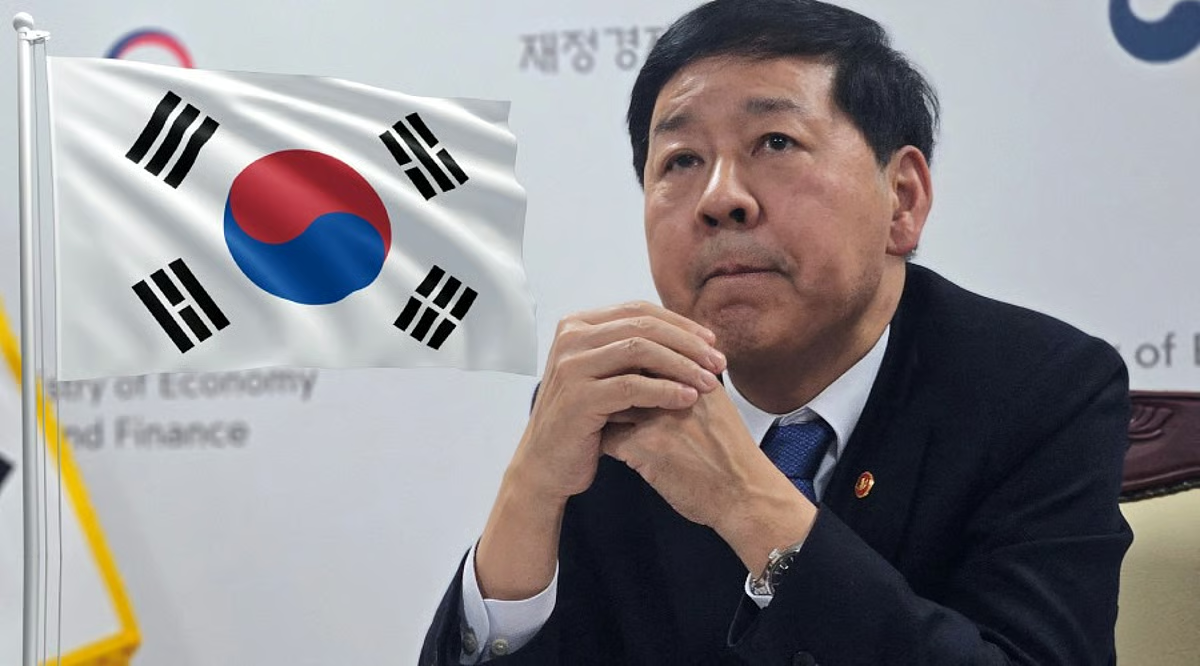
Leveraged single-stock ETFs use derivatives and daily resets to target twice a company’s daily share movement. Gains can increase quickly, while losses can deepen at the same speed. Daily compounding, fees, volatility, and portfolio adjustments can change longer-term returns. Therefore, investors may not receive exactly twice the stock’s performance over several sessions.
The controversy grew after Samsung Electronics and SK Hynix suffered steep declines. On July 29, the Kospi fell nearly 6%, while circuit breakers operated for a second consecutive session. Samsung shares dropped as much as 14%, and SK Hynix fell nearly 20%, despite reporting record earnings. Regulators later acknowledged that leveraged products had increased market volatility.
Also Read:
Finance Minister Koo Yun-cheol and FSC Chairman Lee apologized for failing to assess the risks carefully enough. Lawmakers from governing and opposition parties also called for a parliamentary investigation. Kim rejected claims that the ETFs alone caused the turmoil. He argued that South Korea’s active retail trading culture also contributes to sharp market moves.
Regulators have halted new listings and raised the minimum cash deposit from 10 million won to 30 million won. They also introduced stronger requirements for firms that support market liquidity. Authorities are considering lower leverage ratios, portfolio limits, and temporary leverage cuts during severe market stress. Prosecutors will decide whether Kim’s conduct justifies further legal action.