

Franklin Templeton, a $1.8 trillion AUM global asset manager, has received approval from Nasdaq to list two new Bitcoin ETFs with a DRIP strategy. This brings the company closer to launching Bitcoin ETFs that systematically convert stock dividends into BTC exposure.
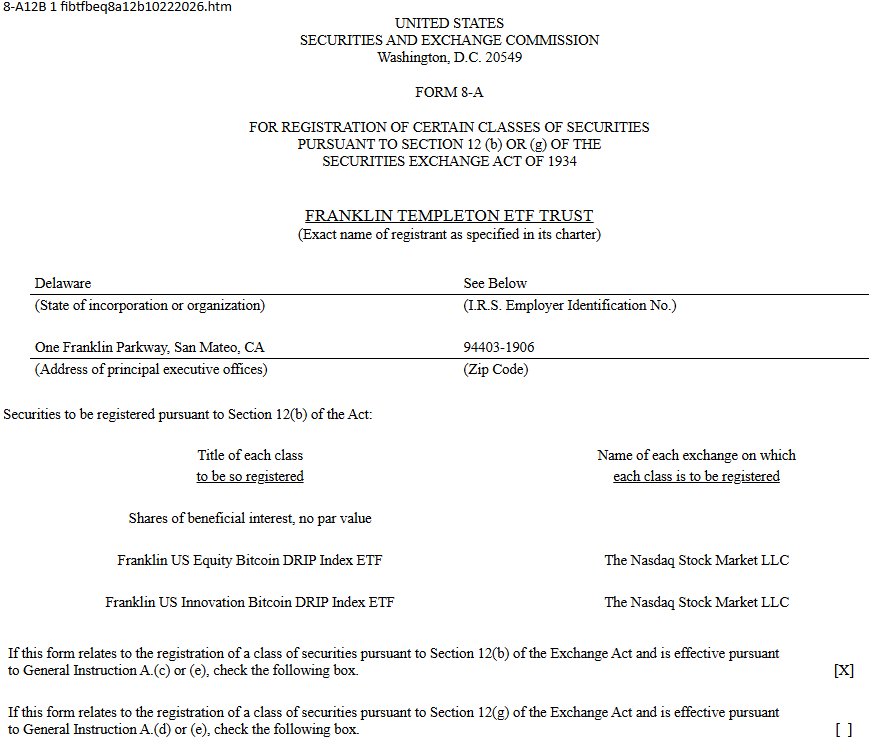
According to the latest SEC filing, Franklin US Equity Bitcoin DRIP Index ETF and Franklin US Innovation Bitcoin DRIP Index ETF is now cleared to list and trade on Nasdaq under tickers FBEQ and FIBT. The ETFs will reinvest dividends from US stocks into Bitcoin.
Both Bitcoin ETFs track VettaFi indexes that combine traditional equity exposure with a rules-based Bitcoin allocation. Investment begins with 95% in U.S. stocks, either a large-cap 500 universe or a 100-stock innovation-focused Nasdaq list. Also, it has 5% in Bitcoin-related instruments.
Also Visit: Best Institutional Crypto Custody Providers in 2026
Instead of distributing dividends or reinvesting them in additional shares, the indexes systematically direct regular and special dividends into Bitcoin exposure on the day after each ex-dividend date.
Bitcoin weight is capped at 20%. Also, any allocation above 5% is cut back to 4.5%. BTC exposure comes through Bitcoin ETPs and other instruments offered by Franklin Templeton. Both ETFs have a management fee of just 0.09%.
The structure offers investors a passive way to accumulate limited Bitcoin exposure funded entirely by equity dividends, reflecting Franklin Templeton’s continued expansion into crypto-linked products.
Franklin Templeton’s spot Bitcoin ETF (EZBC) has recorded total inflows of $335 million to date. EZBC recorded $7.3 million in inflows on Wednesday.
Recently, Franklin Templeton met with US SEC Crypto Task Force. It sought clarity on whether its tokenized funds and ETFs need additional relief to participate in the TSV trading environment created by the Innovation Exemption without violating the 1940 Act.
Meanwhile, BTC price has dropped below $81,500 today amid multiple headwinds facing the broader crypto market. Trading volume decreased by 33% over the past 24 hours amid options expiry.