

Nigeria must strengthen land administration, improve property documentation, expand mortgage financing and embrace technology to attract foreign and institutional investment into its real estate sector, the Chief Executive Officer of Loft & Keys Advisory, Chief Austin Albert Ugochukwu, has said.
Albert said the country’s property market had enormous potential driven by urbanisation, population growth and rising demand for residential, commercial and industrial developments, but persistent challenges were discouraging international investors.
Speaking in an interview on Channels Television on the need to make Nigeria a competitive global real estate destination, he identified transparency, reliable property records, regulatory certainty and access to long-term financing as critical factors influencing investment decisions.
He said Nigeria’s property market was yet to attract significant foreign ownership despite the presence of international residents and the growing interest of Nigerians in overseas markets such as Dubai, London and other destinations.
According to him, foreign investors often consider the risks associated with a market before committing funds, making transparent property transactions and reliable documentation essential to attracting institutional investors, family offices and high-net-worth individuals.
“Those who are keen on building generational wealth, like family offices, institutional funds and ultra-high-net-worth individuals, are looking for cities where they can build their real estate portfolios. They don’t just look at the rewards; they also look at the risks inherent in those regions,” he said.
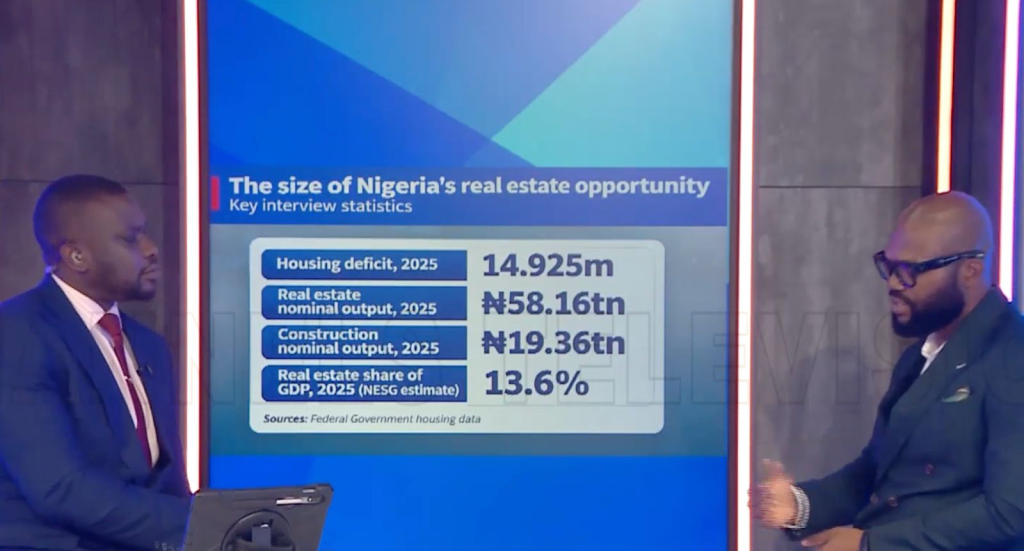
Albert identified property documentation and government involvement in real estate transactions as major areas requiring reform in Nigeria.
He argued that government agencies should be involved from the beginning of property transactions rather than only at the final stage when buyers seek to register or perfect their title documents.
He cited Dubai as an example, explaining that its property registration framework provides investors with greater certainty through government-backed transaction records and digital property registration systems.
“In Dubai, when you pay 20 per cent for an off-plan property, there is a four per cent fee that goes to the government through the Dubai Land Department. That registration ensures that the developer registers the property with the government,” he said.
Albert added that the system provides buyers with an initial contract of sale linked to a digital platform, ensuring that an allocated property unit is recorded and cannot be sold to another buyer.
He said Nigeria needed a similar framework to protect property buyers against multiple allocations and disputes arising from transactions that were not immediately captured in official government records.
“These are people’s hard-earned money, and these are investments they want to preserve and pass on to the next generation. We need to create a process where the government is involved right from the beginning of the transaction,” he said.
The real estate executive also called for the adoption of technology to improve access to property information and transaction records.
He said a centralised, real-time property database would allow investors to verify transactions, ownership records, rental information and property values without relying entirely on private consultants or intermediaries.
According to him, such a platform would improve transparency, reduce transaction delays and make it easier for international investors to assess opportunities in Nigeria.
Albert also advocated stronger regulation of real estate practitioners, arguing that the industry needed clearer standards for developers and property agents to improve professionalism and protect investors.
“Everybody in Nigeria now is a developer, and every Tom, Dick and Harry is an agent. It shouldn’t be so. Once we streamline and sanitise the sector, we will begin to see more serious players coming into the market,” he said.
On documentation costs, Albert acknowledged that Nigeria might be relatively competitive but said investors would be willing to pay more for documentation that guarantees security and certainty of ownership.
He stressed that investors needed confidence that property titles issued by government authorities would remain valid and would not be subject to arbitrary revocation.
He also identified foreign exchange stability as another consideration for international investors, while commending recent efforts by the Central Bank of Nigeria to improve conditions in the foreign exchange market.
He further said Nigeria needed to improve its global investment image by providing accessible and reliable data on the property market, including transaction volumes, sales records, rental indices and developments across major cities.
Albert noted that international investors should be able to obtain relevant market information from official government platforms without having to visit government offices.
“We need a centralised government online registry where we can populate this information. Anybody, from the comfort of their home anywhere in the world, should be able to access the data and make informed investment decisions,” he said.
While acknowledging security concerns in parts of the country, he urged stakeholders to provide balanced information about Nigeria, arguing that the country should also communicate its investment opportunities and progress in infrastructure development.
He said the Federal Government’s proposed and ongoing housing finance initiatives, including the MOFI Real Estate Investment Fund, were steps in the right direction.
Albert noted that the fund, which offers single-digit mortgage financing at an interest rate of 9.5 per cent, had a reported allocation of about N1tn, with approximately N150bn disbursed and financing extended to about 2,000 homes.
He also commended the Federal Government’s diaspora mortgage initiative launched in partnership with financial institutions, but said its 10-year repayment period could place pressure on borrowers.
He advocated longer repayment periods to make the facility more accessible, suggesting that the initiative could be aligned with the MOFI Real Estate Investment Fund to provide more patient capital.
Looking ahead, Albert said Nigeria had significant opportunities in both luxury and mass-market housing but warned against concentrating development largely in high-end locations such as Lekki, Victoria Island, Ikoyi and Banana Island.
He argued that the government should take a more active role in facilitating mass housing by engaging host communities, providing serviced land and delivering basic infrastructure such as roads and utilities.
According to him, developers should not be left to independently negotiate with communities and provide all the necessary infrastructure before commencing housing projects.
He proposed a partnership model in which government provides serviced land and infrastructure, while private investors finance and develop housing projects. Under such an arrangement, he said, government could take an agreed share of the completed properties for allocation to civil servants and other citizens, while investors sell the remaining units.
Albert also stressed the importance of developing a deeper mortgage market to support housing demand and attract institutional capital.
He said investors needed assurance that prospective buyers could access financing rather than relying solely on cash purchases.
“Investors don’t want to come into a market where those buying properties are just cash buyers. They need to know that there is a deep mortgage market where off-takers can leverage financing to acquire properties,” he said.
He added that expanding mortgage financing would help address liquidity constraints in the banking sector and make property investments more sustainable.
Albert expressed optimism about Nigeria’s long-term real estate prospects, citing infrastructure projects such as the Lagos-Calabar Coastal Highway and developments around Eko Atlantic City as initiatives capable of improving the country’s attractiveness to international investors.
He said sustained improvements in infrastructure, property documentation, data transparency and financing would encourage more foreign investors and members of the Nigerian diaspora to acquire properties in the country.
He maintained that Nigeria’s real estate sector could compete more effectively with established international markets if government and private-sector stakeholders addressed the structural challenges affecting investment confidence.