
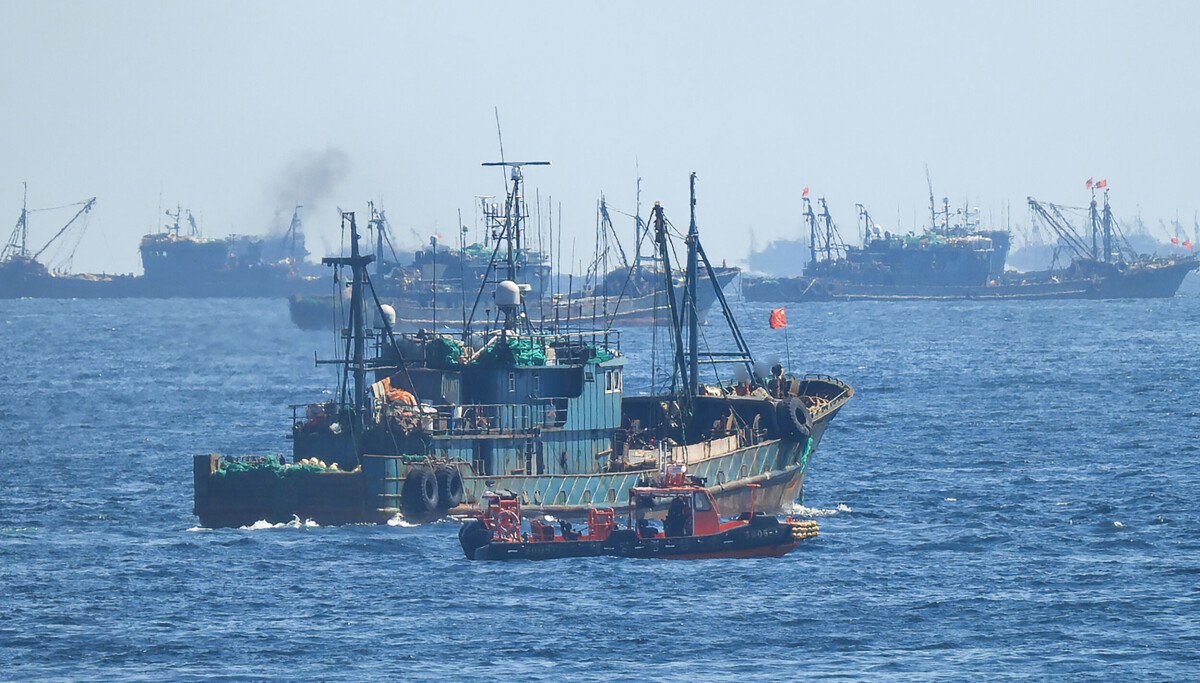
Since Seoul raised the maximum bond fivefold, all six seized Chinese vessels have declined to pay, while suspected incursions have fallen.
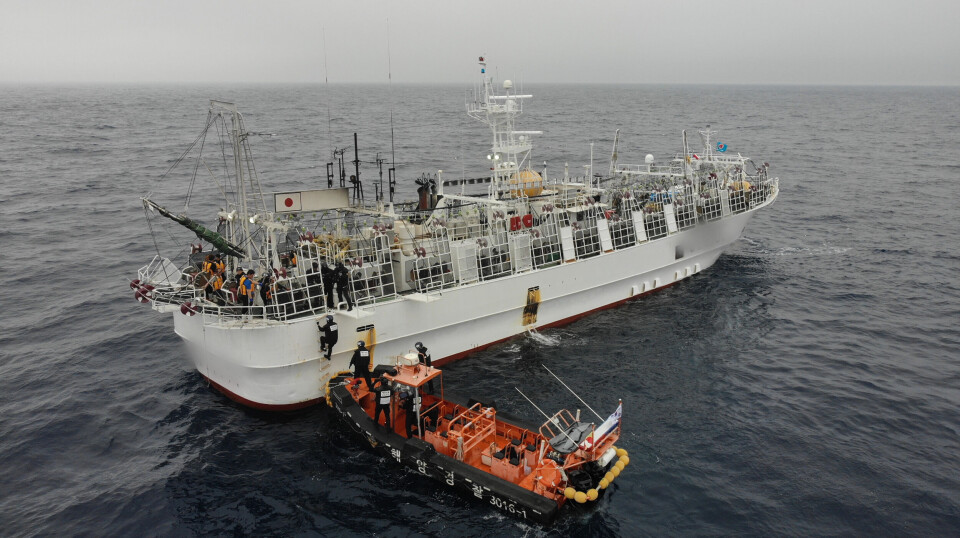
None of the six Chinese fishing boats seized since Korea quintupled the maximum bond on illegal foreign fishing vessels to 1.5 billion won ($1.1 million) in May have paid up and gone home, according to Coast Guard data.
Last year, when the cap stood at 300 million won, 55 of the 56 Chinese boats whose bonds were set, or 98 percent, paid and returned home.
Once the bond is paid, the captain and the boat are released immediately and sent home, likely without facing heavy punishment. Captains who do not pay go to trial and can be held in a workhouse to work off the fine.
The Korea Coast Guard believes the higher cap has made real punishment of illegal fishing boats more likely and has reduced illegal fishing itself.
The Coast Guard began applying the higher cap in May, and each of the six Chinese boats seized since then was assessed a bond of between 1 billion won and 1.5 billion won.
The bond increase followed an order from President Lee Jae Myung. Lee called for a tougher response, including higher fines and bonds, when the Ministry of Oceans and Fisheries and the Coast Guard briefed him on their policy plans in December last year.
An amendment passed in April to the law on foreign fishing in Korea’s exclusive economic zone (EEZ) raised the cap on fines for illegal foreign fishing boats fivefold. The criteria for setting bonds were also revised.
The 55 boats that paid last year put up a combined 5.1 billion won. Earlier this year, before the cap went up, all 19 boats assessed bonds paid in full, a total of 2.8 billion won.
The average bond set per boat last year was about 97 million won, close to the roughly 100 million won a Chinese boat reportedly earns from a single illegal fishing trip. In effect, one trip could cover the bond.
Under current law, a seized foreign fishing boat and its captain go free and return home once the bond is paid, in line with the United Nations Convention on the Law of the Sea. The convention bars imprisonment for fisheries violations in a country’s EEZ unless the countries involved agree otherwise. Authorities therefore cannot keep the captain in custody after a bond matching the expected fine is paid.
The criminal case that follows is handled through summary proceedings and effectively ends without heavy punishment. A captain who does not pay, by contrast, goes to a formal trial and, if unable to pay the fine once it is finalized, can be held in a workhouse.
With the cap now as high as 15 times what one trip earns, the longstanding practice of paying the bond and leaving straight away appears to be breaking down.
Far fewer Chinese fishing boats are also appearing near the Northern Limit Line (NLL), the de facto inter-Korean maritime border in the Yellow Sea. About 90 suspected Chinese fishing boats were spotted on an average day as of November, down from about 150 last year.
The Coast Guard also points to Chinese authorities, who have stepped up crackdowns on and punishment of their own unlicensed and illegal fishing boats since May.
“Illegal fishing by foreign boats has caused considerable economic damage to our fishers,” a Coast Guard official said. “We believe the higher bond is creating a deterrent, with the number of suspected Chinese fishing boats falling.”
A higher bond alone has its limits, however, in areas near the NLL, where Chinese boats flee into North Korean waters and are hard to seize in the first place, some point out.
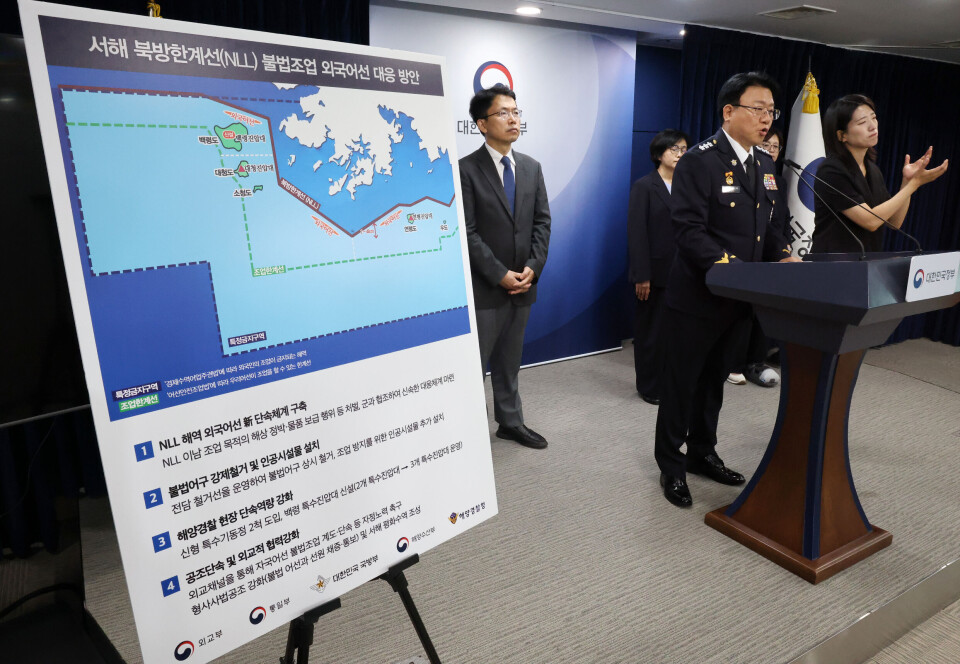
To address that, the government unveiled a plan in August to counter illegal fishing near the NLL, including a new special response unit on Baengnyeong Island and the forced removal of illegal fishing gear.
BY BYUN MIN-CHUL [cho.yongjun1@joongang.co.kr]