
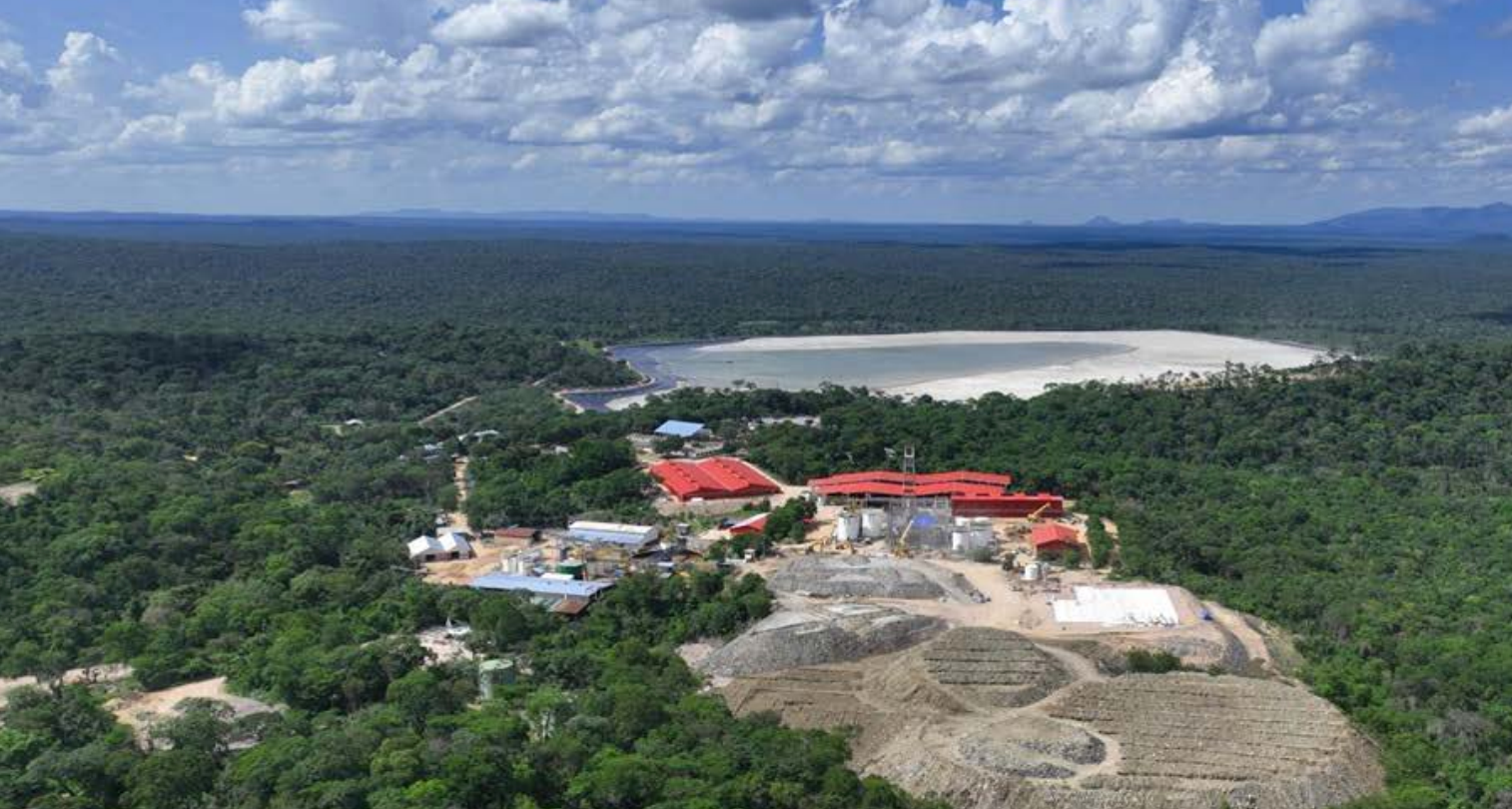
Orvana Minerals (TSX: ORV; US-OTC: ORVMF) faces a bondholders’ meeting Monday after its Bolivian unit breached financial conditions on about $25 million (C$35.5 million) in bonds issued to expand its Don Mario gold and copper plant. The stock dropped.
Empresa Minera Paitití has until Dec. 8 to restore compliance unless bondholders extend the deadline, waive the requirements or amend them. The remaining bonds mature Feb. 19, according to Orvana’s annual results released after markets closed Wednesday.
Orvana shares dropped 3% to C$1.29 Thursday morning in Toronto, valuing the company at about C$176 million ($124 million). The stock has traded between C$1.09 and C$2.93 in the past year.
“We remain focused on progressively reducing the debt incurred to fund the investment in the Don Mario plant expansion, in accordance with the agreed terms,” CEO Juan Gavidia said in a Nov. 9 update.
Higher throughput
Don Mario, located about 380 km east of Santa Cruz de la Sierra, is processing 1,300 tonnes of stockpiled oxide ore a day. Orvana aims to reach its design capacity of 1,700 tonnes a day by the end of December, weeks before the bonds mature.
Orvana expects the plant to produce 22,000 to 26,000 oz. of gold and 14 million to 16 million lb. of copper in fiscal 2027.
Don Mario produced 1,597 oz. of gold and 411,274 lb. of copper in the year ended Sept. 30, including output from commissioning tests and the initial ramp-up.
Covenant breach
The Bolivian unit breached financial covenants as of both June 30 and Sept. 30. Orvana cited the accounting impact of Bolivia’s new official exchange-rate regime and road blockades in May and June that delayed work at Don Mario. The subsidiary fully repaid its first bond program on Nov. 7.
Orvana’s liquidity forecasts assume lenders will not demand early repayment because of the covenant breaches. The company is supporting its Bolivian subsidiary through intercompany funding while Don Mario ramps up. A separate $25-million prepayment facility falls due in three instalments between April and June 2027.
The company expects to cover $111.7 million in commitments due within a year through its $42-million cash balance, forecast operating cash flow, renewed revolving credit lines and VAT refunds. Orvana’s so-called Bonds II carry a fixed annual interest rate of 10%, and the final quarterly covenant test before their February maturity falls on Dec. 31.
Stronger year
The bond talks follow a stronger financial year. Orvana swung to fiscal 2026 net income of about $36 million, compared with a year-earlier loss of $12.3 million, as revenue soared 84% to $182 million and operating cash flow more than tripled to $57.1 million. At the group level, Orvana ended September with $42 million in cash and $120.3 million in current liabilities.
At Orovalle in northern Spain, gold production rose 29% to 37,775 oz. in fiscal 2026, above its guidance range of 34,000 to 37,000 ounces. Orvana expects 27,000 to 31,000 oz. this fiscal year as crews develop deeper levels at Carlés and less skarn ore is available at Boinás.
In Argentina, Orvana plans about 19,500 metres of drilling at its Taguas project between December 2026 and May 2027, with a preliminary budget of $15 million. The program combines drilling to improve confidence in the near-surface gold-silver resource with deeper exploration for a possible copper-gold system, subject to suitable weather and site conditions.
Further exploration at Taguas will depend on available funding as Orvana manages debt repayments and completes Don Mario’s ramp-up, Orvana said.