
This post may contain links from our sponsors and affiliates, and Flywheel Publishing may receive compensation for actions taken through them.
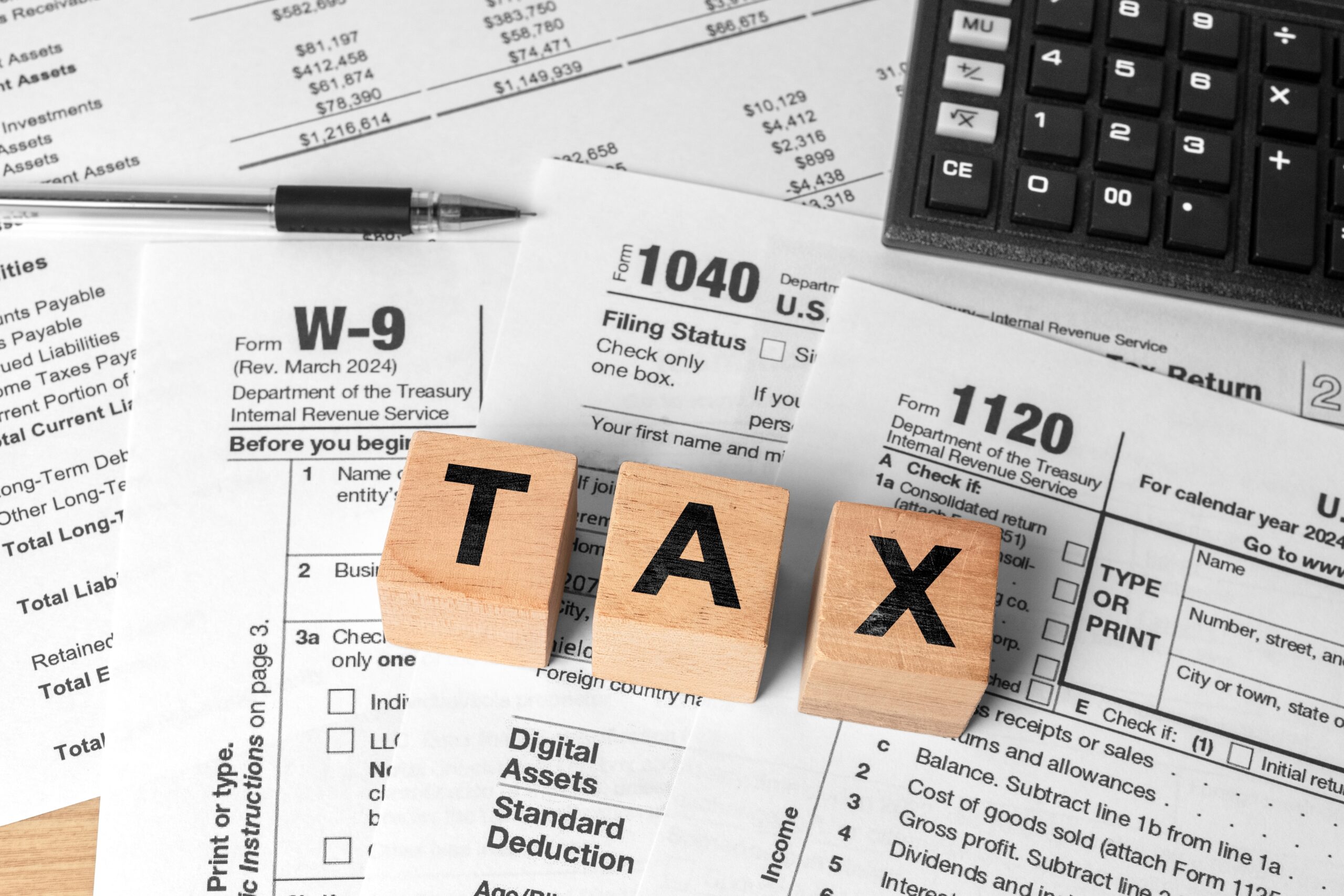
Every February, the envelopes start arriving. A consolidated 1099 from one brokerage, a separate 1099-DIV from a fund company you barely remember, a Schedule K-1 from a pipeline partnership that shows up in March, and then a corrected form that sends you back to your tax preparer. At 74, fewer forms can make tax season simpler. Three broad index funds can cover a full portfolio: Vanguard Total World Stock ETF (NYSEARCA:VT) for stocks, Vanguard Total World Bond ETF (NASDAQ:BNDW) for bonds, and iShares 0-3 Month Treasury Bond ETF (NYSEARCA:SGOV) for cash. Held at one brokerage, they produce a single consolidated Form 1099 and no K-1s.
Where Your Stack of Tax Forms Comes From
Every account and holding generates its own paperwork. Each brokerage sends a 1099. Mutual funds held directly at different fund companies send their own. Individual bonds add interest reporting, and forgotten old accounts keep mailing statements. Partnerships and MLPs issue Schedule K-1s that report your share of the entity’s income, deductions, and credits, and those often arrive late. Every extra form adds preparer fees, delays, and chances for a mismatch.
VT Puts the Global Stock Market in One Fund
VT owns roughly 10,158 stocks across the U.S., developed international markets, and emerging markets. That one position can replace a U.S. large-cap fund, a small-cap fund, an international fund, and an emerging markets fund. Its 0.06% expense ratio works out to about $6 a year per $10,000 invested. VT pays quarterly, and its trailing 12-month distributions equal roughly 1.6% of its price. On an adjusted basis, it returned 7.84% over the past year and 200.03% over ten years.
Key risk: VT declines along with global markets. It dropped 5.81% over the past month alone, and its foreign holdings bring currency swings.
BNDW Covers Investment-Grade Bonds Worldwide
BNDW holds two Vanguard funds. August 31, 2026[1] shows that Vanguard Total Bond Market ETF (NASDAQ:BND) made up about 51.4% of assets and Vanguard Total International Bond ETF (NASDAQ:BNDX) about 48.6%. That combination can replace a Treasury fund, a corporate bond fund, and a ladder of individual bonds that each mail their own paperwork. The expense ratio is 0.05%, or about $5 per $10,000. BNDW pays monthly, and its trailing 12-month payouts equal roughly 4.4% of its price, including a larger year-end distribution in December 2025.
Key risk: When interest rates climb, bond prices move the other way. BNDW’s adjusted price is up just 0.42% over five years. Its international bonds are hedged to the dollar, which smooths out currency swings but carries hedging expenses that affect returns.
SGOV Holds Your Cash Reserve in Treasury Bills
SGOV owns U.S. Treasury bills that mature within three months, with about $106 billion[2] in net assets. It can replace scattered CDs, money market statements, and idle bank balances. The expense ratio is 0.09%, or about $9 per $10,000. SGOV pays monthly, with trailing 12-month distributions near 3.6% of its price. Its prospectus notes that certain states and localities may exempt distributions attributable to interest from U.S. federal government obligations[3].
Key risk: The yield tracks short-term rates. SGOV’s October distribution fell to $0.300547 per share from $0.346643 a year earlier, and the fund offers no growth.
How to Consolidate Without a Surprise Tax Bill
- Accounts are the usual starting point. Moving everything to one brokerage usually removes the most forms.
- K-1 issuers are a common first focus. Partnerships and MLPs add the most complexity and are typically the latest arrivals.
- Timing matters in taxable accounts. Selling appreciated holdings can create a tax bill, so investors often move some positions over several years.
- IRA trades carry no immediate tax. Trades within an IRA don’t create a tax bill.
You are likely already taking required minimum distributions from traditional IRAs. The IRS requires you to figure a separate required minimum distribution for each IRA, though you can total them and withdraw from one or more accounts. Fewer IRAs mean fewer calculations to track, and one fewer chance to trip the per-account RMD rule that is one of nine quiet tax traps we mapped in a free guide for retirees.
A Simpler Portfolio Helps the People Who Come Next
Three funds come with real trade-offs. You give up sector leans, favorite stocks, and fine-tuned bond choices. VT and BNDW still pay taxable distributions if you hold them outside a retirement account, so your single 1099 will still carry several lines. And your stock-and-bond mix still needs a periodic look as your spending changes.
For a 74-year-old, the main gain from that trade is simplicity. One brokerage, three tickers, and one consolidated form make tax season faster and cheaper. They also make life easier for the adult child, trustee, or executor who may one day manage these accounts or settle your estate.
Contact [email protected] for any questions or corrections.