
By Devinder Kumar
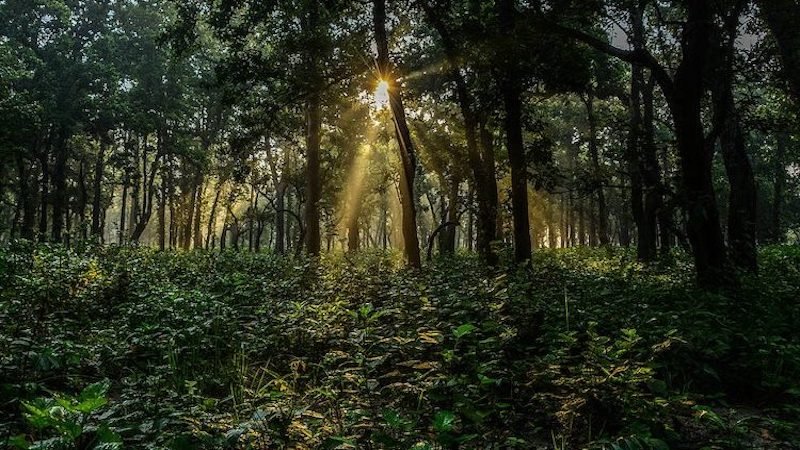
Nepal is richly endowed with forest resources, with a coverage of about 6.4 million hectares. Between 1992 and 2016, the country nearly doubled its forest cover, moving from 26 percent to 45 percent of its land area. The progress in forest regeneration and improvement is attributed to the country’s relative success in sustainable community-based forest management.
The country’s indigenous Peoples and Local Communities share a symbiotic relationship with forests since generations, nurturing the forests and vice versa. However, this relationship has been at risk due to the multifold effects of climate change—in the absence of an adequate access to resources.
In a move to amend the situation, World Bank has established a “dedicated grant mechanism” enabling access to necessary resources and providing support to lower emissions.
The forest landscape of Nepal is home to Indigenous Peoples and Local Communities who draw on forest resources for food, medicine, livelihoods, cultural products, and spiritual well-being. They are at the heart of community-led forest conservation for generations.
But climate change and its associated consequences are threatening this multi-generational relationship, magnifying their vulnerabilities and, by extension, degrading gains in the country’s forest conservation efforts and impacting the country’s climate goals and sustainable development efforts.
The Indigenous Peoples and the Forests
The Terai Arc Landscape (TAL) lying in the southern plains of Nepal, is a rich ecological region with a high concentration of Indigenous Peoples, women-headed households, Dalits, Madhesis, and Muslims among other local communities.
One of Nepal’s 60 state-recognized Indigenous groups, the Chepangs, reside in the steep Chure range of the TAL. The Chepangs, like many other indigenous communities, share a unique relationship with the forests. Chiuri (Butter tree), Chamero (bat), and Chepang – the connection between the three “Cs” – is a core part of this semi-nomadic group’s identity.
“Without bats, the Chiuri tree would not bloom and without Chiuri, the Chepangs would lose a key source of food, medicine, and income”, says Nara Jung Praja, a Chepang leader, and Ward Chair of Kalika 10 in Chitwan, an area predominantly inhabited by Chepangs.
Over time, indigenous practices have evolved embracing value-addition techniques. For example, Chiuri is no longer just a resource for community subsistence, it is also a critical source of income for the Chepang community.
The oil extracted from the seeds, known as Chiuri ghee, is used for cooking and the pressed seeds are turned into powder and used as fertilizers. Honey formed in the Chiuri tree is highly valued for its medicinal properties and can be sold for substantial prices.
Like the Chepangs, Indigenous Tharus, known as the “people of the jungle”, make up the largest segment of the Terai population and have lived in harmony with nature for generations. Tharu culture and tradition center around the forests. Many Tharu women rely on shrubs to sustain the art of weaving baskets as a source of income.
For Rebika Kumari Chaudhary of Deuki Community Forest User’s Group in Dang, frugal use of forest resources and controlling forest fire are some of the ways her community was able to restore the forests.
´The forest-dependent indigenous peoples and local communities like Chepang and Tharus are critical to the sustainable management of forests in Nepal. With Nepal’s model of community-based forest management system, these communities have played a key role in the restoration of forests.
Equitable Access Remains a Challenge
While the communities like Tharus and Chepangs are at the core of community-based forest management, issues of inclusion and equitable access to resources within forest-dependent communities remain a challenge.
In the Terai region, Indigenous Peoples, Dalits, Madhesis, and Muslims are among the groups classified as marginalized which is evidenced by multiple human development indicators including low levels of literacy, and lack of equitable access to resources, basic services, and decision-making opportunities.
The 2018 National Social Inclusion Survey shows that Dalit community, the most marginalized group in Nepal, falls below the national average on all but two of the 15 development indicators. Many indigenous groups fall on the lower ranks of these indicators as well. Reported discrimination is also much higher among these groups, particularly for the Dalit community.
The unequal positioning of these groups becomes particularly apparent when communities face climate-related impacts such as unusual weather events and natural disasters.
Marginalized communities live in remote and challenging terrains and are more exposed to climate risks. They have greater dependence on natural resources for their day-to-day subsistence which also corresponds to increased vulnerability to climate hazards and disasters.
Enhancing inclusivity in Nepal’s forest management regime requires addressing key barriers that keep the most vulnerable groups from participating and accessing benefits from sustainable management of forests.
This includes supporting the participation of indigenous and marginalized groups in various levels of decision-making and policy formulation, expanding access to information on forest laws, policies, and climate-focused programs, building their knowledge and capacity related to sustainable forest management, and creating an enabling environment for constructive dialogue and equitable mechanisms for benefits-sharing in community forestry.
Enhancing Knowledge, Capacity, and Participation
In Nepal, the World Bank’s investments in the forestry sector include initiatives that support inclusion and build the capacities of marginalized communities to participate in and benefit from climate-focused programs.
The Dedicated Grant Mechanism (DGM) and the Enabling Access to Benefit while Lowering Emissions (EnABLE) are two programs in Nepal that support forest-dependent Indigenous Peoples and Local Communities to strengthen their capacity and participation in Nepal’s REDD+ processes at the local, national, and global levels.
The DGM project specifically complements the World Bank’s Forest for Prosperity Project, which is operational in the Lumbini and Madhesh provinces. The EnABLE program complements the World Bank-financed Emissions Reductions Program (ER-P) that operates across the TAL landscape, particularly targeting disadvantaged and marginalized groups in four ER-P districts.
In Nepal, EnABLE has contributed to enhancing local knowledge about climate change and sustainable forest management by producing various knowledge products highlighting the critical role that Indigenous Peoples and Local Communities play in Nepal’s community-driven forest conservation.
This includes a comic book format information booklet that aims to explain the concept of climate change and provide basic information about Nepal’s Emissions Reduction Program; a series of videos aimed at highlighting the role of the Indigenous Peoples and Local Communities in the success of Nepal’s community-driven forest management; and the Get REDDy podcast series in Nepali which aims to provide easily understood information on climate change and related carbon financing regimes to help communities in their engagement with REDD+ programs and activities.