
Unlock the White House Watch newsletter for free
Your guide to what Trump’s second term means for Washington, business and the world
New York City’s pension fund could begin reinvesting in Israeli government bonds, even though new mayor Zohran Mamdani supports divesting from Israel over its conduct in the war in Gaza.
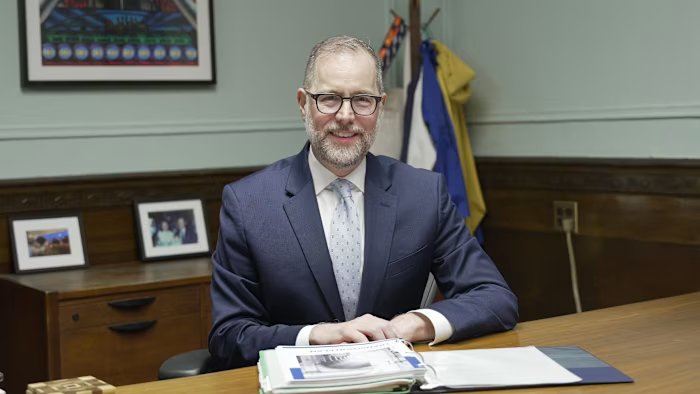
“The Israel bonds have performed very well and they continue to be investment grade rated,” Mark Levine, the city’s chief financial officer, told the FT. “My fiduciary responsibility is to make investment decisions based on that record of performance.”
Any investment would bring him into conflict with New York’s mayor. One of Mamdani’s first acts when he took office on January 1 was to revoke an executive order issued by his predecessor Eric Adams that barred city agencies from boycotting or divesting from Israel.
A staunch critic of Israel’s treatment of Palestinians, Mamdani said in a CBS interview ahead of taking office that New York “should not have a fund that is invested in the violation of international law”.
Levine, who is Jewish, said that while he had “plenty of criticisms” of the Israeli government and had “literally been out in the street protesting against” its policies, there was a need to separate investment decisions from political considerations.

“I have deep criticisms of the policies of the US government,” he said. “But we continue to own US Treasury debt.”
The debate over investment in Israel bonds highlights the tension between maximising returns of public funds and responding to social and ethical pressures.
“It illustrates how squishy all this is,” said Zachary Christensen, a researcher at the Reason Foundation think-tank. “It’s very easy to divest and to back it up with fiscal or fiduciary reasoning — and it’s easy not to as well.”
Mamdani did not respond to requests for comment.
Levine’s proposal to resume purchases of Israel bonds could reverse a 2023 decision by his predecessor, Brad Lander, to halt new investment in Israel bonds as existing holdings matured. Lander said at the time that the move was consistent with the city’s policy of avoiding foreign sovereign debt.
During his election campaign last year, Levine pledged to reinvest New York City pension funds in Israel bonds, which he said had “paid solid dividends for 75 years”.
Ten-year, dollar-denominated Israel bonds — which require a minimum investment of $25,000 — currently offer yields of 5.2 per cent, compared with 4.2 per cent for US Treasuries of a similar maturity.
The yield gap has prompted some US public funds to jump in. Palm Beach County in Florida has become the world’s largest holder of Israel bonds, with total holdings of $1bn, or one-sixth of its assets, after comptroller Mike Caruso authorised a new $350mn purchase this month.
“Israel bonds give us the highest rate of return that we can earn on all of the other investments that we are authorised by the state to invest our tax dollars in,” said County Commissioner Gregg Weiss at a press conference last week.
Levine said he was prepared for further opposition as he weighs whether to resume purchases of Israel bonds. Acknowledging many people, including the mayor, have “sharply different opinions”, he said he “cares a lot” about their views and would “continue to dialogue” with them.
He added that any investment in Israel would make up only a “tiny” share of the $311bn pension fund’s overall portfolio and that a decision would be made after discussions with trustees.
Some analysts said Levine had focused heavily on the strengths of Israel bonds but should pay closer attention to the risks that accompany their higher returns.
“There is no free lunch,” said Christensen. “Any discussion of the issue that does not grapple with both risk and potential returns is problematic.”