
Close Menu
Fund Focus News
    Facebook X (Twitter) Instagram
    Trending
    • Market upheavals drive biggest gains since 2008 for macro hedge funds
    • Shawford Springs Christmas fayre raised funds for charity
    • XRP ETF Reach $1.21B as Asset Managers See a ‘Third Path’
    • Top ETFs to Invest in 2026
    • Understanding Mutual Fund Yield: Calculation, Benefits, and Examples
    • Evaluating Mutual Fund Risk-Return Tradeoffs: Key Metrics
    • XRP ETFs see steady inflows as total assets hit $1.2B
    • Gold ETFs Boom: GLD Is Larger in Size But AAAU Is More Affordable
    Facebook X (Twitter) Instagram
    Fund Focus News
    • Home
    • Bonds
    • ETFs
    • Funds
    • Investments
    • Mutual Funds
    • Property Investments
    • SIP
    Fund Focus News
    Home»Bonds»Oklahoma measure would allow bond-issuing infrastructure districts
    Bonds

    Oklahoma measure would allow bond-issuing infrastructure districts

    October 22, 2024


    Oklahoma would open the door to the creation of bond-issuing public infrastructure districts if voters approve a constitutional amendment on the Nov. 5 statewide ballot.

    State question 833 would allow property owners to petition their municipality to create a PID as a way to finance roads, sidewalks, parks, and water and sewer services through the issuance of bonds backed by a property tax assessment applied only within the district.

    It was placed on the ballot with the Republican-controlled legislature’s passage of Senate Joint Resolution 16 in a 38-7 Senate vote in March and a 66-27 House vote in April. A simple majority vote is required for passage in the election.
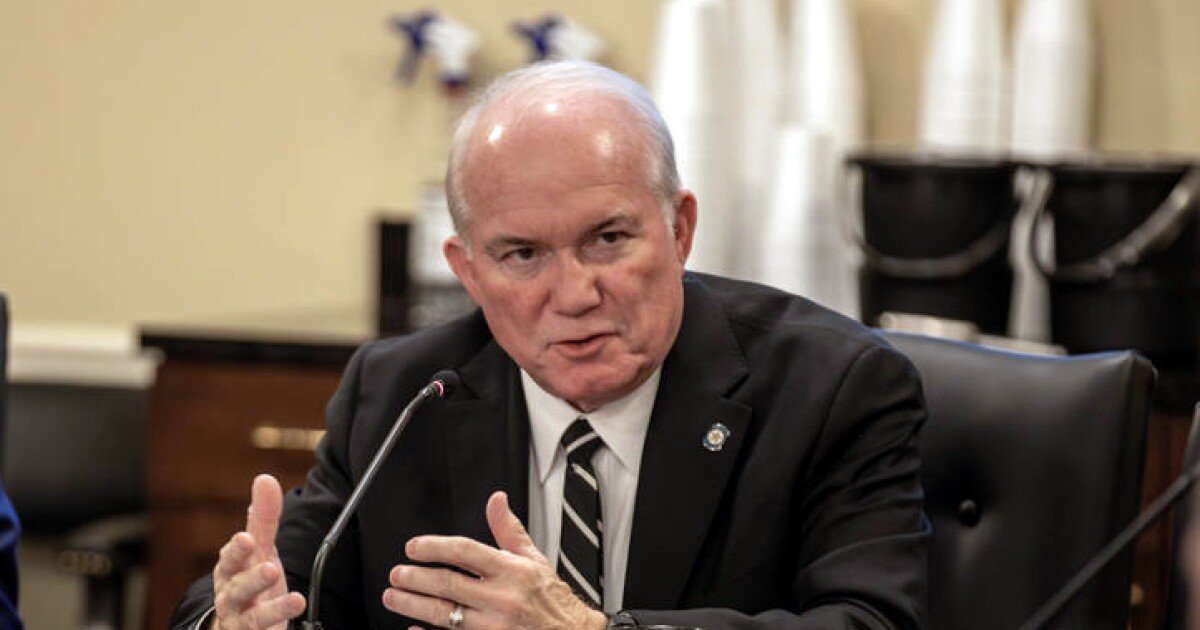
    Oklahoma State Sen. John Haste
    “This will help a developer or developers looking to add housing or it could be for business as well,” said Oklahoma state Sen. John Haste.

    Oklahoma Senate

    Sen. John Haste, R-Broken Arrow, who sponsored the measure, said the districts would be “an additional tool in the tool belt” to spur housing development and support the state’s growth.

    “It allows a city not to have to utilize their own bonding capacity,” he told The Bond Buyer. “This will help a developer or developers looking to add housing or it could be for business as well for the infrastructure to support a development because sometimes the city may not have the bonding capacity or the ability to do some of the infrastructure needs and things like roads or sidewalks, wastewater, that kind of stuff within a particular development.”

    Oklahoma ranked 12th among states for net domestic migration in 2023 with a net increase equivalent to 1.9% of its population, according to a Kansas City Federal Reserve report.

    In a Facebook video post against the ballot measure, Democratic State Rep. Andy Fugate offered a scenario in which a developer who owns property could be the only entity pursuing a PID and bond financing for public infrastructure that he said was intentionally left undefined by amendment backers.

    “Since only one person owns the land, that person can petition the city to make that square mile of public infrastructure district,” he said. “That person then sells bonds to build public infrastructure like a park, tennis courts, a swimming pool, and a golf course, all conveniently inside that gated community. The new homeowners will have awesome infrastructure that’s public to them.”

    To ensure their higher property tax bills as a result of the infrastructure improvements don’t go even higher, homeowners would vote against funding requests like school bonds, according to Fugate. 

    “This state question is an easy grift that profits a handful at the expense of the rest of us,” said Fugate, who called SJR 16 the “triple crown of bad policy” during House debate on the measure.

    Haste said 100% of the property owners would have to sign a petition to create a PID, which would then need city council approval for the district and its governing documents. The property tax assessment would be capped at 10 mills ($10 for every $1,000 of a property’s assessed value) and the amount of bonds cannot exceed 10% of the district’s future property value, he said, adding that prospective property owners would have to be advised of the PID’s existence. If the amendment passes, SJR 16 authorizes the legislature to enact laws to implement PIDs.

    “That’s why part of the guardrails we already have in place are there based on what other states have done,” he said. “But also additional things that are necessary will be run in legislation next year.”

    Similar districts have proliferated in states experiencing population increases and housing shortages as a way to have developments pay for their own infrastructure needs through bond sales that may or may not be rated by a major rating agency. 

    Of the 2,423 metropolitan districts in Colorado, Moody’s Ratings rates 69, which have more than $1.7 billion in combined outstanding debt. The ratings range from A2 to Ba3 with the majority rated A3 or Baa1. 

    Metropolitan districts, which are subject to state and local government regulatory oversight, were launched in some cases with “eligible voters” authorizing billions of dollars of bonds backed by property taxes. In the early stages of a project, those voters typically include only the developer.  

    A 2023 Colorado law requires district service plans to list maximum property tax levies and debt issuance and limits the interest rate on bond issues purchased by district developers.

    Coloradans for Metro District Reform unsuccessfully pushed for a measure last year that would have prevented developers from buying bonds issued by districts they created. 

    Some of the Colorado districts have faltered financially or faced an inadvertent threat from the ballot.

    There have been 52 metro districts that have defaulted, according to Municipal Market Analytics’ database, which was created in 2009, with 11 currently active defaults. 

    A proposed constitutional amendment that would have imposed a 4% cap on statewide property tax revenue growth sparked concerns over its implementation and fears it would raise borrowing costs and lead to litigation, particularly against metro districts.

    Under a deal with amendment backers that led to the initiative’s removal from the Nov. 5 ballot, the Democratic-controlled legislature passed House Bill 1001 during an August special session called by Gov. Jared Polis. The legislation, which Polis signed into law Sept. 4, expands on the enactment earlier this year of $1.3 billion in tax relief through lower assessments rates and a cap on property tax revenue growth for 2024 and 2025.

    In Texas, districts that finance water-related projects and in some cases other infrastructure like roads and parks, issued nearly $4.15 billion of tax-supported and $2.3 billion of revenue-supported debt in fiscal 2023, according to the state’s Bond Review Board. Outstanding debt for municipal utility districts and other districts totaled $45.42 billion.

    In an April report on Texas MUDs, Moody’s said operating fund reserves were strong, while state oversight keeps debt burdens in line with tax base growth. Its ratings for 502 MUDs range from Aa2 to Ba1. 

    “Median debt service as a percentage of expenditures declined for lower-rated MUDs as newly established districts had significant tax base and revenue growth from new development,” the report said. “The positive trajectory of the sector is evidenced by the 99 upgraded districts in 2023.”

    The state has had occasional eye-popping initial voter-approved bond authorizations. A single vote by a property owner in Texas in the November 2023 election authorized the Legacy Municipal Management District in Webb County to issue $2.7 billion of bonds for water, wastewater, and drainage system facilities, nearly $3.8 billion of bonds for roads, $9.7 billion of debt refunding, and the ability to levy taxes to pay off the debt.  

    The bonds will finance infrastructure for 13,000 acres of land owned by a family in the Laredo area that is targeted for residential, commercial, retail, and industrial use. 

    Lund Farm MUD has more than $1.1 billion of bonds on the Nov. 5 ballot to fund infrastructure for a mixed-use residential development approved by the Elgin City Council last year.

    In February, Rockwall County reportedly sued a MUD for holding an “invalid” single-voter election in November 2022 that authorized about $833 million of bonds. 


    Source link

    Share. Facebook Twitter Pinterest LinkedIn Tumblr Telegram Email

    Related Posts

    How to Calculate Convexity Adjustment in Bonds, with Formulas

    December 19, 2025

    Understanding Bullet Loans and Bonds: Key Concepts Explained

    December 19, 2025

    Hong Kong Issues One Of The Biggest Digital Green Bonds

    December 19, 2025
    Leave A Reply Cancel Reply

    Top Posts

    The Shifting Landscape of Art Investment and the Rise of Accessibility: The London Art Exchange

    September 11, 2023

    Charlie Cobham: The Art Broker Extraordinaire Maximizing Returns for High Net Worth Clients

    February 12, 2024

    Shawford Springs Christmas fayre raised funds for charity

    December 21, 2025

    The Unyielding Resilience of the Art Market: A Historical and Contemporary Perspective

    November 19, 2023
    Don't Miss
    Mutual Funds

    Market upheavals drive biggest gains since 2008 for macro hedge funds

    December 21, 2025

    Stay informed with free updatesSimply sign up to the Hedge funds myFT Digest — delivered…

    Shawford Springs Christmas fayre raised funds for charity

    December 21, 2025

    XRP ETF Reach $1.21B as Asset Managers See a ‘Third Path’

    December 21, 2025

    Top ETFs to Invest in 2026

    December 21, 2025
    Stay In Touch
    • Facebook
    • Twitter
    • Pinterest
    • Instagram
    • YouTube
    • Vimeo
    EDITOR'S PICK

    Andhra Pradesh crosses ₹20 lakh crore mark in investments so far: CM Naidu

    November 14, 2025

    A Focused Fund With A Large Cap Bias: For The Core Portfolio

    September 20, 2025

    ‘I’ve received conflicting advice’: I’m retiring at 63 with $1.5 million saved. Is 70/30 equities/bonds too risky?

    September 22, 2025
    Our Picks

    Market upheavals drive biggest gains since 2008 for macro hedge funds

    December 21, 2025

    Shawford Springs Christmas fayre raised funds for charity

    December 21, 2025

    XRP ETF Reach $1.21B as Asset Managers See a ‘Third Path’

    December 21, 2025
    Most Popular

    🔥Juve target Chukwuemeka, Inter raise funds, Elmas bid in play 🤑

    August 20, 2025

    💵 Libra responds after Flamengo takes legal action and ‘freezes’ funds

    September 26, 2025

    ₹10,000 monthly SIP in this mutual fund has grown to ₹1.52 crore in 22 years

    September 17, 2025
    © 2025 Fund Focus News
    • Get In Touch
    • Privacy Policy
    • Terms and Conditions

    Type above and press Enter to search. Press Esc to cancel.