
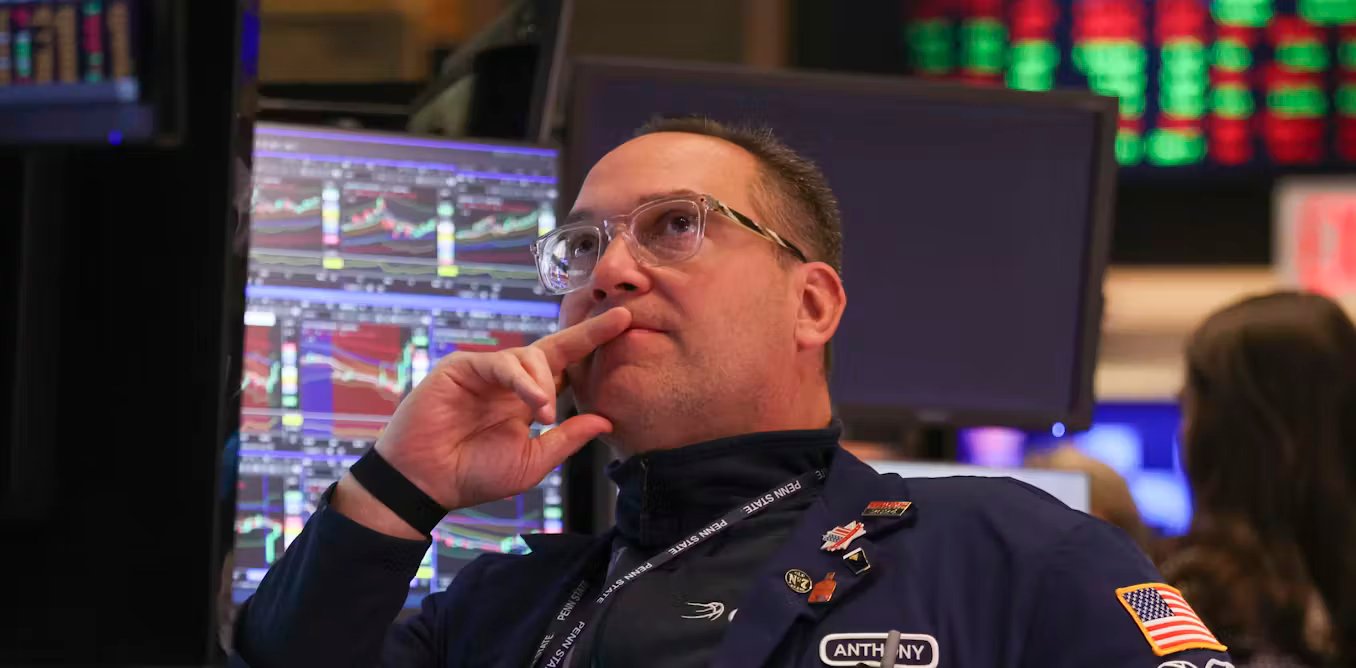
When a conflict escalates, financial markets respond within minutes. That reaction is not just panic or speculation – it is a kind of collective judgement about what might happen next.
The conflict between the US, Israel and Iran, which started on Saturday, triggered a sharp jump in oil prices when Asian markets opened on Monday (rising by as much as 13% amid fears of supply disruption). Major Gulf indices fell steeply, and in some cases trading was suspended amid volatility.
At the same time, investors moved into so-called “safe-haven” assets. Gold prices rose, and demand increased for traditionally defensive currencies such as the US dollar and Swiss franc.
This may sound like distant noise or random financial moves. In reality though, it is one of the clearest signals we have about how serious investors think the situation with Iran could become.
Markets are forward-looking. They do not only react to what has happened – they try to price what they expect will happen. Here’s how to read the signals.
Oil: the first warning light
Oil is usually the first market to move during Middle East tensions. That is because the region plays a crucial role in the global supply of energy. A particular point of concern is the strait of Hormuz, a narrow shipping route through which roughly a fifth of the world’s oil exports pass.
When oil prices jump, it does not mean supply has already stopped. It means traders believe there is a higher risk that supply could be disrupted.
Think of it like insurance. If the risk of damage rises, the price of insurance goes up immediately – even if no damage has yet occurred. Oil markets work in a similar way. Prices reflect the probability of trouble.
Why does this matter? Because oil affects almost everything. Higher oil prices push up fuel costs. Fuel affects transport. Transport affects food prices and goods on supermarket shelves. If oil remains expensive for weeks or months, it can push inflation higher.
So when oil spikes, markets are signalling that they see real economic risk – not just political drama.
At present, the scale of the oil move suggests markets are seriously reassessing the probability of disruption. The crucial question is persistence. If prices stabilise quickly, investors may believe escalation will be contained. If they remain elevated, markets are signalling expectations of prolonged instability.
Bonds: investors looking for safety
The second place to look is the bond market. A bond is essentially a loan. When you buy a government bond, you are lending money to a government in exchange for interest. US government bonds (Treasuries) are widely seen as one of the safest investments in the world.
In times of uncertainty, investors often move their money into these safer assets. This is known as “flight to safety”. When many people buy bonds at once, bond prices go up and their yields (the interest rate that is paid) go down.
You don’t need to follow bond charts every day to understand the message. If investors are accepting lower returns just to keep their money safe, it tells us they are worried.
If oil prices are rising while investors are piling into safe government bonds, markets may be signalling two concerns at the same time: higher short-term prices and weaker economic growth ahead. That is a difficult combination for any economy. Bond markets, in other words, are measuring anxiety.
Stock markets: how long will this last?
Stock markets reflect confidence in companies and economic growth. When shares fall sharply, it often means investors expect profits to be squeezed or business conditions to worsen. But the key issue is duration.
If stock markets fall briefly and then stabilise, investors may believe the conflict will be contained. If losses spread and persist, it suggests markets expect a longer or more disruptive episode.

EPA/STRINGER
Markets are not predicting headlines. They are estimating how long uncertainty might last and how deeply it might affect trade, energy supplies and consumer confidence.
Modern financial markets are highly interconnected. A shock in one region can ripple quickly across continents because supply chains, investment funds and large companies operate globally. That is why even a regional conflict can affect pension funds and savings accounts elsewhere.
Equity markets are not judging politics. They are estimating economic consequences.
What this means for markets – and for the conflict
Taken together, oil, bonds and equities provide a temperature check of expectations. Right now, markets are clearly pricing higher geopolitical risk. The sharp initial oil move shows concern about supply. The shift towards safer assets signals caution. Equity volatility reflects uncertainty about the duration of the conflict.
However, markets are not yet behaving as though they expect a systemic global crisis. We are seeing repricing – not collapse. That distinction matters.
As a finance expert, I believe markets are acting as early warning systems. If escalation of the conflict threatens to cause sustained disruption to energy infrastructure or shipping routes, we would expect the oil price to stay elevated, continued safe-haven flows and broader equity declines.
That would tighten financial conditions globally because higher energy prices push up inflation, falling stock markets reduce household wealth and confidence, and increased demand for safe assets raises borrowing costs for business and governments. In other words, credit becomes more expensive, investment decisions are delayed and consumers become cautious. This could slow economic growth.
If, however, tensions stabilise or de-escalate, markets may reverse quickly. Financial systems adjust rapidly when perceptions of risk change.
The broader implication is that modern conflicts transmit economic effects almost instantly through markets. Even before physical supply chains are interrupted, expectations alone can influence inflation, investment and policy decisions.
Markets do not determine the course of a conflict. But they shape the economic environment in which political decisions are made. For now, they are signalling caution – not panic. Whether that caution turns into something more severe will depend less on today’s headlines and more on whether disruption proves temporary or structural. That is what investors are watching. And it is what we should be watching too.