
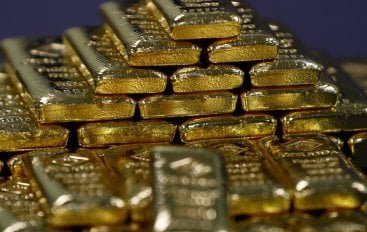
Gold and silver exchange traded funds (ETFs) rallied sharply in Monday’s trade, tracking a strong rebound in precious metals after extreme volatility over the past few sessions. The surge came as gold and silver prices recovered a part of their recent losses, triggering renewed buying interest across bullion-linked ETFs.
Gold futures with April expiry rose nearly 2 per cent to trade around Rs 1,58,500 per 10 grams during morning hours, while June expiry contracts also gained close to 2 per cent. Silver futures saw a much sharper move, with March expiry contracts jumping around 6 per cent to Rs 2,64,885 per kilogram, while May contracts advanced nearly 4 per cent.
Silver Outperforms Gold ETFs
Silver ETFs outperformed gold ETFs by a wide margin. UTI Silver ETF surged over 11 per cent to Rs 252.08, while Nippon India Silver ETF (Silver Bees) jumped more than 10 per cent to around Rs 247. HDFC Silver ETF, Tata Silver ETF and other silver-linked funds also gained over 10 per cent each.
Zerodha Silver ETF, SBI Silver ETF, Aditya Birla Sun Life Silver ETF, DSP Silver ETF, Kotak Silver ETF, Groww Silver ETF and ICICI Prudential Silver ETF were up nearly 8 per cent each, while Mirae Asset Silver ETF, 360 ONE Silver ETF, Axis Silver ETF and Motilal Oswal Silver ETF gained around 7 per cent by 9:30 am.
Gold ETFs posted comparatively moderate gains. Union Gold ETF and Angel One Gold ETF rose over 3 per cent each, while 360 ONE Gold ETF, LIC MF Gold ETF, Kotak Gold ETF, Motilal Oswal Gold ETF, Nippon India Gold ETF and SBI Gold ETF advanced around 3 per cent. Zerodha Gold ETF, HDFC Gold ETF, Axis Mutual Fund Gold ETF and UTI MF Gold ETF were up more than 2 per cent.
Recent Sell-off Driven By Margin Hikes, Dollar Strength
The rebound follows a sharp sell-off in precious metals that erased a portion of their record-breaking January gains. The decline was triggered after CME Group raised margin requirements on gold and silver contracts, forcing leveraged traders to unwind positions. Selling pressure intensified after US President Donald Trump nominated Kevin Warsh as the next US Federal Reserve Chair, a move seen as hawkish and supportive of a stronger dollar — typically negative for bullion prices.
Silver, in particular, has seen heightened volatility after an exceptional rally in 2025, having surged around 50–60 per cent year-to-date on strong industrial demand, supply constraints and safe-haven flows.
Saurabh Jain, Saurabh Jain, Co-founder and CEO, Stable Money, said improving trade sentiment has also supported investor confidence. “Following the recent India–US trade agreement, where tariffs on Indian goods were reduced to around 18 per cent, the outlook for exports has improved. This has coincided with a preference among investors for disciplined, long-term investment approaches,” he said.
Jain added that investors are increasingly using ETFs through SIPs to manage volatility. “A phased approach helps investors stay aligned with the long-term role of precious metals as portfolio diversifiers during periods of global uncertainty. Precious metals ETFs offer a regulated and liquid way to gain exposure without the complexities of physical ownership,” he said.
Correction Technical, Long-term Fundamentals Intact
Hareesh V, Head of Commodity Research, Geojit Investments Limited, said the recent fall was largely technical. “A dramatic unwind hit gold and silver markets, driven by higher margin requirements and a stronger dollar. The correction was amplified by extreme overbought conditions after gold and silver touched unprecedented highs,” he said, adding that the drop did not reflect a deterioration in core fundamentals.
Renisha Chainani, Head of Research, Augmont, said tariff reductions may have a short-term moderating impact on domestic bullion prices. “Lower policy uncertainty and a stronger rupee can lead to short-term consolidation in ETF inflows. However, ETF demand in India is increasingly driven by diversification, currency hedging and global macro risks,” she said.
Chainani added that expectations of lower global interest rates, ongoing geopolitical risks and rising investor awareness should continue to support steady long-term inflows into gold and silver ETFs, with price corrections likely to attract incremental allocations rather than trigger sustained outflows.