

Exchange-traded funds are expanding beyond their traditional role as low-cost index vehicles, as investors increasingly use ETFs to access actively managed strategies. Fixed income is emerging as a key area where ETF structures are changing how capital is deployed.
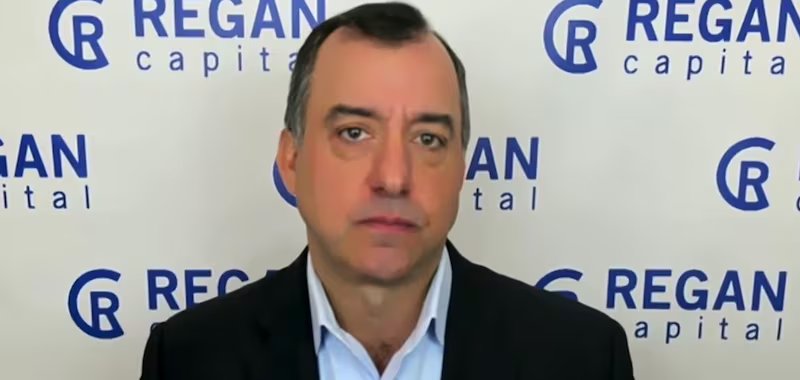
BNN Bloomberg spoke with Skyler Weinand, chief investment officer at Regan Capital, about why active fixed income strategies are increasingly being delivered through ETFs and how agency mortgage-backed securities are becoming more accessible through the ETF structure.
Key Takeaways
- ETFs are increasingly being used as vehicles for active management, not just low-cost index exposure.
- Fixed income ETFs remain relatively early in their development, particularly in complex bond markets.
- Agency mortgage-backed securities offer a large, government-backed market with limited interest-rate risk.
- Active management in mortgage-backed securities can help control duration and capture pricing inefficiencies.
- Shifting rate dynamics have highlighted how different duration profiles can materially affect ETF performance.
Read the full transcript below:
ANDREW: One of the advantages of ETFs is low-cost, efficient investing tied to an index. Our guest says many investors are now turning to ETFs not just for low fees, but because actively managed strategies may improve returns. We’re joined now by Skyler Weinand, chief investment officer at Regan Capital. Skyler, thanks very much for joining us.
Just tell us about your firm. You’re an ETF provider — are you focused only on the U.S. market, or do you offer any products in Canada?
SKYLER: We’re based in Dallas, Texas. We manage about US$3.7 billion in assets, more than half of which is in ’40 Act funds. We run a large mutual fund, we have two U.S.-based ETFs, and we also have a usage-based vehicle for non-U.S. investors.
Our view on mutual funds versus ETFs is a bit nuanced, but ETFs are definitely the way of the future for liquid fixed-income products.
ANDREW: Let’s talk about two of your products, starting with MBSF. It targets the agency mortgage bond floating-rate market, which is enormous. What is it designed to do?
SKYLER: There’s about US$500 billion in agency floating-rate mortgage bonds. This has traditionally been a bank product. If Silicon Valley Bank had owned floaters in 2022 and 2023, it would have been fine, but instead it bought fixed-rate paper for an extra 20 to 40 basis points.
This is a large market with very little interest-rate duration and very little interest-rate risk. It’s government-guaranteed, backed by U.S. government-sponsored enterprises like Fannie Mae and Freddie Mac. You get monthly floating-rate income with no credit risk.
Yields are currently attractive. You’re picking up roughly one to one-and-a-half percentage points over U.S. Treasuries. This market was pressured in 2021 and 2022 when the Federal Reserve started raising rates, largely due to a lack of buyers. Before 2021, investors were earning about 25 basis points over Treasuries. Today, that spread is closer to 100 basis points.
ANDREW: You’ve told us about MBSF. Now tell us about MBSX. What does this offer investors?
SKYLER: MBSX is our sister fund focused on fixed-rate agency mortgage-backed securities. MBSF is the floating-rate product, while MBSX is fixed rate.
There are a number of mortgage-backed ETFs that simply track the index, but that index is very bifurcated. You have bonds issued at two to three per cent coupons after COVID-19 — those borrowers are unlikely to refinance, so you’re buying very long-duration paper. On the other end, you have new-issue bonds where borrowers are refinancing aggressively.
There’s a middle ground where you can buy high-quality securities at 85 to 90 cents on the dollar, maintain duration of roughly two to three years and still have meaningful upside. MBSX represents our best ideas in the fixed-rate agency MBS market.
That market is more than US$10 trillion in size, yet there are only four or five ETFs focused on it. Through active management, we aim to keep duration in the two- to three-year range while capturing upside from prepayments.
ANDREW: I’m looking at a return comparison on Bloomberg going back to May 1 of last year, around the time MBSX launched. Total return for MBSX is close to nine per cent, compared with about 4.5 per cent for MBSF. Both also outperformed TLT, the long-duration Treasury ETF. Why has MBSX done better?
SKYLER: Last year, interest rates declined, so even owning the index generated returns of seven to eight per cent as rates fell roughly 65 basis points. Most of that move occurred in the belly of the yield curve, particularly the two- to seven-year range.
TLT is focused on the 20-plus-year part of the curve, which actually moved higher.
ANDREW: Just to clarify, when you say the “belly of the curve,” what do you mean?
SKYLER: Treasury bills cover zero to one year. The belly of the curve refers to roughly the two- to seven-year maturities. The long end of the curve is the 10- to 30-year range.
Most money managers prefer duration between about three and six years. The index duration is closer to six years. Because of the duration profile in MBSX and fixed-rate products more broadly, they outperformed floating-rate strategies last year — though that was the first time in a long while.
Floating-rate exposure still plays an important role for banks and insurance companies. But more broadly, fixed income is dominated by fixed coupons. Across Treasuries, corporates and mortgage-backed securities, you’re talking about a roughly US$50 trillion market, and only about four to five per cent of it is floating rate.
ANDREW: Skyler, thank you very much. We appreciate the insight into the U.S. fixed-income market. Skyler Weinand, chief investment officer at Regan Capital.
—
This BNN Bloomberg summary and transcript of the jan. 27, 2026 interview with Skyler Weinand are published with the assistance of AI. Original research, interview questions and added context was created by BNN Bloomberg journalists. An editor also reviewed this material before it was published to ensure its accuracy and adherence with BNN Bloomberg editorial policies and standards.