
Close Menu
Fund Focus News
    Facebook X (Twitter) Instagram
    Trending
    • Budget 2026: What the STT hike means for mutual funds
    • Dorset Premium Bonds winners revealed for February 2026
    • Arbitrage Funds Can See Up To 20-30-Basis-Point Reduction In Returns, Say Mutual Fund Experts
    • Budget 2026: Arbitrage fund returns may drop 25–30 bps after STT rate revision, says Edelweiss MF
    • 3 Fidelity ETFs That Can Beat The S&P 500
    • Vanguard Cuts Fees on 53 Mutual Funds and ETFs for 2026
    • NS&I announces February Premium Bonds winners – did you win?
    • Four lucky Premium Bonds savers win £100,000 on their first draw
    Facebook X (Twitter) Instagram
    Fund Focus News
    • Home
    • Bonds
    • ETFs
    • Funds
    • Investments
    • Mutual Funds
    • Property Investments
    • SIP
    Fund Focus News
    Home»Funds»Top fund managers urge Bank of England to stop selling gilts into rocky debt markets
    Funds

    Top fund managers urge Bank of England to stop selling gilts into rocky debt markets

    October 5, 2025


    By Naomi Rovnick

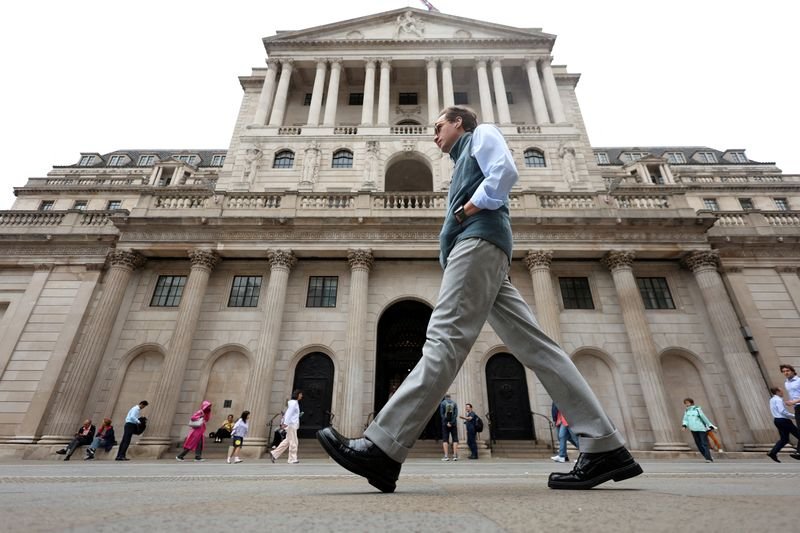
    LONDON (Reuters) -Asset managers whose companies oversee more than $1.5 trillion are urging the Bank of England to scrap bond sales they believe place unnecessary strain on Britain’s government debt, while they also rack up tens of billions of pounds of taxpayer costs.

    Reuters spoke to 10 investors who had wanted the central bank to halt the sales before it pledged on September 18 to slow its overall runoff, which includes bonds that mature. They don’t think the BoE has gone far enough and recommend changing the policy, including a complete halt to sales.

    As finance minister Rachel Reeves’ annual budget looms in November, Britain’s long-term borrowing costs are the highest among G7 advanced economies. Sticky inflation and fiscal worries are depressing the value of bonds, known as gilts, while the BoE is also actively selling its holdings into weak UK debt markets, recording losses.

    GILT MARKET INSTABILITY

    The Treasury compensates the central bank for bond-market losses. While taxpayers previously benefited from gains on the bonds, the arrangement now costs the government 22 billion pounds ($29.6 billion) annually, research by former BoE economist Carsten Jung shows.

    “Many investors including ourselves have been saying to the Bank of England you’re making the problem worse, not better. Stop doing this,” said RBC BlueBay Asset Management fixed income CIO Mark Dowding, who directly oversees assets of about $154 billion. He said he doesn’t own gilts and is betting on the pound weakening against the euro.

    Dowding had shared his view with BoE officials before the central bank announced it would reduce the pace of the gilt runoff to 70 billion pounds ($94 billion) from 100 billion pounds annually. He’s still expecting gilt market instability and has since suggested to the UK debt office to stop issuing long-dated bonds to raise funds.

    The BoE declined to comment while a Treasury spokesperson declined to comment on whether the government would consider changes to reduce the strain on public finances.

    The BoE hoovered up 875 billion pounds worth of government bonds between 2009 and 2021 to support the UK economy and then moved to offload them faster than other major central banks. This so-called quantitative tightening followed years of easing by central banks in the aftermath of the global financial crisis and the pandemic.

    ‘FISCAL FEEDBACK LOOP’

    A 2024 Treasury Committee report called the QT plan a “leap in the dark” with more public money at stake than was ever envisaged. One 40-year gilt issued in 2020 is now trading at 24% of its original issue price, in a sign of the potential losses the BoE faces.

    The BoE has said that the net cash flow benefit to taxpayers since 2012 is still 34 billion pounds, funds used for government spending amid pressure to boost growth for increasingly disillusioned voters.

    And while losses push up one measure of Britain’s debt, gilt sales improve the current budget deficit measure that Reeves targets. That’s because they reduce bank reserves on the BoE’s balance sheet on which it pays interest.

    Data crunched by Columbia Threadneedle’s Christopher Mahon, head of dynamic real return for multi-asset and with a neutral position on gilts, shows the extra debt interest costs from active quantitative tightening were between 1 billion and 3 billion pounds annually.

    He will “continue to push the topic” at future meetings with the BoE because the announced reduction is too small to make an impact on wobbly gilt markets, he said.

    Central banks moving in lockstep to end quantitative easing since 2021 has lifted debt yields globally but the effect has been amplified in the UK, a 2024 study published by the National Bureau of Economic Research estimated, with the BoE’s active sales raising yields by up to 70 basis points (bps). One basis point is one-hundredth of a percentage point, or 0.01%.

    The U.S. Federal Reserve and the European Central Bank have instead allowed debt to roll off their books as bonds mature, with the effect of raising yields by about 20 bps, the NBER paper said.

    The BoE said in August that its debt sales added 15 to 25 bps to gilt yields.

    For Paul Flood, head of mixed assets at BNY Investments Newton, active UK QT affected UK debt sustainability via a “fiscal feedback loop” of higher public sector costs and higher gilt yields.

    “I think it’s madness,” Artemis’ head of fixed income Stephen Snowden said. “Active quantitative tightening should be stopped altogether. It’s ruinous for the taxpayer.”

    ($1 = 0.7429 pounds)

    (Reporting by Naomi Rovnick; additional reporting by David Milliken, Nell Mackenzie and Yoruk Bahceli; Editing by Dhara Ranasinghe, Elisa Martinuzzi and Aurora Ellis)


    Source link

    Share. Facebook Twitter Pinterest LinkedIn Tumblr Telegram Email

    Related Posts

    Vanguard Cuts Fees on 53 Mutual Funds and ETFs for 2026

    February 2, 2026

    Danish pension funds under pressure to invest in domestic markets

    January 31, 2026

    3 Winners and 3 Losers From Emerging-Market Funds’ Big Rally

    January 30, 2026
    Leave A Reply Cancel Reply

    Top Posts

    The Shifting Landscape of Art Investment and the Rise of Accessibility: The London Art Exchange

    September 11, 2023

    Charlie Cobham: The Art Broker Extraordinaire Maximizing Returns for High Net Worth Clients

    February 12, 2024

    The Unyielding Resilience of the Art Market: A Historical and Contemporary Perspective

    November 19, 2023

    Budget 2026: What the STT hike means for mutual funds

    February 3, 2026
    Don't Miss
    Mutual Funds

    Budget 2026: What the STT hike means for mutual funds

    February 3, 2026

    The Union Budget 2026–27, presented on February 1, 2026, maintained existing income-tax slabs while prioritising…

    Dorset Premium Bonds winners revealed for February 2026

    February 2, 2026

    Arbitrage Funds Can See Up To 20-30-Basis-Point Reduction In Returns, Say Mutual Fund Experts

    February 2, 2026

    Budget 2026: Arbitrage fund returns may drop 25–30 bps after STT rate revision, says Edelweiss MF

    February 2, 2026
    Stay In Touch
    • Facebook
    • Twitter
    • Pinterest
    • Instagram
    • YouTube
    • Vimeo
    EDITOR'S PICK

    Ken Griffin sells Chicago penthouse for $11M — half of what he paid

    October 22, 2024

    13-year-old girl dies after drinking one sip of hot chocolate from coffee shop

    August 13, 2024

    Strategic investments reflect Roaring Fork School District goals ahead of next school year

    July 11, 2024
    Our Picks

    Budget 2026: What the STT hike means for mutual funds

    February 3, 2026

    Dorset Premium Bonds winners revealed for February 2026

    February 2, 2026

    Arbitrage Funds Can See Up To 20-30-Basis-Point Reduction In Returns, Say Mutual Fund Experts

    February 2, 2026
    Most Popular

    🔥Juve target Chukwuemeka, Inter raise funds, Elmas bid in play 🤑

    August 20, 2025

    💵 Libra responds after Flamengo takes legal action and ‘freezes’ funds

    September 26, 2025

    ₹10,000 monthly SIP in this mutual fund has grown to ₹1.52 crore in 22 years

    September 17, 2025
    © 2026 Fund Focus News
    • Get In Touch
    • Privacy Policy
    • Terms and Conditions

    Type above and press Enter to search. Press Esc to cancel.