
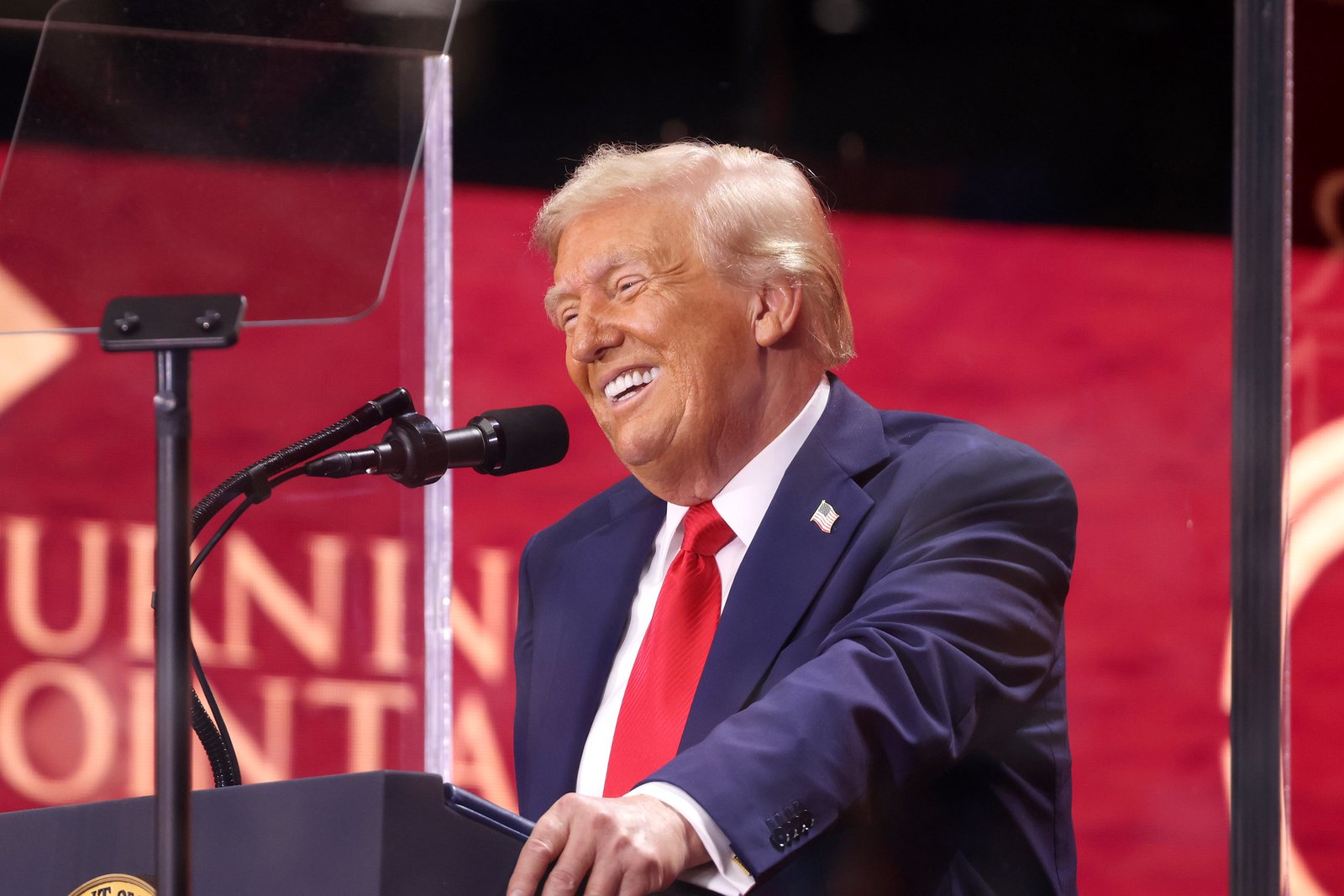
US President Donald Trump has sparked a constitutional crisis after announcing £8.1 bn ($10 billion) in federal funds will be transferred to a private organisation he chairs.
The move gives him total control over the money through the ‘Board of Peace’, an entity launched in January 2026. No federal body or congressional committee will oversee the spending, which Trump claims is intended for international reconstruction efforts.
Legal experts warn the action is unprecedented and could constitute a ‘high crime’ under Article II of the US Constitution.
Critics online and in Washington described the transfer as ‘open corruption’ and a ‘dangerous concentration of power.’
Democratic senators said the move was ‘totally illegal’ and vowed to challenge the funding source in the courts.
What the Public Thinks of Trump’s ‘Board of Peace’ Funding
Redditors called the transfer ‘open corruption.’ One wrote that the action could be a high crime under Article II, Section 4 of the Constitution. Others said Congress has authority but appears unwilling to intervene.
Reddit users highlighted the scale of the funds. One noted that £8.1 bn ($10 billion) is roughly equivalent to 25,000 years of a US president’s salary. Some compared it to Trump’s previous business and presidential earnings.
Many argued that taxpayer money was being redirected for personal control rather than public benefit. Or something else, like escaping the United States: ‘Sure seems like he is setting his family up to leave America with a fortune and move to the Middle East while still having his family control some sort of American foreign affairs well after they are gone.’
How the Board Works
The Board of Peace was launched in January 2026.
Trump chairs it and sets its policies. The board has its own charter. He can make decisions, control subcommittees, and choose successors. No oversight is required. Legal experts warn that this is highly unusual for an organisation receiving state funding.
The board aims to support reconstruction in conflict zones like Gaza. European officials have questioned whether the Board undermines the United Nations.
Some say it lacks transparency and representation for local populations.
Within the US, critics argue that moving billions without Congress violates the Constitution. Democratic senators called it ‘totally illegal.’ The Board’s funding source was not detailed during its first meeting. Experts say the structure risks conflating private control with public money.
Even if a UN resolution mentions the Board, it only covers Gaza reconstruction. It does not give global authority. Trump has suggested the Board could complement or oversee UN work. This has sparked further discussion about legality and international norms. And how much Trump would control, basically, the world.
Risks of Centralised Control
Unlike institutions such as the UN or the World Bank, the Board has no built-in auditing or transparency mechanisms.
Trump’s lifetime chairmanship and unilateral authority raise concerns about accountability. Critics say it could set a dangerous precedent where one person controls public funds without review.
They described helplessness as billions shift to private control. Some called it a ‘record-breaking bank robbery.’ Others warned about the negative implications for democratic governance and oversight.
Good News: It’s Illegal…for Now
But there’s something to hold on to: the president cannot unilaterally transfer or spend federal money without an act of Congress.
The Constitution is pretty clear about who controls government money. Congress decides how federal funds are spent. That power lies in Article I, and it means money cannot be moved around just because a president wants to.
The president’s job is to carry out the laws Congress passes, not to rewrite the budget. There are also federal laws that support this.
The Impoundment Control Act says a president cannot cancel or delay approved spending without going through Congress. The Antideficiency Act prevents officials from spending funds that were never properly approved.
Even the Supreme Court has ruled that presidents must follow spending laws as written. So the system is designed to stop one person from controlling public funds on their own.
In fact, when President Trump attempted to withhold billions in foreign aid, Congress and courts pushed back. They argued that only elected legislators may decide how appropriated funds are used.