

RIYADH: Saudi Arabia is rapidly emerging as a key player in the global semiconductor industry, driven by ambitious initiatives aimed at establishing a strong foothold in this crucial sector.
Semiconductors, which are essential components for powering AI software, electric vehicles, smartphones, and various advanced technologies, have created intense competition among nations and tech giants. Currently, Taiwan leads with 46 percent of global semiconductor foundry capacity, followed by China, South Korea, the US, and Japan.
This concentrated supply chain has prompted Saudi Arabia, under its Vision 2030 initiative, to heavily invest in developing local semiconductor manufacturing capabilities. The goal is to reduce dependency and enhance economic diversification.

“Semiconductors are the foundation of modern technology and crucial for economic growth, representing a $500 billion industry today, projected to reach $1 trillion by 2030,” said Frederic Ozeir, partner and head of Automotive and Manufacturing Industries for India, Middle East, and Africa region at Oliver Wyman, in an interview with Arab News.
He added: “For a modern economy, they (semiconductors) are fundamental to nearly all electronics across key sectors like computing, telecom, energy, automotive, and healthcare.”
Ozeir explained that these tech components drive technological innovation, advancing AI, 5G, and autonomous vehicles with significant improvements in speed, efficiency, and capabilities.
Semiconductors also serve as strategic assets for national security, essential for defense systems and infrastructure, with applications ranging from communications equipment to advanced weaponry. Economically, they drive growth, employment, and global competitiveness, similar to oil in energy-dominant economies.
At the forefront of Saudi Arabia’s semiconductor push is the $100 billion Alat project, led by the Kingdom’s wealth fund. Alat aims to address rising domestic demand and position the nation as a global hub for semiconductor innovation and production.
In collaboration with King Abdulaziz City for Science and Technology, Alat is focused on developing local talent and infrastructure necessary for semiconductor design and manufacturing.
“The semiconductor industry represents a transformative opportunity for Saudi Arabia’s industrial sector,” emphasized Alat CEO Amit Midha. “Our partnership with KACST is pivotal in advancing our capabilities across key semiconductor technology segments, including power, perception, and processing.”
Saudi Arabia’s semiconductor ambitions extend beyond economic diversification to emphasize a strategic imperative for enhancing national sovereignty and technological independence.
To this end, the Kingdom has launched a billion-riyal investment fund dedicated to semiconductor companies and established the National Semiconductor Hub. At least 50 semiconductor design companies will be established in Saudi Arabia by 2030, supported by a deep tech venture capital fund exceeding SR1 billion ($266 million) as part of a new tech hub.
These initiatives are complemented by efforts to attract global expertise through targeted residency programs aimed at accelerating knowledge transfer and capacity building.
“Saudi Arabia has inherent competitive advantages for building a successful semiconductor industry,” Ozeir noted. “The country also offers competitive utilities and infrastructure, providing reliable energy, clean water, and extensive land. Political stability and government support are also key, with a stable regulatory environment that includes direct incentives and efficient processes,” he emphasized.
Ozeir elaborated that to develop this sector, the nation needs to create a suitable enabling environment by addressing the need for a specialized workforce, including process engineers, material scientists, and precision technicians. “Additionally, the country must develop its industry ecosystem and ensure access to international markets, as local demand for semiconductors is still nascent,” he said.
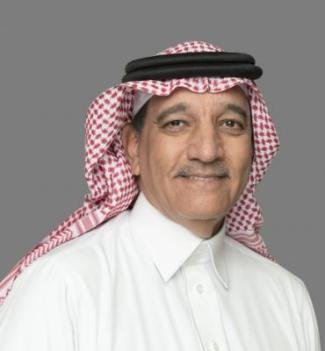
Talat Zaki Hafiz, a Saudi economist, highlighted the broader economic benefits, stating: “The semiconductor industry will contribute significantly to both the Kingdom’s economy and the industrial sector in general, especially as Saudi Arabia is engaging and promoting several industries that require significant and sizable amounts of semiconductors.”
For instance, Saudi Arabia is advancing into high-tech industries such as electric cars, helicopters, drones, and advanced ships, which require substantial amounts of semiconductors. This shift will drive significant demand for semiconductors, aligning with Vision 2030’s goals of economic diversification and industrial advancement, according to Hafiz.
The urgency of Saudi Arabia’s semiconductor push is underscored by global supply chain disruptions, which have exposed vulnerabilities in dependent economies. By developing a robust semiconductor ecosystem, Saudi Arabia aims not only to secure its supply chain but also to emerge as a leading exporter of high-tech components in the global market.
“The collaboration with KACST represents a cornerstone in Saudi Arabia’s journey towards semiconductor leadership,” said Muneer bin Mahmoud Al-Dosouqi, president of KACST. “It underscores our commitment to fostering a sustainable industrial ecosystem based on advanced technologies and clean energy sources,” he added.
Ozeir outlined the strategic approach for the coming years: “Saudi Arabia should adopt an integrated, cluster-based approach to develop its semiconductor industry. Initially, this involves front-end manufacturing, backward integration into wafer production and design, and then expanding capacity to forward-integrate into leading-edge fabrication and back-end manufacturing in the medium term.”
Oliver Wyman’s partner noted that the Kingdom could also implement supportive policies similar to leading semiconductor nations, combining direct grants for FDI (foreign direct investments), low-interest loans, investment tax credits, and sovereign funds that boost international investments.
“Specialized visa schemes, financial benefits for foreign manpower with expertise, and elite university programs in semiconductor-related fields will be essential to drive this development,” he added.
Saudi Arabia’s proactive approach in the semiconductor sector reflects a strategic vision aimed at enhancing its global competitiveness.
“Being the largest economy in the Middle East and the fastest-growing economy in the Arab world and internationally, the Kingdom can easily succeed in becoming a competitive player in the global semiconductor market,” Hafiz said.
He added: “It possesses the resources needed for manufacturing semiconductors that can help and support its efforts to play a competitive role and obtain leadership in the global semiconductors market and industry.”
Despite hosting the world’s largest reserves of oil and emerging as a global energy superpower, Saudi Arabia has been very active in pursuing and building capacities in clean energy and reducing the carbon impact on both humanity and the environment.
Hafiz highlighted that the Kingdom is undertaking various actions, such as implementing the Circular Carbon Economy and the Saudi Green Initiative, to achieve its goal of zero neutrality by 2060. He expressed confidence in Saudi Arabia’s capability and eventual success in integrating sustainable practices and clean energy sources into its semiconductor manufacturing processes.
As global demand for high-performance chips continues to surge, the Kingdom’s proactive approach underscores its determination to carve out a prominent place in the global semiconductor landscape. “Several new national initiatives were announced in the Semiconductor Future Forum, confirming the Kingdom’s desire to move forward to develop and localize this industry,” Hafiz shared.
One of these initiatives is the National Capabilities Center for Semiconductors, which aims to “develop and localize the electronic chip industry in the Kingdom,” according to the economist.
In conclusion, Saudi Arabia’s strategic investments and partnerships in the semiconductor industry reflect a bold vision aimed at securing its economic future and asserting its technological prowess on the global stage. As the Kingdom continues to advance its semiconductor capabilities, it stands poised to play a significant role in driving innovation and shaping the next generation of high-tech industries worldwide.
Hafiz expressed his optimism for the future: “I believe that the Kingdom has a bright future in the semiconductor industry over the next decade, simply because it has dedicated its efforts to boost its capabilities in developing such an industry in the Kingdom through building local talents and relying on its longstanding expertise in several industries, especially in high-tech related industries.”