
Many Australians don’t get rich from buying bricks and mortar because they are too emotional, a property investment adviser with five decades of experience says.
Michael Yardney, the director of Metropole Property Strategists who has been buying real estate since the 1970s, said the current downturn showed the wisdom of investing for the longer-term rather than trying to get rich quickly or panicking when things turn bad.
‘I invest for the long-term and don’t get thrown off by either the good or the bad phases of the property cycle, because I know they are part of the economic cycle,’ he said.
‘It’s been that way since Federation and is unlikely to change.’
The veteran property strategist advises investors to buy in a middle-distance suburb of Sydney, Melbourne or Brisbane because that’s where the jobs are.
However, another buyer’s agent argued house values had performed even better in Tasmania and the NSW north coast during the past two decades.

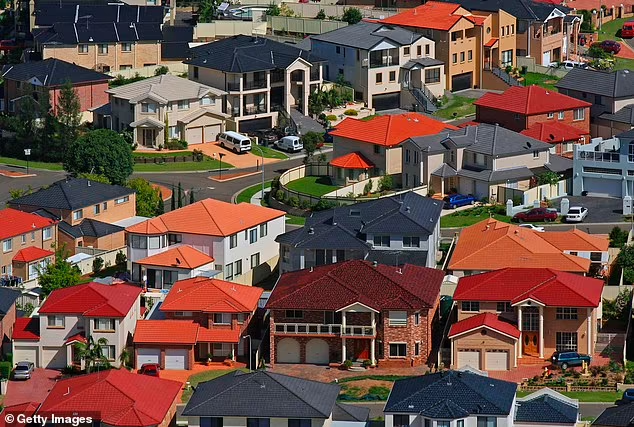
A property investment adviser with five decades of experience has revealed many Australians don’t get rich from buying bricks and mortar because they are too emotional (pictured are houses at Cecil Hills in Sydney’s outer south-west)
Mr Yardney said not enough people were strategic when buying property.
‘One of the reasons most investors don’t develop the financial freedom they deserve is because they don’t understand the rules of money and they end up buying their properties with emotion,’ he said.
‘Be it your first property or your next property, it should be part of a long-term plan and a stepping stone to building a substantial portfolio.
‘The problem is most people buy their investments with emotion.’
The Reserve Bank of Australia’s eight consecutive monthly interest rate rises since May, taking the cash rate in December to a 10-year high of 3.1 per cent, have sparked a steep downturn in house prices and limited what the banks can lend to potential borrowers.
Sydney has been the worst-affected capital city market since peaking in April with the median house price this year plunging by 11.9 per cent to $1,243,126 as of November, CoreLogic data showed.
But more upmarket suburbs have done even worse with Narrabeen on the northern beaches plunging by 26.8 per cent to $2,592,772.
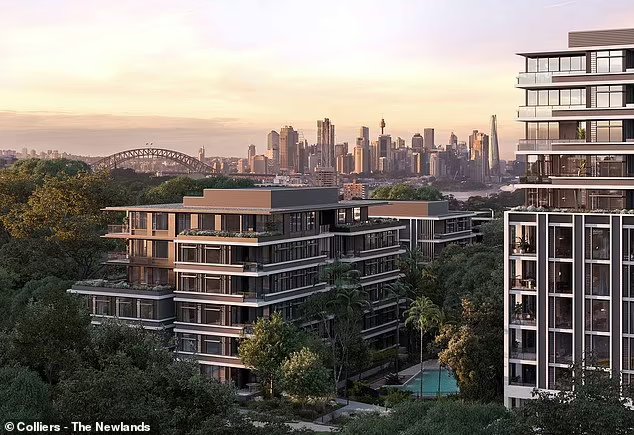
Michael Yardney, the director of Metropole Property Strategists, who has been buying real estate since the 1970s, said middle-distance suburbs of Sydney (St Leonards on the north shore, pictured), Melbourne and Brisbane were a better long-term investment
The gentrified, inner-city suburb of Surry Hills has seen its mid-point home price dive by 25.4 per cent to $1,789,868, as nearby Redfern plummeted 25.3 per cent to $1,612,519.
Despite that, Mr Yardney said the middle-ring suburbs of Sydney, Melbourne and Brisbane were still better long-term bets than regional areas or far outer suburbs.
‘Location will do 80 per cent of the heavy lifting for your property’s performance and that’s why I only invest in select suburbs of our three major capital cities,’ he said.
‘Now I know there will always be people telling you to invest in regional Australia, but why fight gorillas – why fight the big trends?
‘Most jobs, most wages growth, most population growth and most of our economy happens in Australia’s capital cities and in particular, in our big three capital cities.’
But Propertyology head of research Simon Pressley said the middle ring suburbs of Sydney, Melbourne and Brisbane had experienced far less growth during the past two decades, compared with Hobart, regional Tasmania and the NSW north coast.
He cited data showing a four-fold increase in the big three cities, compared with prices multiplying by six outside these blue chip areas.
Sydney’s gentrified inner west saw its median house price surge from $515,000 to $2.04million from 2002 to 2022, as prices in Melbourne’s Hobsons Bay area in the west climbed from $260,000 to $1.05million.

But Propertyology head of research Simon Pressley said the middle ring suburbs of Sydney, Melbourne and Brisbane had experienced far less growth during the past two decades, compared with Hobart, regional Tasmania and the NSW north coast (pictured are schoolies at Byron Bay)
Values in Brisbane’s middle-distance suburbs during that time rose from $180,000 to $755,000.
But during the past two decades, Hobart’s median house price has climbed 6.3 times, from $120,000 to $750,000 as Tasmania’s Huon Valley saw its equivalent price multiply 7.6 times from $87,000 to $660,000.
Byron Bay’s mid-point house price during the past two decades has multiplied by 6.4 times.
Nonetheless, Byron has been Australia’s worst-performing regional market in 2022, with CoreLogic data showing a 20.5 per cent plunge to $2,307,592 as neighbouring Suffolk Park saw its values dive by 18.5 per cent to $1,958,514.
But during the past year, affordable areas have experienced huge price increases despite the Reserve Bank rate rises.
The median home price at Davoren Park in Adelaide’s north has surged by 34.7 per cent to $336,186, with a similar phenomenon occurring in the nearby affordable suburbs of Elizabeth Grove, Elizabeth South, Elizabeth and Elizabeth Vale.
Bingara, in the NSW New England region north of Tamworth, saw its mid-point house price rise by 36.2 per cent to $279,257.
Mr Yardney said a low-rise apartment in a middle-distance suburb of Sydney, Melbourne or Brisbane was preferable to a house in a far outer suburb or a regional area, if money was an issue.

Michael Yardney, the director of Metropole Property Strategists, said too many Australians didn’t get rich from buying property because they were emotional
‘We’re trading space for place – trading backyards for balconies and courtyards to live in the inner and middle-ring suburbs of our big capital cities, which means you don’t have to own a house,’ he said.
‘Townhouses, villa units, and low-rise ‘family-friendly’ established apartments in the right location make great investments.
‘I know there are people out there coming to invest in the new outer suburbs, but I’m not really convinced that land in Penrith or Point Cook or Toowoomba will ever be more valuable than land near the harbour.
‘Think about it – where would you live if money was no object?’
When interest rates were still at a record-low of 0.1 per cent, houses in the suburbs and regional areas, particularly by the coast, surged in value while big city apartments, particularly smaller ones in high-rise complexes, hardly increased in value or even declined.
The ability of being able to work from home saw more professionals move to the middle and outer suburbs or regional areas in the search for space.
Regional house prices in 2021 surged by 26.3 per cent to $562,341 as capital city apartment values rose by a lesser 12.6 per cent to $637,464.
But rate rises in 2022, to tackle the worst inflation in 32 years, have caused a downturn because the banks are required to assess a potential borrower’s ability to cope with a three percentage point increase in variable mortgage rates under Australian Prudential Regulation Authority rules.
Rates this year have risen by 300 basis points – the most severe increase since the RBA began publishing a target cash rate in January 1990.