
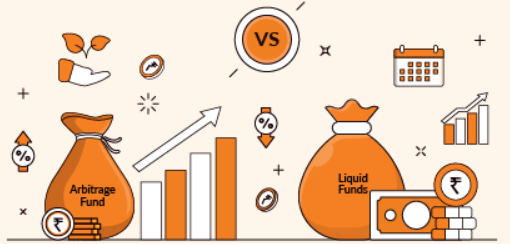
Arbitrage funds are really popular with people who want to make money from the difference in prices between the cash and derivatives markets. These funds. Sell the same thing in different markets to make a profit from the price difference.
Arbitrage mutual funds are a choice for people who want to make money without taking too much risk. They make money by finding mistakes in the market, not by guessing what the market will do.
To choose the right arbitrage fund you need to think about a few things like what strategy the fund uses, how much it costs and how easily you can get your money back. In this blog we will talk about what to look for when choosing an arbitrage fund.
What are Arbitrage Funds?
Arbitrage funds are a type of fund that is treated like a stock fund for tax purposes. They invest in stocks and other things that are related to stocks. They also use special strategies to reduce risk. These funds make money by buying and selling things in markets like the spot market and the futures market.
The key to how they do is their ability to make money from the difference in prices between these two markets. Arbitrage funds are a choice for people who want to make money from the ups and downs of the market without taking too much risk. They usually make more money than stock funds but they are also less risky.
Key Factors to Consider When Selecting an Arbitrage Fund
Arbitrage funds are generally safe. How well they do depends on a few things. You need to think about the strategy the fund uses, how much it costs and how easily you can get your money back. Here are the important things to consider:
1.Strategy Discipline of the Fund
The strategy the fund uses is really important. A good arbitrage fund finds mistakes in the market. Make money from them without taking too much risk.
Different arbitrage funds use strategies, like:
- Pure Arbitrage: This is when the fund buys and sells the same thing in different markets to make a profit from the price difference.
- Relational Arbitrage: This is when the fund looks for relationships between things like a stock and its related index futures. It makes money from the difference in prices between these things.
- Cash-and-Carry Arbitrage: This is when the fund buys something in the spot market and sells its contract making a profit when the futures price is higher than the spot price.
When choosing an arbitrage fund you should make sure the strategy it uses is right for you. Funds that are more careful and disciplined in their strategy usually do better in the run.
2-Costs Associated with Arbitrage Funds
Arbitrage funds are generally safe. You need to think about how much they cost. The costs can add up. Reduce your profits.
The main costs of arbitrage funds are:
- Expense Ratio: This is the fee the fund charges for managing your money. Arbitrage funds usually have fees more than other funds because they are actively managed. You should look for funds with fees to make more money.
- Transaction Costs: Arbitrage funds. Sell things often to make money from market mistakes. This can result in transaction costs, which can reduce your profits. You should understand how much the fund is paying in transaction costs and how it affects your profits.
- Taxation: Arbitrage funds are treated as equity-oriented mutual funds for tax purposes because they maintain at least 65% exposure to equity and equity-related instruments.
1. Short-term capital gains (units held for 12 months or less) are taxed at 20%.
2. Long-term capital gains (units held for more than 12 months) are taxed at 12.5% on gains above ₹1.25 lakh per financial year, with no indexation.
These rates apply to qualifying transactions under the post–23 July 2024 capital gains framework and are one of the reasons arbitrage funds remain comparatively tax-efficient for investors in higher tax brackets
3.Liquidity of Arbitrage Funds
Liquidity is also important when choosing an arbitrage fund. Liquidity means how easily you can get your money back and how easily the fund can sell its investments without affecting the market price.
Arbitrage funds usually offer liquidity because they invest in things that can be easily bought and sold, like stocks and futures. However some funds may have rules that make it harder to get your money back like exit fees or lock-in periods. You should check the funds rules and fees before investing.
4.How Liquidity Affects Arbitrage Fund Performance
Arbitrage funds usually use strategies but their liquidity can affect how well they do, especially when the market is volatile. If a fund cannot sell its investments quickly it may miss out on opportunities. Even lose money. Therefore it is crucial to understand the liquidity of the funds investments and its rules for getting your money
Evaluating Arbitrage Fund Returns
Arbitrage funds give you stable and predictable returns than other equity-based mutual funds but the returns are generally lower. The returns you get from Arbitrage funds are usually made up of interest income and capital gains. This depends on the market conditions.
Arbitrage funds make money by taking advantage of price differences so their returns are affected by things like how volatile the underlying securitiesre how often prices are not efficient and how well the fund can take advantage of these opportunities.
When the market is not very volatile or it is stable the returns from Arbitrage funds may be lower. However the returns from Arbitrage funds tend to go up when the market’s more volatile and there are more opportunities for Arbitrage.
Historical Performance of Arbitrage Funds
Looking at how Arbitrage funds have performed in the past can give you an idea of the returns and risks of Arbitrage funds. Over the years Arbitrage funds have given returns although they are moderate making them a good choice for investors who want a stable income stream and are conservative.
However it is important to remember that how Arbitrage funds performed in the past does not always mean they will do the same in the future and you should think about things like the strategy of the fund, the costs and how easily you can get your money back before making a decision.
Making the Right Arbitrage Fund Choice
To choose the Arbitrage fund you need to think about many things, including the strategy of the fund, the costs and how easily you can get your money back. By understanding how the strategy of the Arbitrage fund fits with the risk you’re willing to take and your investment goals, looking at the costs and making sure you can get your money back when you need it, you can make a good decision.
Arbitrage funds are a low-risk way to invest and they can give you stable returns but you need to think carefully about these things to get the best results.
If you are interested in investing in Arbitrage funds you can use investment platforms, like Jio BlackRock, which make it easy to invest in well-managed and cost-effective Arbitrage funds that can meet different investment needs.