

In times of recession, when bond yields reach levels similar to those seen today, fixed income has often delivered stronger returns than equities over the following five years.
But the high inflation environment we are in now has largely been caused by a supply-side shock, rather than a recessionary (demand-side) one, leading some to question whether fixed income will follow that rule-of-thumb outperformance this time round.
Those who fled to cash as a safe haven have found inflation moving against them, eroding the spending power of cash holdings.
Moreover, equity markets have also demonstrated a remarkable capacity to outperform expectations over much longer periods, even when they have suffered sharp shocks.
Given all these trade-offs, how are investment managers balancing allocations between bonds, equities, and cash within portfolios for clients nearing or in retirement?
Dan Caps, lead portfolio manager of the Evelyn Partners Index MPS range, says that each client’s individual risk profile will be the biggest determinant of their asset allocation, but in this environment, clients have been happier to hold fixed interest over cash.
Changing client behaviour
Particularly, investors who were previously holding large cash balances have gravitated towards gilt portfolios, targeting gilts with lower coupons, which Caps explains can achieve a better net of tax return, particularly for higher rate taxpayers.
Clients in retirement can also build gilt ladders, targeting gilts with different maturities designed to mature around the time they anticipate needing the funds, though these can also be sold before maturing should the clients end up needing the funds sooner.
Caps adds: “Many of our IFA partners have clients with significant cash holdings that were typically built up when rates were climbing.
“This is why we launched a bond strategy last year into the adviser market that aims to deliver better returns than savings through investments in short-dated gilts and money market instruments with an element of tax efficiency too, as gilts are CGT exempt.
“This has proven very popular and will be especially relevant when the tax on savings interest rises in 2027.”
Bonds vs equities
According to Craig Veysey, fixed income lead at Guinness Global Investors, equities still offer superior long-run growth potential.
However, in a higher-yield environment, high-quality bonds have become much more competitive on a risk-adjusted basis.
For investors, this matters because bonds can now provide a more attractive combination of income, lower volatility, and diversification than they did for much of the past two decades.
Veysey adds: “The key point is that bonds are once again able to do more than one job in a portfolio: they can generate meaningful income today, while also offering the potential to cushion portfolios if growth weakens or rates fall.
“That does not mean bonds are risk-free, but it does mean the case for holding them alongside equities and in place of excess cash is much stronger than it was a few years ago.”
Where value lies
The most compelling opportunities, in Veysey’s view, are in higher quality parts of global fixed income; that is, more developed government bond markets and higher-quality credit.
Government bonds now offer much more meaningful income, he says, than they did in the post-zero-rate era, and they retain diversification potential if growth weakens or recession risk rises.
Veysey adds: “It is important to distinguish between rates and spreads here. So far, this has been more of a rates-led repricing than a full credit dislocation.
“Government bond yields have moved higher, while credit spreads, although wider, remain well inside the more stressed levels seen in 2022 and during last year’s tariff-driven volatility.
“That suggests better value than before, but not yet the kind of broad capitulation that would justify becoming aggressively bullish on lower-quality credit.”
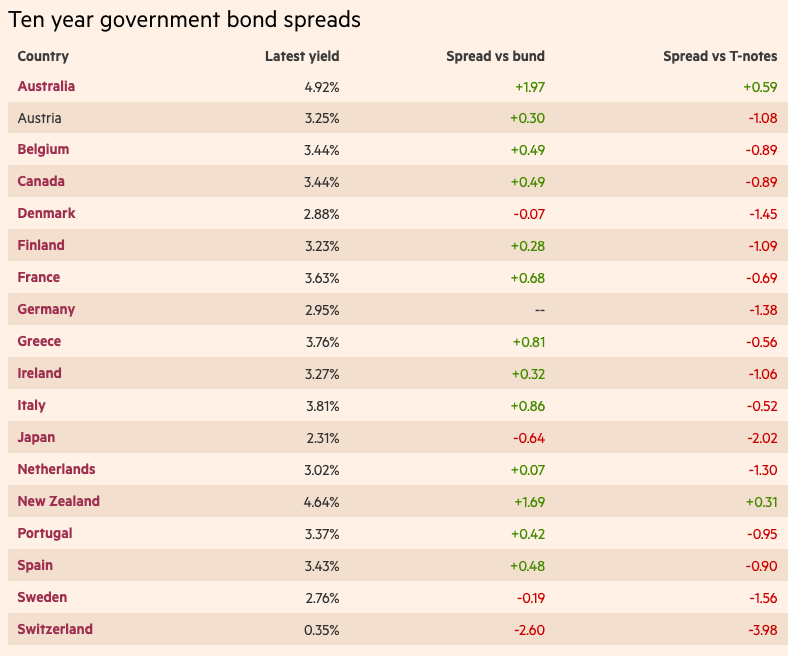
As for investment-grade credit, the key reason for his preference is that all-in yields for this asset class are now materially more attractive than they were even a short time ago, which improves both the income available to investors and the cushion against further volatility.
However, the move has so far been driven much more by higher underlying government bond yields, rather than by any significant repricing in spreads.
He adds: “I remain more cautious on lower quality and more cyclical parts of high yield. All-in yields are clearly higher than they were, but much of that reflects the broader rates move rather than a full credit repricing.
“So while value is improving, it is not yet the kind of dislocation that would make me aggressively positive on lower-quality credit.
“For now, I think the best opportunities are still in quality, liquidity, and selectivity rather than broad beta exposure.”
According to Darren Ripton, head of MPS at Aberdeen, the classic 60/40 diversification between equities and bonds works in demand-driven downturns.
But in a supply-side, inflationary shock like today’s environment, that strategy can break down.
As a result, investors might need to look elsewhere for diversification.
When diversification breaks down
If risky assets like equities fall because demand weakens, people spend less and growth slows — this is often disinflationary.
Central banks typically then cut interest rates to support the economy. Falling rates mean government bonds perform well.
So bonds diversify portfolios effectively, offsetting equity losses.
The current issue now is supply disruption, especially in energy, with oil and gas constraints.
This pushes costs and inflation higher, while also hurting growth, leading to weaker equities and rising inflation.
As a result, central banks cannot cut rates to support growth because inflation is high; they may even raise rates.
Higher inflation plus higher rates is not good news for bonds.
Equities and bonds can then end up both performing poorly at the same time, becoming more correlated instead of diversifying each other.
Ripton says: “The recent risk-off environment has proved bruising for equity and fixed interest investors.
“Yields have risen as markets factor in higher levels of inflation over the future months and years, and a change in interest rate expectations that is a consequence of this.
“Although the last month has proved a difficult environment, the higher starting yields that can now be accessed may provide an opportunity for investors to add assets, which may well provide useful returns and diversification when the next crisis hits.
“Being truly diversified at a portfolio level, through the use of a broad set of asset classes, including fixed interest, is still the only free lunch in investing.”
Other paths for diversification
In this environment, Ripton points to other asset classes that may offer diversification, with overseas currencies (for sterling investors) such as the US dollar, Japanese yen, and Swiss franc historically being considered safe havens.
Asset classes such as global infrastructure, which in many cases have inflation-linked cash flows as a key element of their contracts, may also offer some protection.
Exposure to commodities themselves in solutions that can access them may also prove beneficial, although gaining that pure exposure in many cases is less straightforward.
Some argue that even with higher yields, bonds may not fully address the key risks facing retirees — prompting a renewed focus on guaranteed income solutions such as annuities.
Stuart Slegg, head of retail investment solutions at Just Group, says replacing some or all of the bonds in a retirement portfolio with a guaranteed income stream has the potential to deliver less income volatility and potentially higher incomes and legacy benefits.
He explains: “A portfolio must work differently for an individual in retirement than it does while they are accumulating pension savings.”
Ima Jackson-Obot is deputy features editor at FT Adviser