
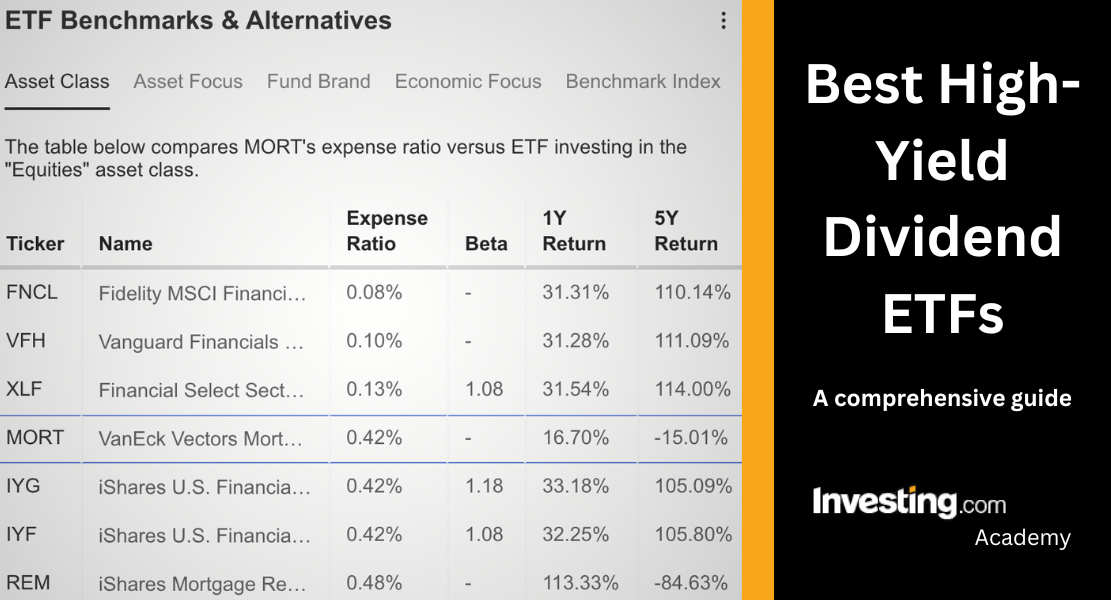
High dividend yield ETFs are a popular choice for investors seeking a steady stream of income. These ETFs invest in companies that pay out a significant portion of their earnings as dividends, providing investors with regular cash flow. In an era where interest rates may fluctuate and bond yields remain uncertain, high dividend yield ETFs offer an attractive alternative, especially for retirees or those looking to supplement their income.
As we move into 2026, certain high dividend yield ETFs are garnering increased attention due to their consistent performance, strategic asset allocation, and competitive expense ratios. This article will explore some of the top contenders in this space, examining their key features and discussing why they might be worth considering for your portfolio. We’ll delve into factors like sector exposure, dividend sustainability, and the importance of evaluating the fund’s underlying strategy. Prepare to discover some potentially lucrative options for generating income through high dividend yield ETFs.
- Expense Ratio: 0.46%
- Top Holdings: Primarily preferred stocks from financial institutions, including:
- Bank of America Corp Preferred Stock
- Wells Fargo & Co Preferred Stock
- JPMorgan Chase & Co Preferred Stock
- Why Consider It? PFF provides exposure to a broad range of preferred stocks, which offer fixed income and are senior to common stock in a company’s capital structure. These investments can provide a relatively stable income stream. The ETF can be helpful to reduce exposure to common equity markets.
- Expense Ratio: 0.49%
- Top Holdings: Primarily dividend-paying stocks from developed international markets, including Rio Tinto PLC (UK), BHP Group Ltd (Australia), and Enel SpA (Italy).
- Why Consider It? IDV offers diversified exposure to high-dividend-yielding stocks in developed countries outside of the United States. This can provide both income and geographic diversification.
- Expense Ratio: 0.4%
- Top Holdings: High-yield corporate bonds from various sectors, including Sprint Corp Bonds (various maturities), CCO Holdings LLC Bonds (various maturities), and Tenet Healthcare Corp Bonds (various maturities).
- Why Consider It? JNK invests in a portfolio of high-yield (“junk”) bonds, offering potentially higher income compared to investment-grade bonds. However, it’s important to note that high-yield bonds also carry greater credit risk.
- Expense Ratio: 2.55%
- Top Holdings: A composite of Closed-End Funds (CEFs) focused on income generation, covering multiple asset classes (e.g., bonds, equities, preferred stocks). Specific CEF holdings change frequently.
- Why Consider It? PCEF offers a diversified approach to income investing by holding a basket of Closed-End Funds (CEFs). These CEFs may invest in a variety of income-producing assets, creating broad diversification. However, the high expense ratio should be carefully considered. Due to the leverage that many CEFs employ, returns are magnified, both positively and negatively.
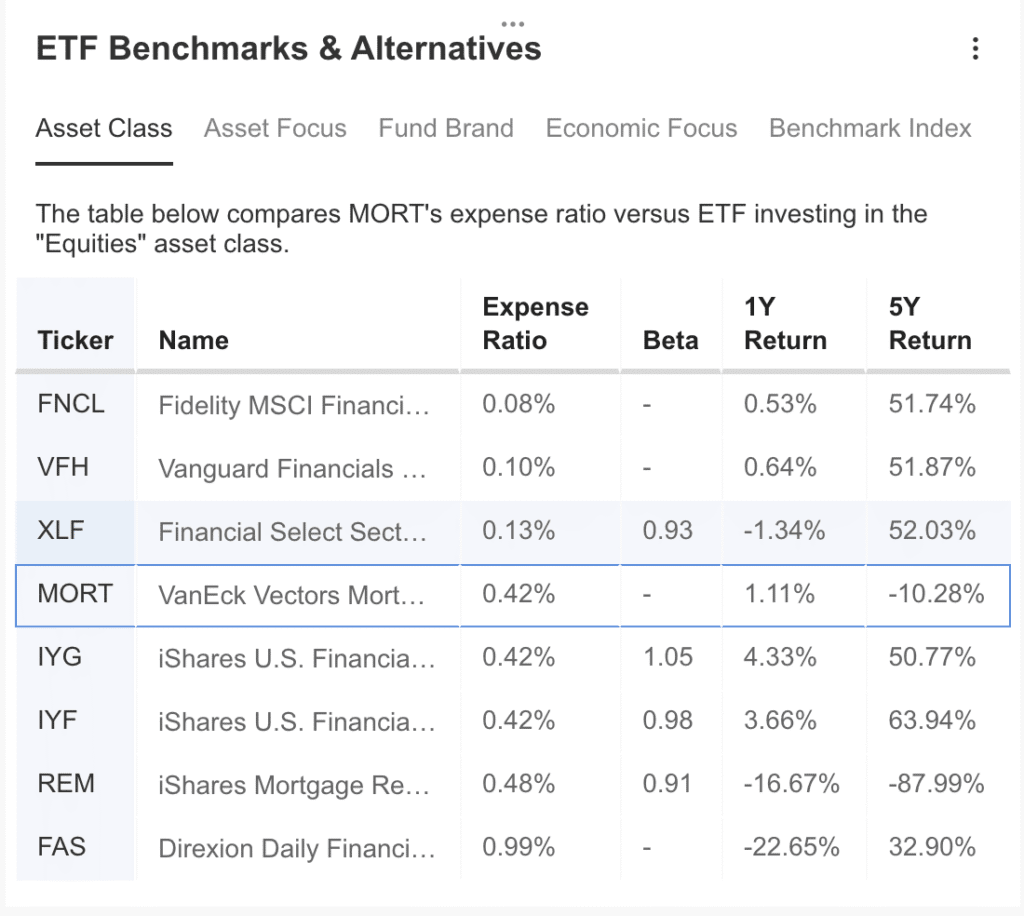
- Expense Ratio: 0.42%
- Top Holdings: Mortgage REITs (Real Estate Investment Trusts), including Annaly Capital Management Inc, AGNC Investment Corp, and Starwood Property Trust Inc.
- Why Consider It? MORT provides exposure to mortgage REITs, which invest in mortgage-backed securities. These REITs typically offer high dividend yields, making MORT an attractive income option. However, mortgage REITs are sensitive to interest rate changes.
Discover the capabilities of InvestingPro for evaluating High Dividend Yield ETFs. Access in-depth analysis of High Dividend Yield ETFs, easily compare expense ratios, 1-year, and 5-year returns:
High -dividend yield ETFs can be a valuable tool for generating income, but they’re not a guaranteed path to riches. It’s essential to understand the risks and rewards, do your homework, and consider your individual circumstances before investing. They can work best as a part of a well-balanced, diversified portfolio.
Potential Benefits
- Consistent Income Stream: Provide regular dividend payments, which can be valuable for income-seeking investors.
- Diversification: Offer exposure to a basket of dividend-paying companies or other income-generating assets, reducing single-stock risk.
- Professional Management: Managed by experienced investment professionals who select and monitor the underlying holdings.
- Transparency: Holdings are typically disclosed regularly, allowing investors to see what the ETF owns.
Potential Risks
- High Expense Ratios: Some high-yield ETFs have relatively high expense ratios that erode returns, especially in the CEF space.
- Dividend/Interest Cuts: Payouts are never guaranteed and can be reduced or suspended by the underlying companies/issuers.
- Interest Rate Sensitivity: Bond and mortgage REIT ETFs are sensitive to rising interest rates, which can negatively impact their value.
- Credit Risk: High-yield bond ETFs carry higher credit risk compared to investment-grade bonds, meaning there’s a greater chance of default.
Finding the “top” high dividend yield ETFs isn’t just about chasing the highest yield; it’s about identifying funds that align with your specific investment objectives, risk tolerance, and time horizon. Here’s a structured approach to help you navigate the choices:
- Analyze Holdings
- Examine the ETF’s top holdings to understand the underlying asset class and sector exposure. What sectors are dominant? Is it heavily weighted toward utilities, REITs, financials, or is it more balanced? Over-concentration can be dangerous. Understand the risks associated with those sectors.
- Check Expense Ratios
- Compare the ETF’s expense ratio to similar high dividend yield ETFs with similar investment strategies. A higher expense ratio isn’t necessarily bad if the ETF delivers superior performance, but you need to justify the higher cost.
- Review Performance and Liquidity
- Assess historical performance and ensure the ETF has sufficient trading volume. Look at performance over at least 5 years (preferably 10 years or more) to get a sense of how the ETF performs over different market cycles. Don’t rely solely on recent performance.
- Understand the Theme
- Choose an ETF that aligns with your risk tolerance and investment goals. Consider the fund’s underlying strategy (e.g., dividend growth, high current yield, specific asset class).
What is a high dividend yield ETF?
It’s an ETF that focuses on investments that generate a high level of income. This can include dividend-paying stocks, bonds, preferred shares, or other income-producing assets.
Are high dividend yield ETFs safe?
No investment is completely safe. High dividend yield ETFs have risks like fluctuating payouts, interest rate sensitivity, and credit risk (especially for high-yield bond ETFs).
How do I buy a high dividend yield ETF?
You can purchase shares of a High Dividend Yield ETF through a traditional brokerage account, just like stocks.
What are the tax implications of investing in high dividend yield ETFs?
Distributions (dividends or interest) are generally taxable as ordinary income. Consult a tax professional for personalized advice.
What’s better, an ETF with dividend stocks or bonds?
That depends on your risk tolerance and investment goals. Dividend stock ETFs offer growth potential, while bond ETFs generally offer stability. Some also provide diversification beyond common equity markets.