
Regulators search for ways to curb volatility as Samsung Electronics and SK hynix leveraged funds dominate trading
South Korea’s financial regulators are scrambling to curb the influence of leveraged exchange-traded funds tracking the country’s top chipmakers, Samsung Electronics and SK hynix, just weeks after approving the products as part of efforts to deepen the capital market.
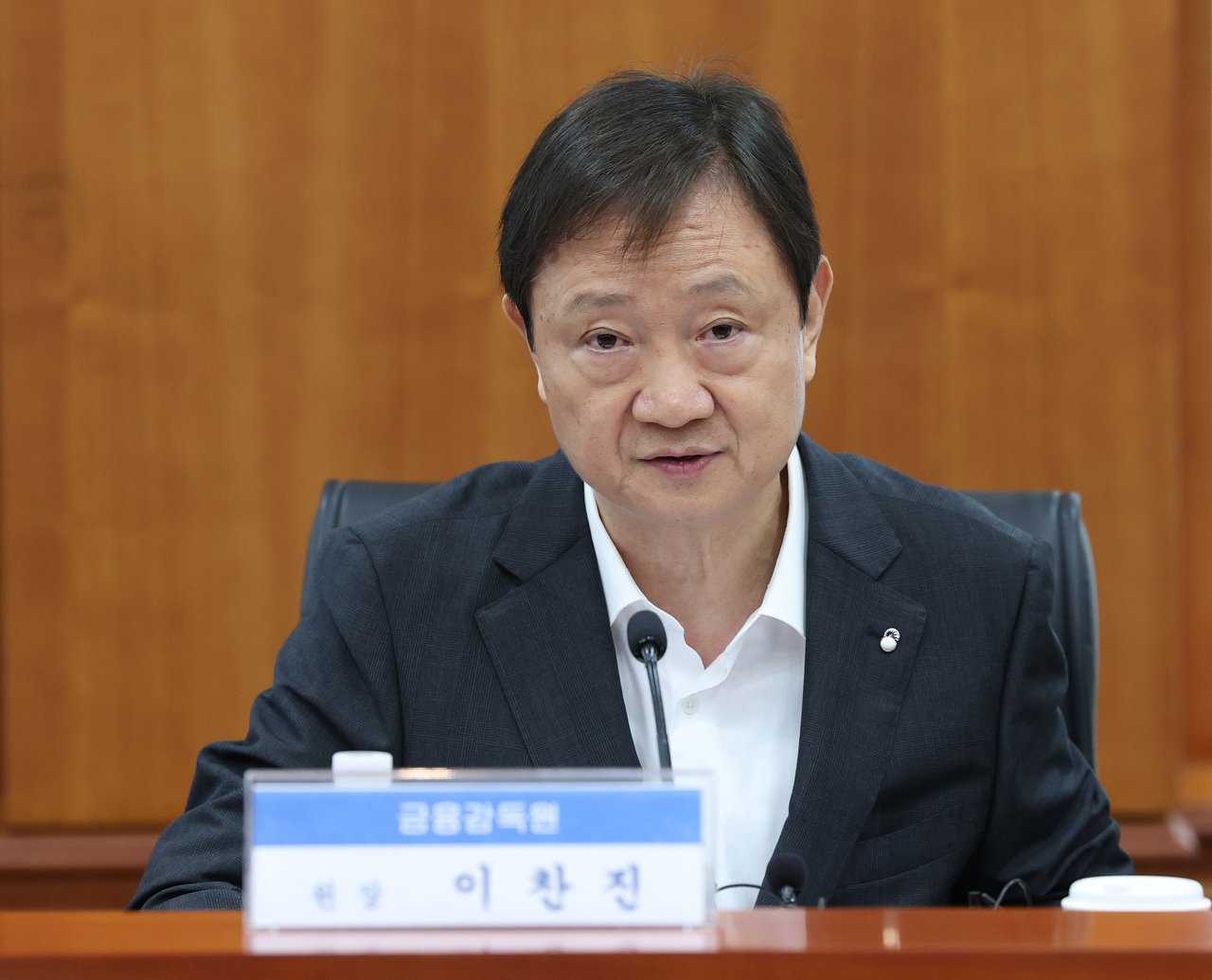
Financial Supervisory Service Gov. Lee Chan-jin, the country’s top financial regulator, acknowledged that there is no easy way to address the market impact of the leveraged ETFs.
At a closed-door meeting with the heads of local asset managers held Monday, Lee reportedly said “a straightforward solution was unlikely,” describing the problems associated with the ETFs as “structural.”
While the authorities would soon make an announcement after finalizing their stance on the leveraged ETFs, the situation could not be easily resolved, he cautioned.
“This is not something that can be resolved with a one-off measure. It will require continuous monitoring, as well as ongoing adjustments and refinements,” he said.
Leveraged ETFs tied to Samsung Electronics and SK hynix have been on a wild ride amid a sharp correction in the underlying chip stocks, fueled by concerns that the semiconductor cycle may be peaking.
Of the 16 leveraged ETFs tied to the two chipmakers listed here, all 14 long single-stock leveraged funds, excluding the two inverse products, tumbled to record lows following Monday’s market rout.
The combined assets of the 16 single-stock leveraged ETFs have shrunk to 9.65 trillion won ($6.48 billion) as of Monday from more than 16 trillion won on June 25. Despite the sharp decline in assets, regulators have little room to take aggressive action, given the products’ outsized presence in the market.
As of Friday, the 16 single-stock leveraged ETFs accounted for 10.12 trillion won in turnover, representing 31.6 percent of total ETF trading. The turnover also surpassed that of the entire Kosdaq market, which stood at 6.9 trillion won on the day.
The speculative frenzy shows little sign of fading even amid the market correction.
On Monday, trading in the products climbed further to 12.14 trillion won, even as the underlying shares of Samsung Electronics and SK hynix plunged 10.7 percent and 15.37 percent, respectively.
Lee’s latest remarks follow a series of expressions of regret in recent weeks over the launch of the leveraged ETFs. At a press conference held on June 22, Lee expressed concern “about the excessive side effects that have emerged since the launch of leveraged ETFs.”
“I personally wonder whether we should have done more to stop them, even if it meant going to extreme lengths.”
Though Lee said at the conference that the authorities were discussing possible responses, including curbs related to margin and credit-backed trading, no specific measures have been implemented.
Policymakers have also expressed growing concern that leveraged ETFs are amplifying market volatility.
“We are well aware of concerns that leveraged ETFs are adding to stock market volatility,” Finance Minister Koo Yun-cheol said on July 7. “Relevant authorities are closely monitoring the situation and assessing various developments.”
With single-stock leveraged ETFs increasingly blamed for fueling market volatility, local asset managers find themselves in an increasingly difficult position.
“Given how the situation has unfolded, asset managers are feeling the pressure as the issuers of these ETFs,” an official at a local asset management company said.
silverstar@heraldcorp.com