
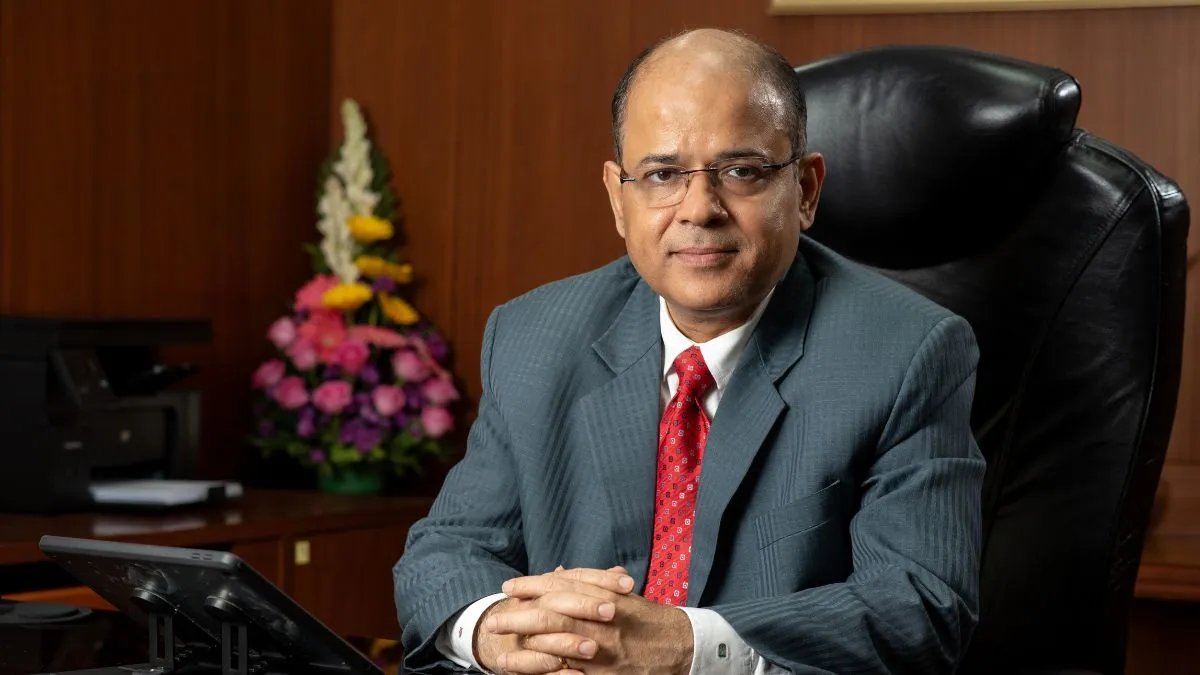
While maintaining a cautious outlook on the markets amid the prospect of a weak monsoon and geopolitical uncertainty, RK Jha, Managing Director & CEO of LIC Mutual Fund Asset Management tells Kushan Shah that small SIPs have done well for the fund house. Excerpts:
What are the biggest challenges facing the market currently?
There is a possibility of renewed hostilities in West Asia. However, I believe the market impact will be less severe than when the conflict first began. Initially, there was widespread uncertainty across global markets, but investors have since adjusted to the unpredictable nature of the conflict. That said, volatility is likely to persist.
The bigger concern for the economy is the possibility of a weak monsoon. If rainfall is deficient or the monsoon season is curtailed, it could hurt kharif sowing, disrupt agricultural output and add to inflationary pressures.
Mutual fund inflows have remained resilient despite market volatility. Do you expect this trend to continue if uncertainty persists?
Retail investors naturally become cautious when portfolio returns are subdued. Despite this, SIP inflows have remained robust, providing stability to equity markets. Many investors have stayed invested because long-term returns from mutual funds continue to outperform traditional investment avenues such as fixed deposits.
Young investors are also entering the market because of growing awareness about mutual funds. However, if economic and market conditions fail to improve, the pace of new investor additions could slow. Experienced investors who understand market cycles and the power of compounding are likely to remain invested, while less seasoned investors may pause or discontinue their investments if volatility persists.
How have small-ticket SIPs fared during this prolonged period of market volatility?
We have seen an excellent response to our small-ticket offering, Pocket SIP. It is a misconception that small-ticket SIPs do not work. They have helped change the perception among financially underserved investors, many of whom earlier believed mutual funds were beyond their reach. The convenience of daily SIPs has also encouraged more consistent investing.
Are such small-ticket SIPs commercially viable for AMCs and distributors?
I believe they are. While administrative costs are higher, I expect future cost rationalisation to address this challenge. If that happens, fund houses may even be able to lower the minimum SIP amount further.
Simplifying the KYC process can also make a significant difference. Many potential investors are still deterred by documentation requirements. Greater financial awareness, coupled with easier onboarding, will help bring more investors into the mutual fund ecosystem.
Is LIC Mutual Fund leveraging its association with LIC and its distribution network?
Our association with LIC gives us strong brand recognition and investor trust. However, insurance and mutual funds compete for the same pool of household savings, so there is healthy competition rather than direct synergy.
Mutual funds cannot directly leverage LIC’s distribution network because the business models and regulatory requirements are different. In addition, many long-standing LIC agents are reluctant to become mutual fund distributors because of the mandatory NISM certification, highlighting the need for structured training and capacity building.
We are instead expanding our reach by strengthening relationships with mutual fund distributors, leveraging the trust associated with LIC, and partnering with leading fintech platforms. This multi-channel approach enables us to reach a broader investor base by combining traditional distribution with digital channels.
NFO launches and fund mobilisation have slowed in recent months. How is LIC Mutual Fund driving investor participation in existing schemes?
There are several ways to grow even when NFO activity is subdued. We are conducting investor awareness programmes to deepen mutual fund penetration, particularly in under-served markets. Fear of losses continues to discourage many potential investors, so investor education remains a priority.
We are also expanding our branch network to improve access to our products and address investor concerns. In addition, we are working closely with fintech platforms and distributors to enhance product visibility and distribution.
What are the AMC’s key goals over the next one to two years?
We aim to cross ₹1 lakh crore in assets under management over the next one to two years, provided the geopolitical environment remains stable and markets perform well. A stronger market would encourage participation from both retail and institutional investors.
We have also applied for a Specialised Investment Fund (SIF) licence and intend to launch SIF products once we receive regulatory approval. If market volatility persists, our focus will remain on strengthening our existing schemes rather than launching new fund offers.
What message would you give to investors concerned about the underperformance of their mutual fund portfolios?
Investors should start investing as early as possible and stay disciplined with regular SIP contributions. Short-term market fluctuations are inevitable, but they are temporary. Over the long run, disciplined investing and the power of compounding remain the strongest drivers of wealth creation. The key is to stay invested and avoid making emotional decisions during periods of market volatility.