
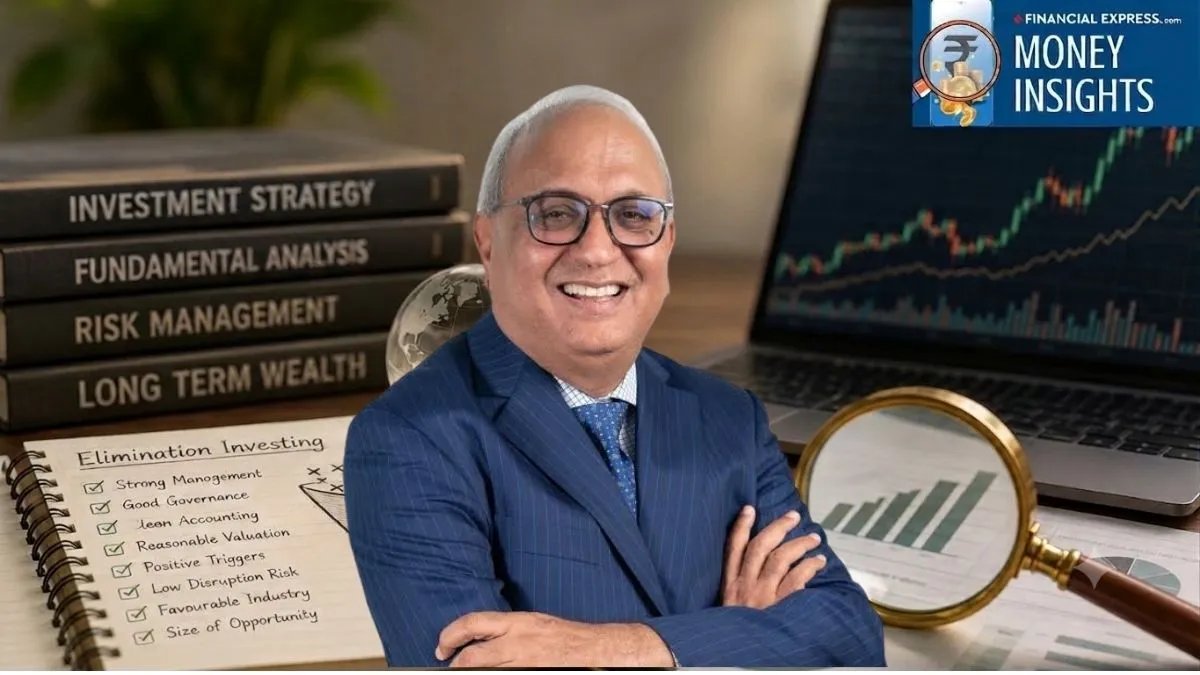
Samir Arora is a veteran fund manager. Back in the 90s, he was Alliance Capital’s first employee in India, helping launch its Indian mutual fund business in 1993.
He was the Chief Investment Officer (CIO) of Alliance Capital’s Indian mutual fund business from 1993 to August 2003. Along with managing Alliance Capital’s Asian Emerging Markets mandates, Arora managed all of Alliance Capital’s India-dedicated equity funds.
Most diversified equity funds, Alliance Tax Relief 96 (a tax-saving fund), Alliance 95 (an aggressive hybrid fund), and Alliance Equity (a large & mid cap fund), during his tenure clocked appealing annualised returns of 37.6%, 23.4%, and 27.5%, respectively, outperforming the markets.
And after a decade-long stint with Alliance, Arora co-founded Helios Capital in January 2005, based out of Singapore, fired up and excited. He’s been voted as among the most astute equity investors in Singapore.
In March 2020, Arora made his India comeback by launching portfolio management services (PMS), and in August 2023, officially entered India’s mutual fund business, launching Helios Mutual Fund.
Soon thereafter, in November 2023, he launched the flagship equity scheme—Helios Flexi Cap Fund—which drew everyone’s attention, for obvious reasons that Arora had delivered appealing returns for investors in the past.
Helios Flexi Cap Fund
Today, the scheme manages assets of over Rs 7,577 crore (as per the June 2026 portfolio) and has become a popular one in its category.
Arora has never directly managed Helios Flexi Cap Fund, but the investment philosophy shaped by him has attracted investors.
Has it delivered the performance needed for the confidence entrusted?
In 2 years and 9 months since its inception, the Helios Flexi Cap Fund has clocked an appealing compounded average growth rate (CAGR) of 18.5% (as of 28 July 2026).
Moreover, across timeframes, the fund has fared well. This is in line with Helios Mutual Fund’s investment philosophy of “striving to be consistent performance across timeframes”. It proves that Helios Mutual Fund does not take its tagline lightly, “Har term ke liye”,
Report Card of Helios Flexi Cap Fund
| Absolute | CAGR | ||||
| 3 Mths (%) | 6 Mths (%) | 1 Yr (%) | 2 Yr (%) | SI Yr (%) | |
| Helios Flexi Cap Fund | 5.0 | 7.0 | 7.3 | 6.7 | 18.5 |
| Category Median | 4.5 | 4.3 | 4.0 | 1.6 | – |
| BSE 500 – TRI | 1.9 | 0.5 | 1.8 | 1.5 | – |
The returns data is as of 28 July 2026.
Source: Value Research
The table above shows the fund has noticeably outperformed its category median and the BSE 500 – Total Return Index (TRI) over the short term (i.e. 3 months, 6 months and 1 year).
Over the past 1 year, despite the intense volatility in the Indian equity market (due to Trump 2.0’s tariff tantrums, escalating geopolitical tensions in West Asia, and heavy foreign investor outflows) that weighed on the performance of Indian equities, Helios Flexi Cap Fund has delivered significantly better returns compared to the category median.
The returns have been better even than the largest flexi cap fund, i.e. Parag Parikh Flexi Cap Fund (AUM of over Rs 1.43 lakh crore), which clocked a negative 0.96% absolute return in the past 1 year, even though the scheme’s long-term returns have been appealing (13.3% CAGR over 5 years).
On 1-year returns, Helios Flexi Cap Fund has also outperformed HDFC Flexi Cap Fund (the second-largest fund in the category with an AUM of over Rs 1.06 lakh crore), which clocked a 4.9% absolute return and is the top-performing scheme on 5-year returns with a 18.8% CAGR.
However, when compared to Abakkus Flexi Cap Fund’s 11.7% absolute returns (the fund was launched by Abakkus Mutual Fund in December 2025, by another veteran fund manager, Sunil Singhania), Helios Flexi Cap Fund’s returns are relatively low.
So far, over a 2-year period, the fund’s returns are nearly 4.2 times the category median.
While the level of risk taken by the fund (as denoted by the standard deviation) and the risk-adjusted returns (as denoted by Sharpe and Sortino ratios) are not available, as the fund has completed less than 3 years since its launch, the returns seem to be well justified by the alpha generated by the fund.
What’s driving the performance of Helio Flexi Cap Fund?
It’s the investment philosophy and robust research process. The scheme utilises Arora’s signature “Elimination Investing” (EI) framework:
Elimination Investing: How Helios Filters Out High-Risk Stocks
The core principle of the EI framework is that it does not predict which companies will be at the top, but rather which companies are more likely to underperform.
By focusing on reducing the risk of selecting poorly performing companies and skilfully eliminating companies that do not meet these criteria convincingly, the fund house creates a focused universe of “not bad” companies. This approach significantly improves the odds of arriving at a universe of companies with better prospects, aligning with the aim of outperforming the market over time.
Simply put, it is an investment strategy that focuses heavily on rejecting companies with weak corporate governance or poor business models rather than just chasing winners.
Helios’s EI process navigates through a comprehensive framework comprising eight pivotal factors. This framework is meticulously applied to eliminate investments that exhibit red flags, which lack:
- Size of Opportunity
- Favourable Industry Dynamics
- Low Potential for Disruption
- Strong Management/Background/Strategy
- Good Corporate Governance
- Clean Accounting
- Medium-Term Positive Triggers
- Reasonable Valuations
By employing this investment strategy, the focus is on eliminating “bad” investment opportunities that fail to meet the above criteria and then leaving with only the “ones that cannot be eliminated on any factor”, i.e. the universe of buy list. The fund thereafter undertakes detailed research work before adding to the portfolio.
Thus, it ultimately selects stocks from a universe of good, and perhaps less good, but definitely not bad, companies, with the mandate to invest flexibly across market caps.
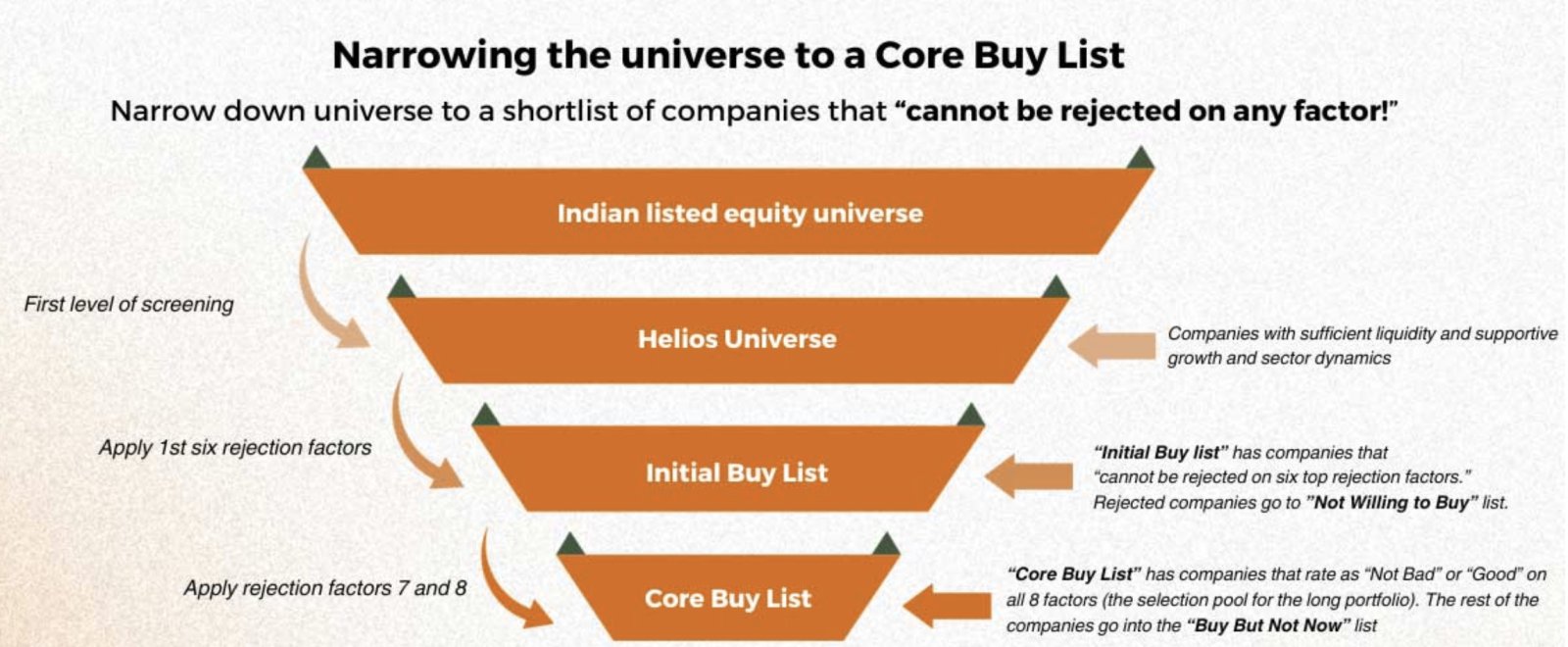
The EI framework is applied diligently and consistently to give long-term advantage to investors.
Helios Mutual Fund recognises that you, the investor, have different investment horizons based on your goals and objectives.
Will Helios Flexi Cap Fund continue to walk the talk in the future?
As Helios Mutual Fund chooses stocks from attractive themes/sectors, eliminates stocks that do not pass the 8-factor EI process, and does the deep dive research work to arrive at a “core buy list” (that cannot be rejected on any factor) from which it selects stocks it believes to have a fair shot at outperforming consistently. The fund has so far walked the talk and is potentially expected to fare well over the long term under its fund managers, Alok Bahl and Pratik Singh.
The fund follows an active approach for its portfolio construction. With a growth style pursued, the fund’s portfolio turnover ratio has ranged between 8% and 79% since its launch. In the past 1 year, the fund’s portfolio turnover ratio has generally ranged between 22% and 35%. The fund’s current portfolio turnover ratio is 33%, the factsheet reveals.
Given this, it is important to note that the fund opportunistically adjusts its holdings, at times, based on how it views the market.
For example, unlike other flexi-cap funds that frequently stayed locked in large-cap allocations, Helios Flexi Cap Fund actively has shifted its tactical weights to capitalise on the 2024–2026 small- and mid-cap rally.
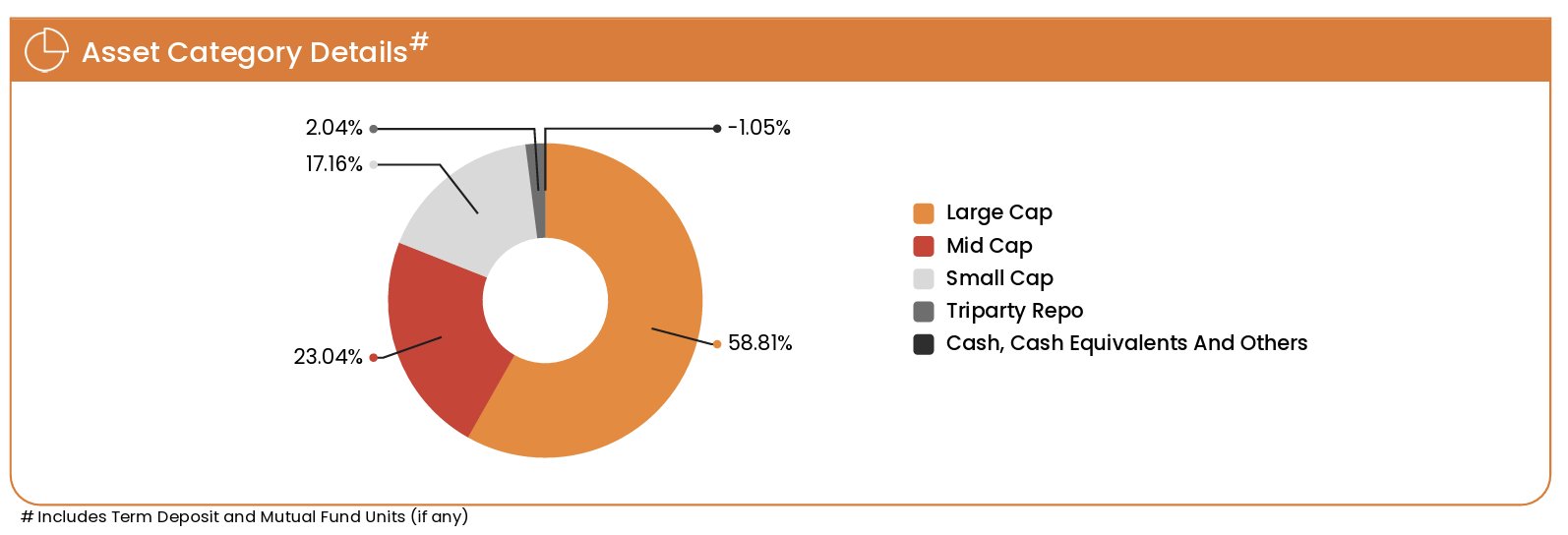
Currently, as per the portfolio as of June 2026, recognising the risks in play and considering valuations, the fund has allocated predominantly to large-caps (nearly 59%), followed by mid-caps (around 23%), and small-caps (17%).
Current Asset Allocation of Helios Flexi Cap Fund
The fund is fully invested in equities (99%), with a total of 68 stocks in its portfolio. Of these, the top 10 stocks comprise 31.7%, making the portfolio well-diversified, and include names such as Adani Ports and Special Economic Zone, HDFC Bank, ICICI Bank, Eternal (formerly Zomato), and Reliance Industries, among others.
Top 10 Holdings of Helios Flexi Cap Fund
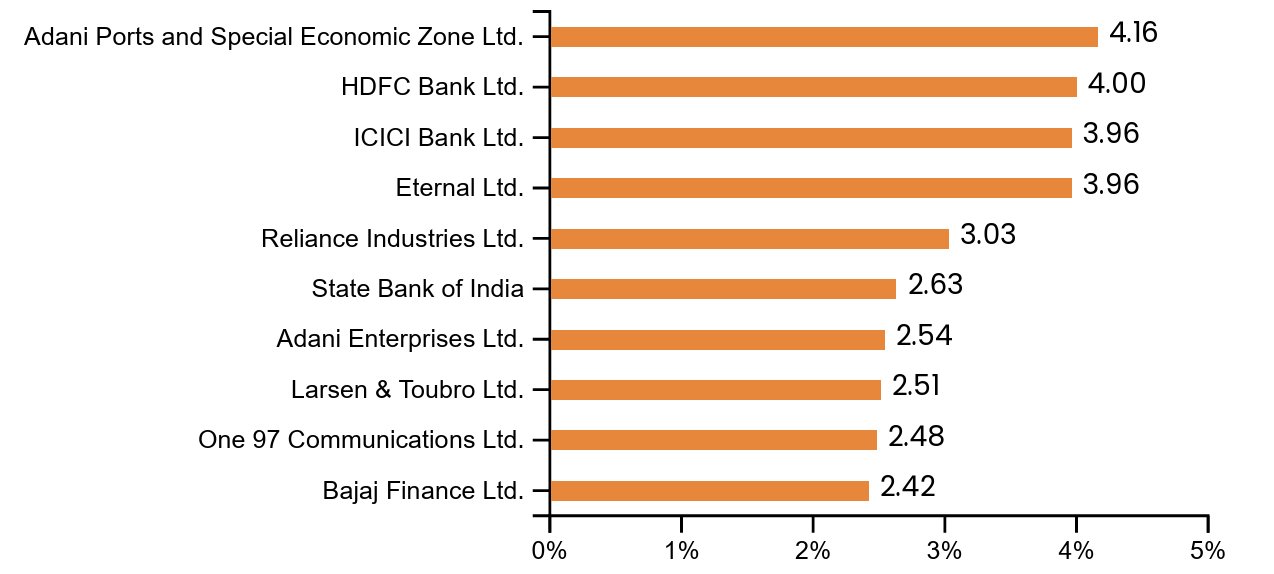
Among the top 10 holdings, barring One97 Communications (a midcap), all are large-caps.
As regards sector exposure, the top 3 sectors are financial services, capital goods, and consumer services, comprising 53.9% of the portfolio, as per its latest factsheet (as of 30 June 2026).
Capital goods have been among the top market-outperforming sectors, enabling the fund to generate significant alpha. Similarly, allocation to consumer services and other services has paid off well.
Allocation to healthcare has provided defensive stability during broader market corrections.
Also, by relying heavily on large-cap financials, capex leaders, and ports/infrastructure, the fund has achieved a lower drawdown compared to peer flexi-cap funds that held heavy, volatile small-cap exposures.
The portfolio valuation ratios, such as price-to-earnings (PE) and price-to-book (PB) at 33.2 and 4.5, respectively, show that Helios Flexi Cap Fund generally trades at higher valuation multiples compared to peers with similar AUM size such as Quant Flexi Cap Fund, Bandhan Flexi Cap Fund, and Bajaj Finserv Flexi Cap Fund.
Also, when compared to the two mammoths – Parag Parikh Flexi Cap Fund and HDFC Flexi Cap Fund – the valuation ratios of Helios Flexi Cap Fund are aggressive, given that it follows a growth-focused quality approach.
Is Helios Flexi Cap Fund a good fit for your portfolio?
You may consider adding Helios Flexi Cap Fund to your 2026 watchlist only if you have a high-risk appetite, wish to take a growth-oriented exposure (to invest across market caps dynamically), and an investment horizon of at least 5 years. If you are value-conscious, it may not be an apt fit for your portfolio.
With active portfolio management and churning, the fund is delivering appealing returns, striving to be consistent in performance across timeframes.
Invest sensibly, be a thoughtful investor.
Happy investing!
Note: We have relied on data from www.valueresearchonline.com, www.financialexpress.com, and the factsheets published by the respective fund houses throughout this article. Only in cases where the data was not available, have we used an alternate, but widely used and accepted source of information.
Returns data as of 28 July 2026. Direct Plan and Growth Option Considered.
Standard Deviation is a measure of the total volatility of the fund. The Sharpe Ratio is a measure of risk-adjusted return that shows how much excess return an investment generates for each unit of risk taken.
Portfolio data as of 30 June 2026. The average price-to-book value ratio and price-to-equity ratio of all underlying stock holdings, weighted by their portfolio weights, are considered.
Disclaimer:
Disclaimer: The above content is for informational purposes only. Mutual Fund investments are subject to market risks. Past returns are not indicative of future returns. Please consult your financial advisor before investing.
Rounaq Neroy has over 20 years of experience in the financial markets and investments. He is a close observer of the Indian economy and writes deeply on the capital markets, mutual funds, stocks, precious metals, asset allocation, wealth management, and investment strategy. His editorials provide interesting, actionable investment ideas to guide readers in the journey of wealth creation and make wise decisions. Rounaq was the Head of Content at PersonalFN (Quantum Information Services Pvt. Ltd.), which also owns Equitymaster.com – India’s oldest and trusted equity research house.