

The best reason to take the trouble to diversify your investments is that holding a wide variety of assets can significantly reduce the risk of losses.
The idea is to ensure no holding is substantial enough to torpedo your returns if it does badly.
Taking a balanced approach to what you buy will also make your portfolio less volatile because when one asset is performing poorly, this will generally be offset by another that is doing better.
But diversifying your portfolio is not just about the split between assets like stocks, corporate and government bonds, property, commodities like gold, and so on.
You also need to look at spreading investments geographically and between types of markets, like developed, emerging and those somewhere between them.
A multi-asset fund or a global tracker will do a lot of the work for you, although be aware with the latter you might find yourself inadvertently over-exposed to the US and its tech giants.

Investment strategy: Taking a balanced approach to what you buy will make your portfolio less volatile
If you start branching out into more specialist or actively-managed funds, it is also sensible to think about any natural bias you might have (perhaps without even noticing) towards a particular investing style – value, growth, quality – as they tend to be dominant at different times.
Consider also where you hold your investments, as these come with different tax incentives, rules and drawbacks, which might be switched up by the Government at any time, though typically not all at once.
For example, modern work pensions are cheap investment products, heavily subsidised by your employer and the government – with the ‘default’ fund you are auto-enrolled into the most basic and no-hassle way to invest of all.
But your money is locked up until you are 55, or 57 from spring 2028, and any withdrawals after your 25 per cent lump sum are taxed as income.
Therefore, with the caveat that you should build an emergency fund in a cash Isa first, it is then a practical and tax-efficient step to open a stocks and shares Isa as well.
The money you put in is already taxed, but after that it remains tax free and can be accessed at any age.
Diversifying your investments: Getting started
‘Spreading your money over different investment leads to a less bumpy ride as various investments perform differently rather than moving mostly in tandem,’ says Rob Morgan, chief analyst at Charles Stanley Direct.
‘No single area can be on top forever, which is why it’s important to hold a mixture. If you hold too few or too similar investments, things can work well for a while but can also quickly go downhill.’
But there are limits to how far you should go in diversifying your investments.
James Scott-Hopkins, founder of wealth manager EXE Capital Management, says: ‘There is diversification and over-diversification.
‘Diversification is key to reducing volatility but overdoing it will likely mean poorer returns. Like a good diet, everything in moderation.
‘Too much, and you end up reverting to the mean, so you might as well buy a tracker fund. But, as we know, we have the problem of concentration risk, with nearly half the S&P 500 in AI-related businesses.’
Meanwhile, Darius McDermott, managing director at FundCalibre, cautions that in an extreme market sell-off your diversification strategy might still not work.
‘Diversification is often described as not putting all your eggs in one basket,’ he says.
‘But that’s only half the story – if every basket sits on the same cart, it doesn’t matter how many you have; one pothole and they all bounce the same way.’
Are your current investments diversified enough?
You need to consider this in relation to your investment goals, time you plan to spend investing and a few other factors – there are no absolute rules.
Morgan says you should also think about how much volatility you are prepared to accept, and take into account that this can change over time.
He explains that taking on too little risk in your 20s and 30s could be a wasted opportunity.
But if you let your investments get too concentrated later in life, when you are looking to cash in or start drawing an income, you could become a victim of volatility at just the wrong moment.
‘The longer the time horizon for the intended investment the more an investor could consider allocating to shares.
‘For instance, when investing for retirement multiple decades away investing in shares exclusively, or almost exclusively, could be considered.’
So how do you check whether you have spread your risk sufficiently well? Morgan says these are the warning signs that you need to carry out a review.
– Your portfolio value is very volatile – it experiences big ups and downs.
– You only hold a small number of shares or specialist funds, or you hold few broad investments such as trackers and multi asset funds.
– Most of the investments you own appear to move in tandem – they all go up and down at the same time to a greater or lesser extent.
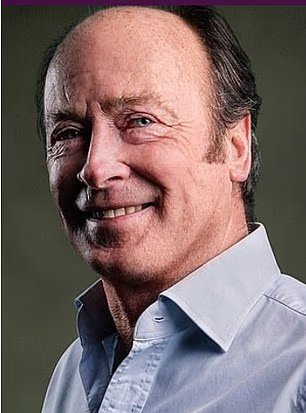
James Scott-Hopkins: Diversification is key to reducing volatility but overdoing it will likely mean poorer returns
How to make your investments more diversified
You need to think about this on two levels, namely asset classes like shares and bonds, and then numbers of holdings within each area, says Morgan.
‘A “balanced” approach might be to consider 60-80 per cent exposure to shares and 20-40 per cent to bonds and other assets that could have the effect of dampening down the typically greater ups and downs of the stock market.’
He says if you hold individual shares there needs to be more diversification than with funds – 30 to 40 holdings wouldn’t be considered too many, but you need to commit to monitoring them.
Meanwhile, he thinks 10-20 funds is an appropriately broad portfolio, because a less than 5 per cent position isn’t going to have a meaningful effect on your returns unless it does exceptionally well or badly.
And holding just one multi-asset fund is a useful shortcut – more on this below.
‘It’s important to strike a balance. A portfolio shouldn’t become a “stamp collection,” an unstructured array of holdings,’ says Morgan.
‘It’s best to start with overall objectives and strategy and then populate certain areas with just one or two funds in each area rather than an unstructured clutter.’
James Scott-Hopkins of EXE Capital Management reckons the key is to compile funds or investment trusts from a few conviction managers who focus on different companies around the world.
He suggests:
– A foot in the AI door to benefit from momentum investing;
– Another in companies that are hard for competitors to muscle in on;
– And, importantly, another in companies that have strong cash flow and pricing power to counter inflation.
Scott-Hopkins tips the Polar Capital Global Insurance fund, run by the same manager for 25 years and averaging 10 per cent growth a year.
‘Everyone needs insurance, even when markets move into bear market territory. It is a fund that is perfectly negatively correlated to equities.’
He also likes the almost 100-year-old Brunner Investment Trust, which is free to select the world’s best companies regardless of where they are listed.
‘It’s where they generate their revenues that counts. The portfolio of around 50 stocks offers broad diversification at a time of increased concentration at the index level.’
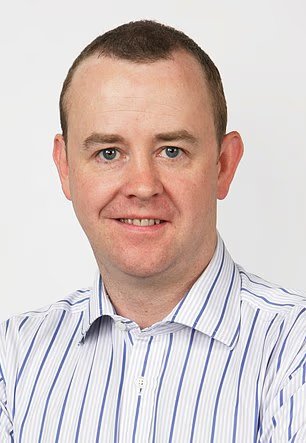
Darius McDermott: If every basket of eggs sits on the same cart, one pothole and they all bounce the same way
Diversification strategies to consider
Darius McDermott of FundCalibre offers the following fund ideas.
Bonds: Strategic bond funds such as GAM Star Credit Opportunities or Invesco Tactical Bond give you flexible access across the fixed income spectrum.
Absolute return: BlackRock European Absolute Alpha aims to deliver positive returns whatever markets do, using long and short positions so you’re not solely reliant on prices rising.
Real assets: Cohen & Steers Diversified Real Assets or First Sentier Global Listed Infrastructure offer ballast from toll roads, utilities and infrastructure, rather than corporate profits alone.
Growth, value and quality: Styles take it in turns to lead. Value funds like Ranmore Global Equity buy cheap shares well below the market average, with a tempting income on top.
Quality growth funds like IFSL Evenlode Global Equity back reliable names such as Mastercard and Visa for the long haul.
Both have very different flight paths from each other – and the index – and owning both smooths returns rather than tracking the market.
Multi-asset: Jupiter Merlin Balanced Portfolio holds 40-85 per cent in equities alongside bonds and other assets in one diversified package.
How to diversify with a multi-asset fund
Multi-asset funds are ready-made investments aiming to provide everything you need in one package, according to Morgan.
‘If you have a good idea of the risk you want to take, and you want a hands-off approach to managing your investments, they could be a great option.’
‘These funds are useful for investors who want to leave most of the investment decisions and rebalancing to experts but personalise their portfolio through their own selection of funds and shares at the edges.’
But he warns that no multi-asset fund offers a perfect solution for everyone, and they can come with different risk levels, so either choose the one most appropriate for your needs or consider buying a combination.
Dangers of diversifying with only ONE global tracker fund
Buying a global tracker fund is still a popular way to get broad all-in-one exposure to the whole world’s stock markets – but these days it comes with a warning attached.
These funds simply clone market performance and are passively run – there is no active management – and are cheap as a result.
However, they involve a concentrated bet on US markets, which make up around two-thirds of global markets, and therefore the tech and AI behemoths that dominate Wall Street.
If you only hold one global tracker fund and nothing else, you need to be aware of this over-exposure, and consider whether you want to mitigate the risks – various methods of doing so are explained below.
Morgan says a global tracker fund can be a good first option for those not able to spend time researching investments, and a building block around which other investments can be arranged.
‘Funds or ETFs such as Fidelity Index World or iShares Core MSCI World UCITS ETF provide straightforward access to many share markets around the world and therefore thousands of different companies.
‘However, be aware that traditional US and global passive funds are heavily skewed towards large US stocks.
‘Since these companies are often interlinked in terms of their fortunes, and valuations already reflect high expectations, incorporating a broader range of elements should ensure a portfolio isn’t flying on the single engine of big tech.’

Jason Hollands: So-called Magnificent Seven – Nvidia, Microsoft, Apple, Alphabet, Amazon, Meta and Tesla – represent a third of the S&P 500 Index
Jason Hollands, managing director of Bestinvest, says: ‘The traditional assumption that investing in an index tracker automatically delivers broad diversification deserves renewed scrutiny.’
He points out that the so-called Magnificent Seven – Nvidia, Microsoft, Apple, Alphabet, Amazon, Meta and Tesla – represent a third of the S&P 500 Index.
And Hollands says that if you add in semiconductor firms Broadcom and Micron Technology, both benefiting from vast spending on AI infrastructure, the top ten stocks in the S&P 500 now represent 37.4 per cent of the entire index.
He adds that it’s not just a US issue because the AI investment boom is increasingly reshaping regional indices around the world.
The MSCI Emerging Markets Index currently has close to 30 per cent exposure to three semiconductor companies – Taiwan Semiconductor Manufacturing Company (TSMC), Samsung Electronics and SK Hynix.
Hollands explains that the dominance of these companies is currently so pronounced that Taiwan and South Korea are now the two largest country positions within the MSCI Emerging Markets Index, with China and India pushed into third and fourth places respectively.
‘As recently as 2020, China accounted for around 43 per cent per cent of the MSCI Emerging Market Index – it is now 18.9 per cent.
‘Many investors buying an emerging markets tracker may assume they are gaining broad exposure to the growth prospects of a swathe of developing economies.
‘Increasingly, however, they are inadvertently making a significant bet on a small number of semiconductor manufacturers and, by extension, the continuation of the global AI investment cycle.’

Rob Morgan: Taking on too little risk in your 20s and 30s could be a wasted opportunity
How to avoid the global tracker trap
Alternatives to traditional global trackers and funds you could buy in tandem to them are explored below.
Equal weighted funds
These allocate an equal weight to each individual company in an index like the US S&P 500, rather than the usual method of weighting them according to market value.
‘This reduces dependence on a handful of dominant stocks and can provide broader participation across the market,’ says Hollands.
‘One strategy for those worried about concentration risk might be to shift part of an existing position in a conventional market-cap weighted tracker into an equal weighted version.’
He suggests for US exposure you could hold both a S&P 500 Index tracker and the Legal & General S&P 500 Equal Weight Index fund.
And in addition to a global tracker, you could buy the Invesco MSCI World Equal Weight UCITS Exchange Traded Fund.
Morgan says if you are unsure about being overly invested in ‘big tech’ then an equal weight strategy will place more emphasis on areas such as industrials, real estate, materials and utilities
‘Broadly, the approach tilts towards cheaper “value” stocks and away from more expensive “growth” stocks.
‘X trackers S&P 500 Equal Weight UCITS ETF tracks the same number of holdings as a standard S&P 500 ETF but weights the components equally – at approximately 0.2 percent presently – rather than by size based on relative market capitalisations.
‘Holdings are rebalanced to equal weighting on a quarterly basis.’
Defensive global equity funds
Morgan says as an alternative or complement to a global tracker, you could buy a defensively minded global equity fund, or a global equity income fund targeting resilient, dividend-paying stocks
‘For instance, JO Hambro Global Opportunities offers a blend of offense and defence with the managers focused on quality and value.
‘Zero exposure to Nvidia, Apple, Amazon, Meta, Broadcom and TSMC make the fund a more defensively minded diversifier to a global tracker.
‘Meanwhile, Trojan Global Income focuses on quality and resilience as a priority with a preference for more predictable businesses that can quietly compound their earnings over time.

Factor funds
These are ‘next generation’ passive investments, maintaining broad diversification but still without relying on the judgment of a fund manager, according to Hollands.
They hold a wide basket of shares but are weighted according to fundamental characteristics, rather than simply market capitalisation, he explains.
Hollands suggests the Invesco RAFI US Fundamental Value ETF, which owns the 1,000 largest US companies,
‘Instead of weighting each holding on market-cap, it does so on four criteria: sales (averaged over the prior five years), cash flow (averaged over the prior five years), book value (at the review date), and dividends (total dividend distributions averaged over the last five years).’
DIY INVESTING PLATFORMS

AJ Bell
AJ Bell
Easy investing and ready-made portfolios

Hargreaves Lansdown
Hargreaves Lansdown
Free fund dealing and investment ideas

interactive investor
interactive investor
Flat-fee investing from £4.99 per month

Freetrade
Freetrade
Investing Isa now free on basic plan

Trading 212
Trading 212
Free share dealing and no account fee
Affiliate links: If you take out a product This is Money may earn a commission. These deals are chosen by our editorial team, as we think they are worth highlighting. This does not affect our editorial independence.