


A €285bn swing in euro-area bond flows gives MUFG reason to see some support for the euro-dollar below $1.10, even as higher US yields favour the USD rates.
The euro ended Friday at $1.0968, close to its three-month low of $1.0954. Demand for euro-area shares tells a different story. Net equity inflows reached €207bn in the nine months to September, more than triple the €65bn recorded in the same period of 2025.
MUFG found an even bigger turnaround in bonds. For securities with maturities of more than a year, the euro area recorded €113bn of net inflows, against €172bn of net outflows a year earlier.
The bond figures count money moving in both directions. In the final months covered by the data, net flows turned outward again. MUFG traced that chiefly to euro-area investors buying more bonds abroad.
Derek Halpenny at MUFG wrote, “There are other components to cross-border flows related to hedging and speculative flows captured elsewhere but the message from these components is that foreign investor appetite for euro-zone equities and bonds has been solid on a year-to-date basis.”
A US fund buying French shares, for example, can sell euros forward to hedge against a fall in the exchange rate. The share purchase appears in the portfolio figures either way. That limits how much the figures can tell investors about demand for euros on the spot market.
Other flows offered the currency less support. MUFG puts the euro area’s current-account surplus at €160bn in the nine months to September, down from €180.8bn a year earlier, partly because imported energy cost more. Net direct investment outflows rose to €206bn from €122bn over the same period.
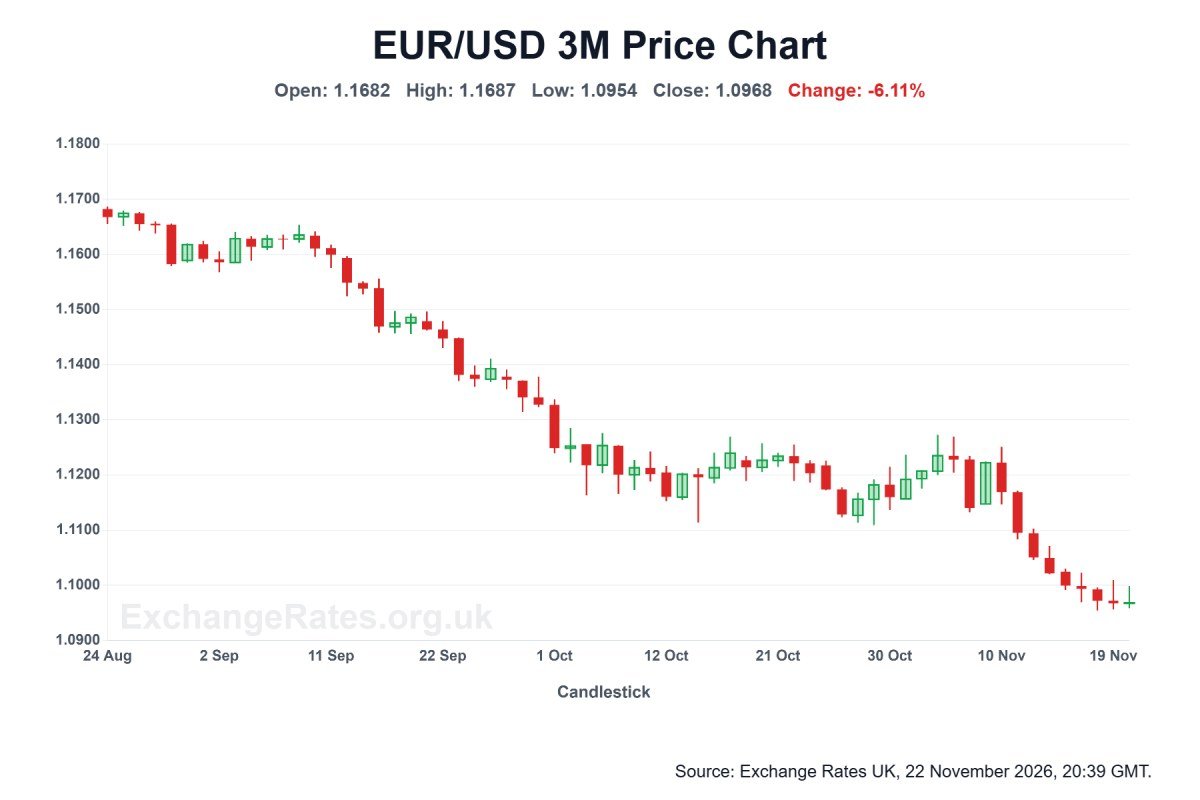
Nordea still expects higher US interest rates to favour the dollar. On Friday, its analyst Joel Lundh judged market expectations of two to three Federal Reserve rate rises before summer reasonable. He stood by Nordea’s October forecast of $1.08 during the first half of 2027, around 1.5% below Friday’s close.
Crédit Agricole CIB points out that the US interest-rate advantage did not widen during the euro’s latest fall. It sees scope for the decline to slow, though it expects a recovery to require signs that the dollar’s broader rally is fading.
The ECB publishes its next balance of payments figures on 18 December. They will show whether euro-area investors’ purchases of foreign bonds continued to outweigh overseas demand for euro-area debt in October, when the euro fell through $1.12.
Our currency coverage draws on live market data, official economic releases and published bank research.