

A triple whammy of negativity is sweeping markets this morning, building on yesterday’s theme as French fiscal and political woes combine with AI worries, escalating Middle East tensions and rising oil prices. The good news? With investors taking cover and frothy tech shares slumping, bonds and defensive stocks are once again serving a purpose, and government bond yields, with the exception of France, of course, are coming down a bit. Is UK debt a safe haven again?
It’s of course much more nuanced than that, but yesterday’s stock market rout, which was very tech-focused, does mean there’s cash circling around looking for a home, and with precious metals bringing their own problems, bonds are where investors have landed. The UK 10-year gilt yield is down a touch to 5.33 per cent, having breached 5.45 per cent earlier this week. Similarly, the US 10-year Treasury yield is below 5 per cent, having touched 5.1 per cent on Thursday. There has been no end to France’s problems, however, with its 10-year yield hovering around 5.1 per cent and the spread versus German bonds as high as ever.
It’s France and the tech sell-off affecting the stock markets this morning, with the FTSE 100 again in the red despite having played up to its anti-tech make-up in recent weeks. Even a rising oil price is not enough to overcome the fallout from the continent: the blue-chip index is down 0.5 per cent, while shares in Frankfurt and Paris are down slightly more.
Overnight, indices in Tokyo and Seoul both fell, with the latter never really standing a chance given its extreme AI trade. Yesterday’s US selling was very much AI-heavy, with the Philly Semiconductor index down nearly 7 per cent and neocloud leader CoreWeave taking the biggest hit, falling 10 per cent. As a result, the Nasdaq index was down 2.6 per cent, and the S&P 500 fell 1.2 per cent. However, defensive shares and industrials picked up some momentum as investors turned elsewhere. The Dow Jones index finished slightly in the green, as did the S&P equal-weighted index whose balance removes the tech dominance at the top. Futures show this trend will very much carry on when New York opens later on today, with the Nasdaq expected to open 2.6 per cent down and the Dow slightly up.
Safe havens aren’t much of a silver lining, though, with oil prices rising 4 per cent yesterday to breach $114 a barrel and standing just shy of that this morning, following escalation in the Middle East. European gas futures are also rising, amid reports that the US and Israel are gearing up to restart hostilities (did they ever end?) with Iran. Attacks from Yemen’s Houthis on Saudi oil supplies are also adding to the woes.
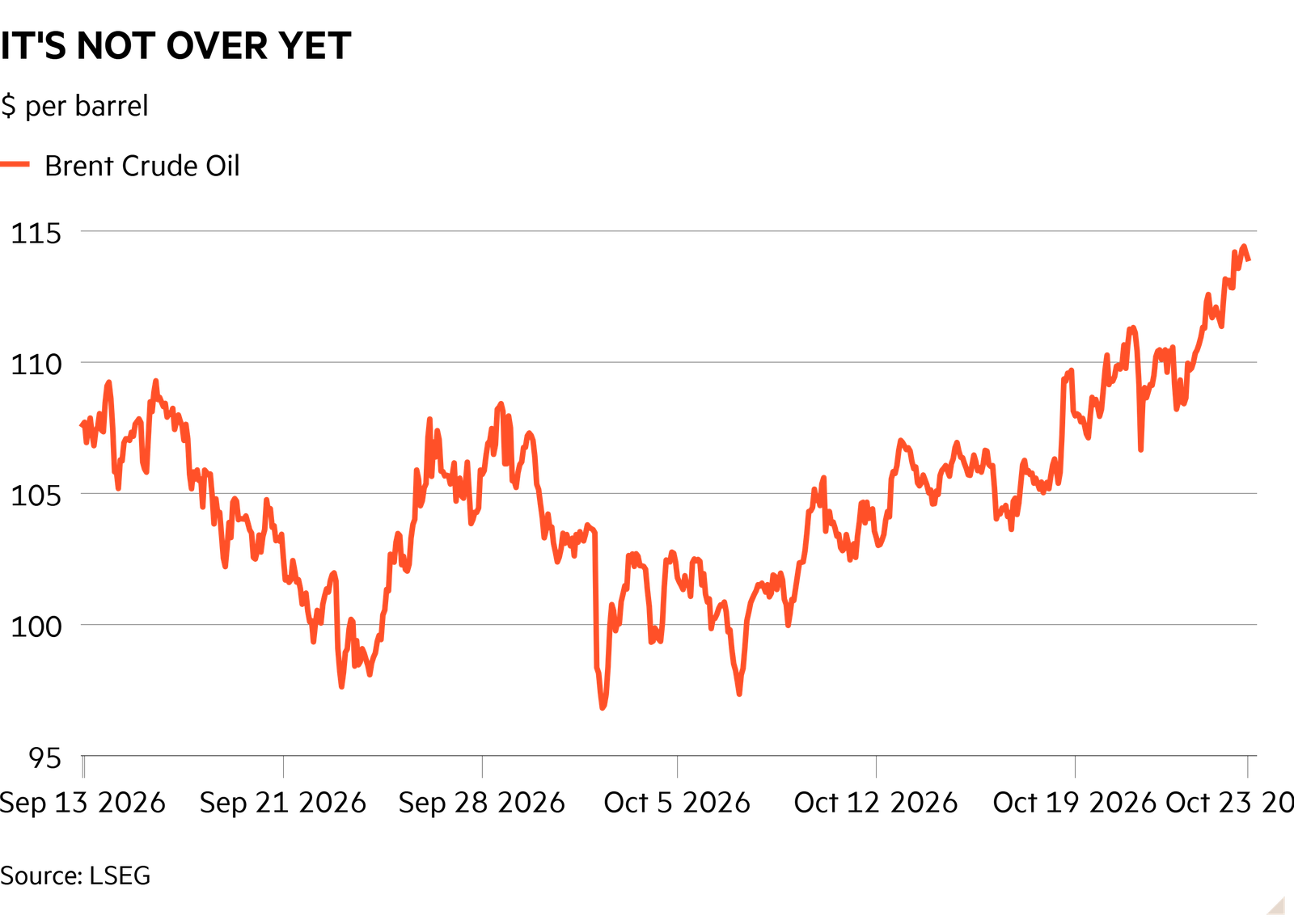
The weekend break can’t come soon enough for stock markets, and while bond yields falling is good news for embattled governments in the UK and US, they’d probably rather it was because of their action, rather than investors literally having nothing else to buy. If the oil price remains at this level for any period of time, 10-year and 30-year yields will be under pressure again due to long-term inflation expectations and debt issues. Expect pressure on short-term bonds too, as central banks raising rates comes back to the fore. At the moment, the odds say the Federal Reserve will hold next week, but it’s becoming more and more likely the Bank of England will hike. This is far from over.
Of course, there’s the small matter of the Budget next week, which bond investors will be keeping a close eye on to understand how Prime Minister Andy Burnham and chancellor John Healey will fix the nation’s finances without borrowing more or taxing more and hurting economic growth. Hmm. Read more on the Budget here
By Taha Lokhandwala