(Bloomberg) — Treasuries wiped out an early slump as investor focus turned to the risk that surging energy prices will become a drag on economic growth.
Yields were lower by about a basis point at 3:45 p.m. in New York after erasing increases of six to seven basis points. They had risen along with oil benchmarks after US President Donald Trump took a threatening tone toward Iran in a speech.
The US war on Iran has disrupted oil supply from the region, causing prices to rise more than 50%. The prospect that higher US inflation via gasoline prices will keep the Federal Reserve from cutting interest rates has hurt the bond market.
The higher oil prices go, however, the more investors worry that the shock will cause a recession, hitting the stock market and driving money into bonds. The S&P 500 index, little changed after erasing a drop, closed at its lowest level this year Monday. The dollar strengthened against all its Group-of-10 peers.
“We’ve been writing to our clients for weeks that this will become a growth story,” said Gregory Faranello, head of US rates at Amerivet Securities. While inflation will rise first, “the US Treasury market has woken up to this reality that over time if energy prices move higher or stay sustained, the economy will suffer.”
In a speech Wednesday night in Washington, Trump dashed hopes for a quick end to the Middle East conflict, saying the US plans to launch fresh attacks on Iran within the next two to three weeks, despite also reiterating that the war is “very close” to completion.
US benchmark West Texas Intermediate crude oil futures settled above $111 a barrel, and the US daily average price per gallon for unleaded gasoline is over $4, both for the first time since 2022.
“Markets seemed to be positioning for a ceasefire announcement last night, while President Trump’s address gave the opposite,” said Molly Brooks, rates strategist at TD Securities.
Temporary Respite
Oil benchmarks briefly pared their advance at around mid-morning in New York on reports that Iran was drafting a protocol with Oman to open the Strait of Hormuz. Coincidentally, US stock benchmarks trimmed their declines and yields accelerated lower.
Elevated gasoline prices stand to put upward pressure on broad inflation gauges like the consumer price index, which was higher than Fed policymakers would like it to be even before war started.
While policymakers have expressed divergent views on the appropriate response to the oil price surge, several have said it warrants delaying interest-rate cuts to keep higher inflation expectations from becoming entrenched.
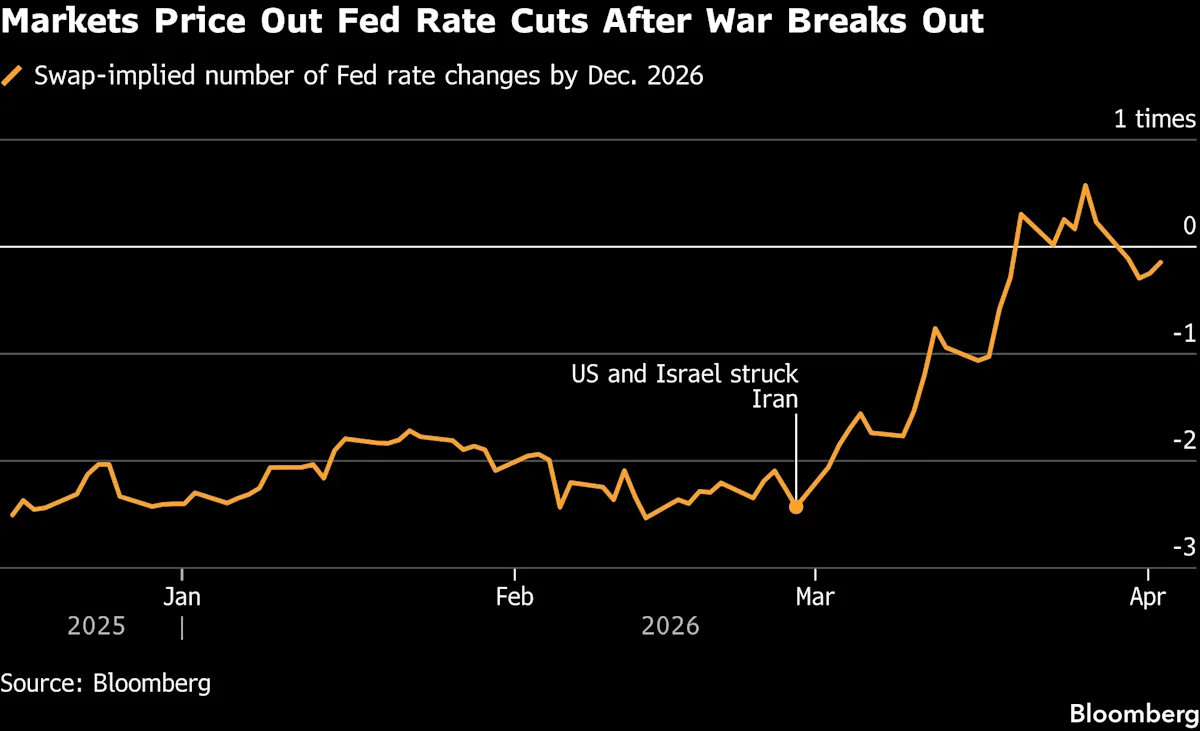
Before the war started on Feb. 28, overnight index swaps had priced in more than two quarter-point rate cuts this year. Those expectations were subsequently erased, and traders began to price in the chance that the Fed’s next move would be a rate increase. More recently, the market expects the Fed to stay on hold in 2026.
The US central bank cut interest rates three times last year in response to weakness in the job market. They paused the cuts in January, citing improvement on that front. Since then, the US Labor Department’s monthly jobs report for January was stronger than anticipated, while February data showed weakness.
Bank of America strategists this week pushed back their view for Fed reductions to September and October, from June and July.
Good Friday
The March employment report is set to be released Friday under unusual conditions, with the US stock market closed for Good Friday. The de-centralized bond market normally closes as well, however when the holiday coincides with a jobs-report release day, an abbreviated trading session is the norm.
The Securities Industry and Financial Markets Association recommended trading stop for dollar-denominated bond trading at 12 p.m. New York time, an hour after CME Group Inc.’s interest-rate futures trading is slated to conclude. Meanwhile, European markets will reopen on Tuesday.
“The data has a good chance of being stronger than the bond market anticipates,” said Tom di Galoma, managing director at Mischler Financial Group. “Risk-reduction and position unwinds have been happening all week ahead of UK and European four-day Easter weekend holiday.”
US economic data on Wednesday indicated the Iran war is putting upward pressure on inflation. The Institute for Supply Management’s gauge of prices paid for manufacturing inputs climbed to 78.3 in March, remaining at the highest since mid-2022.
‘Arm Wrestle’
Concern that inflation pressures will intensify drove the biggest monthly increase in 10-year Treasury yields in March since late 2024. While higher oil prices risk stoking inflation, they also threaten to weigh on global growth, complicating the outlook for monetary policy.
TD’s Brooks said investors are likely to once again shift their focus toward the risk of a potential demand hit coming from higher oil prices. Money managers at Pacific Investment Management Co. and JPMorgan Asset Management are among who have already said they’re preparing for an economic slowdown that will cause a bond-market rebound.
“The arm wrestle between inflation expectations and growth concerns will continue,“ said Martin Whetton, head of financial markets strategy at Westpac Banking Corp.
Federal Reserve Chair Jerome Powell said earlier this week that longer-term inflation expectations appear to be in check, though officials are closely monitoring developments as they assess the economic impact of the war.
–With assistance from Alice Atkins, Michael MacKenzie and Anya Andrianova.
(Adds Strait of Hormuz report and oil settlement price and updates yield levels.)
More stories like this are available on bloomberg.com
©2026 Bloomberg L.P.