
A UC Riverside environmental engineering team has discovered specific bacterial species that can destroy certain kinds of “forever chemicals,” a step further toward low-cost treatments of contaminated drinking water sources.
The microorganisms belong to the genus Acetobacterium and they are commonly found in wastewater environments throughout the world.
Forever chemicals, also known as per- and polyfluoroalkyl substances or PFAS, are so named because they have stubbornly strong carbon-fluorine chemical bonds, which make them persistent in the environment.
The microorganisms discovered by UCR scientists and their collaborators can cleave those stubborn fluorine-to-carbon bonds, they report July 17 in the journal Science Advances.
“This is the first discovery of a bacterium that can do reductive defluorination of PFAS structures,” said Yujie Men, corresponding author of the study and an associate professor at UCR’s Bourns College of Engineering in the Department of Chemical and Environmental Engineering.
Men cautioned that the bacteria were effective only on unsaturated PFAS compounds, which have double carbon-to-carbon bonds in their chemical structures.
But importantly, the scientists also identified the specific enzymes in these bacteria essential for cleaving the carbon-fluorine bonds. This discovery opens the door for bioengineers to improve these enzymes so they can be effective on other PFAS compounds. (Enzymes are proteins that act as catalysts for biochemical reactions.)
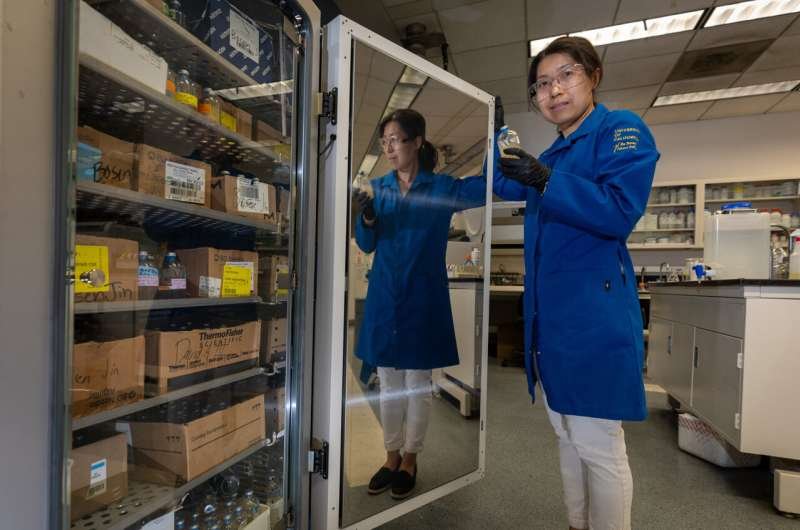
“If we can understand the mechanism, maybe we can find similar enzymes based on the identified molecular traits and screen out more effective ones,” Men said. “Also, if we can design some new enzyme or alter this known enzyme based on the mechanistic understanding, we could be able to make it more efficient and work with a broader range of PFAS molecules .”
In 2023, Men published a paper that identified other microorganisms that cleave the carbon-chlorine bond in chlorinated PFAS compounds, which triggers substantial spontaneous defluorination and destroys this group of pollutants. The most recent discovery greatly expands the number of PFAS compounds that can be destroyed biologically.
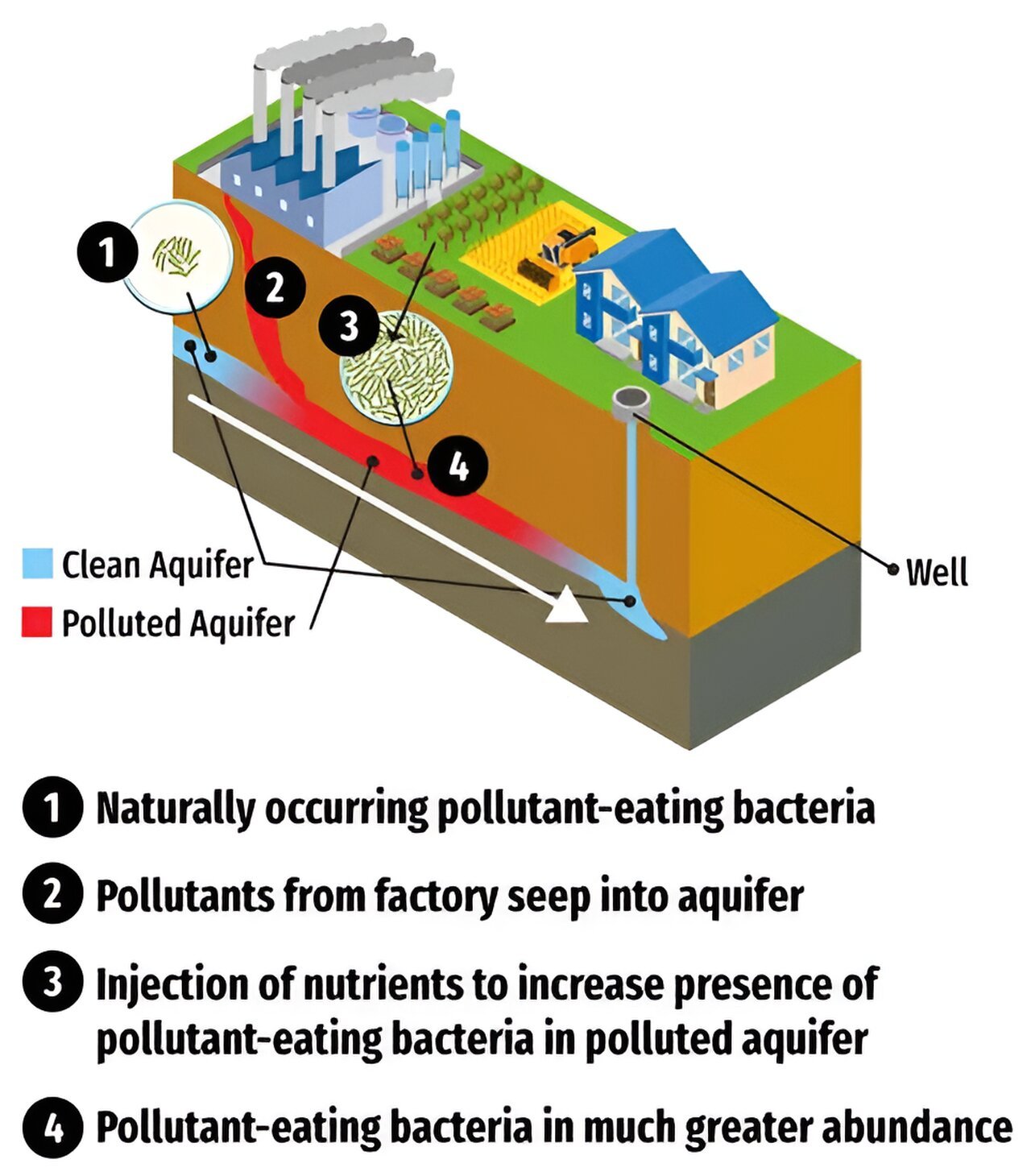
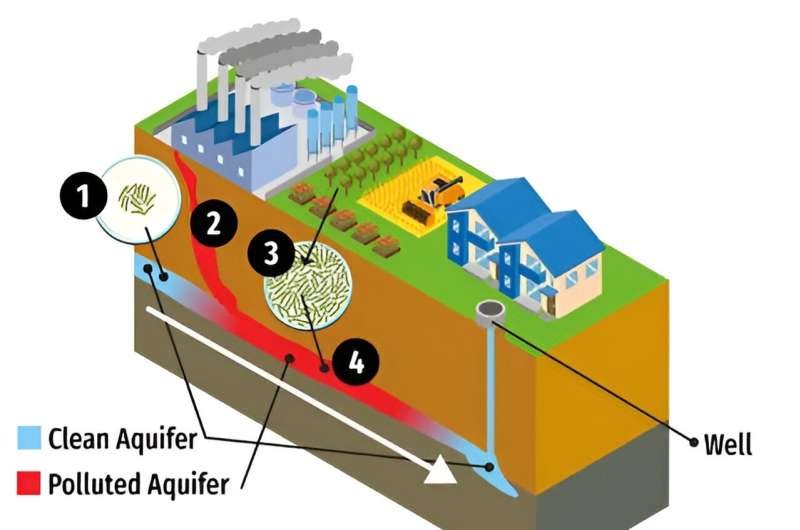
Using bacteria to treat groundwater is cost effective because the microorganisms destroy pollutants before the water reaches wells. The process involves injecting the groundwater with the preferred bacteria species along with nutrients to increase their numbers.
Because PFAS compounds are linked to cancer and other human health maladies, the U.S. Environmental Protection Agency, or EPA, imposed water-quality limits earlier this year that restrict certain forever chemicals to only four parts per trillion in the nation’s tap water, spurring water providers to find PFAS cleanup solutions.
PFAS compounds came into widespread use in thousands of consumer products starting in the 1940s because of their ability to resist heat, water, and lipids. Examples of PFAS-containing products include fire suppressant foams, grease-resistant paper wrappers and containers such as microwave popcorn bags, pizza boxes, and candy wrappers; also, stain and water repellents used on carpets, upholstery, clothing, and other fabrics; according to the EPA.
Yaochun Yu is the lead author of the paper. He was a visiting student scientist and a UCR post-doctoral scientist at UCR before joining the Swiss Federal Institute of Aquatic Science and Technology, or Eawag, in 2022.
More information:
Yaochun Yu et al, Electron-bifurcation and fluoride efflux systems implicated in defluorination of perfluorinated unsaturated carboxylic acids by Acetobacterium spp., Science Advances (2024). DOI: 10.1126/sciadv.ado2957. www.science.org/doi/10.1126/sciadv.ado2957
Provided by
University of California – Riverside
Citation:
Microbes found to destroy certain ‘forever chemicals’ by cleaving stubborn fluorine-to-carbon bonds (2024, July 17)
retrieved 17 July 2024
from https://phys.org/news/2024-07-microbes-destroy-chemicals-cleaving-stubborn.html
This document is subject to copyright. Apart from any fair dealing for the purpose of private study or research, no
part may be reproduced without the written permission. The content is provided for information purposes only.