
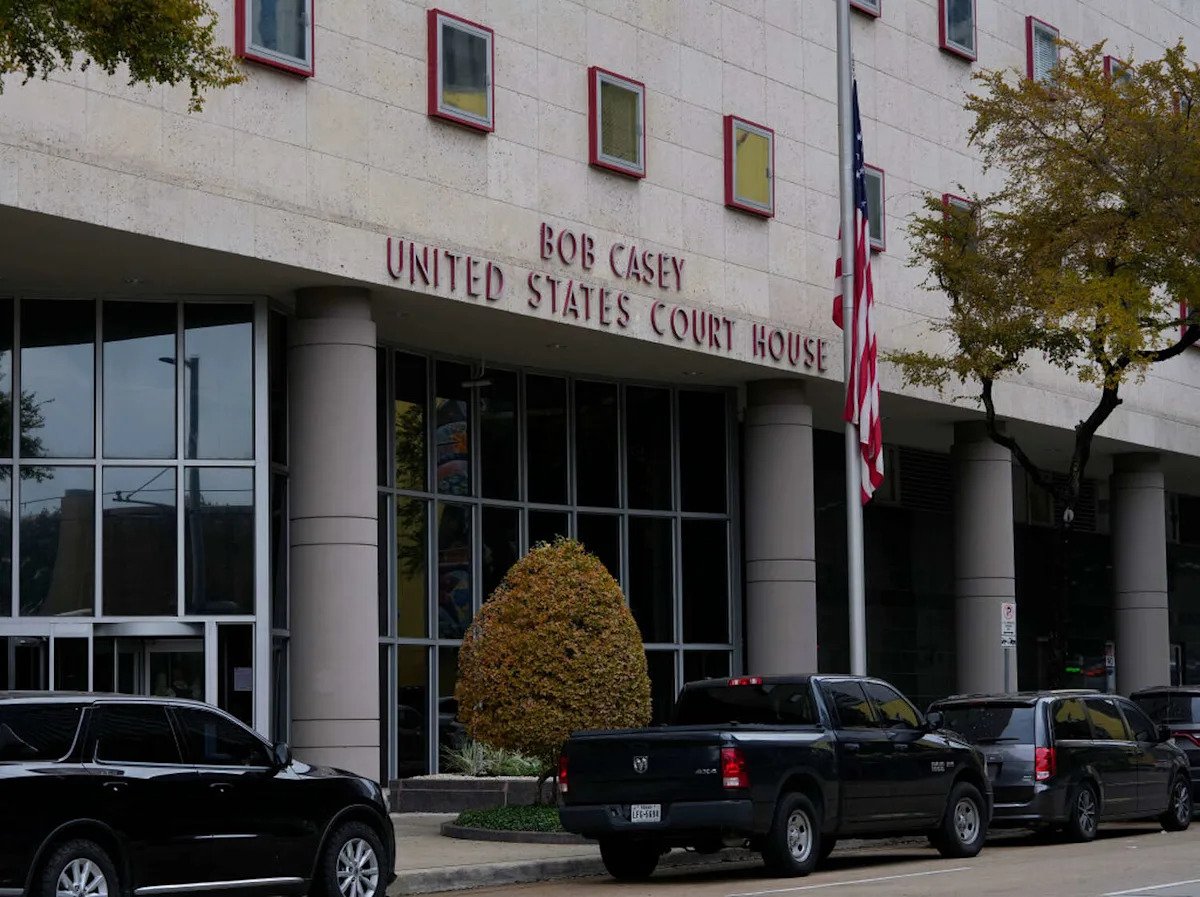
Inside a mostly empty courtroom Monday morning, attorneys delivered closing arguments in the first bench trial for people accused of conspiring with Houston’s AABLE Bail Bonds to spring men charged with murder and other crimes from jail.
Last year, more than 50 people were arrested and accused of participating in a conspiracy to use fraudulent documents to get people with high bail amounts out of jail. The Department of Justice accused most of the people in the indictment of defrauding an insurance company, Financial Casualty & Surety, the underwriter for bonds written by AABLE.
MORE ON HOUSTONCHRONICLE.COM: Inside a Houston bail company’s alleged fraud scheme that helped get murder suspects out of jail
The three people on trial – James Bateson, Kamaiga Gholar and Katherine O’Brien – are all accused of acting as straw cosigners to get criminal defendants out of jail using AABLE’s services. Here’s what was revealed during the trial:
Not every co-signer acted the same way
The indictment handed up last year accuses the alleged co-signers of committing the same crime: putting their names on documents that showed they earned more money than they truly did.
Testimony during the trial showed a wide variance in how the co-signers acted.
Bateson is accused of sharing false information about himself, claiming that he worked for a company that didn’t exist, prosecutors said. He showed up at AABLE’s offices and turned over his driver’s license for the company’s files. Prosecutors alleged Bateson was paid $100 to help bond out a defendant, James Palladina, in April 2021.
Gholar went to AABLE’s office and presented truthful information about herself. She’s accused of passing along false information about other people she knew to obtain a bond for a defendant named Nicholas Yoder. During testimony, Gholar said she didn’t know the information that other people gave her was false.
“He was asking me to help him” Gholar said. “I like putting smiles on people’s faces and turning their day around. Anything I can do, I’m just helpful. I like being a big help to people.”
Prosecutors, however, played phone recordings where Gholar talked about disguising her handwriting in bond documents and delaying the timing of when she sent information to avoid suspicion.
O’Brien used other people’s personal information with their knowledge, including the Social Security number of a woman she met while working in a job-training program, to bond out her then-boyfriend, Roemello Burros, according to prosecutors. O’Brien argued that she was a victim of abuse and committed the crime under duress. After he was bonded out, Burros was convicted of sex trafficking. O’Brien was one of his victims, according to her attorneys.
AABLE employees guided the scheme, according to testimony
Testimony during the weeklong trial revealed more details about how AABLE employees allegedly worked with criminal defendants to arrange the fraudulent documents.
Prosecutors played a jailhouse phone call between Yoder, Gholar’s friend, and Mary Brown, an AABLE employee, in which Brown coached him on how many co-signers he needed and what kind of information they should report.
An audio recording presented by prosecutors showed Brown charging extra money to get around information verification checks required by AABLE’s insurer.
In another part of the trial, Gholar said that she was directed by another employee, Oscar Wattel, to seek out fake co-signers after she turned in truthful information.
Both Brown and Wattel were charged in the AABLE indictment. Court records show Brown asked for a court date to be set to enter a guilty plea, but no date has been set.
Still unclear is what role AABLE’s owner, Sheba Muharib, may have played in the conspiracy. The federal indictment charged Muharib with knowingly allowing Wattel to work for her despite a previous conviction for insurance fraud. Unlike Brown and Wattel, there wasn’t any testimony during the trial to link Muharib directly with AABLE customers.
Who was hurt?
One of the more complicated arguments of the case is who exactly was hurt by the scheme. According to the indictment, the victim is Financial Casualty & Surety, the insurer who backed AABLE’s bonds in case a bond was forfeited.
Prosecutors acknowledged that none of the bonds AABLE arranged were forfeited. The insurer didn’t lose any money because of the release of the 11 men because they all returned to court as they were supposed to.
But it’s a crime to force an insurer to unknowingly risk money, prosecutors said.
“FCS put its money on the line, its property on the line, when it issued surety bonds for these defendants who were released on the basis of false information,” Assistant U.S. Attorney Stephanie Bauman said.
Ken Good, an attorney who represents FCS, testified that AABLE’s collapse hurt the company. FCS has lost between $1.5 million and $2 million since AABLE’s closure, Good said. The losses were largely because of forfeited bonds agreed to by AABLE that FCS had to pay, he said.
Good testified that AABLE was a “house of cards” that worked to evade internal checks on its financial health that might have caught the scheme while it was underway.
“We normally have red flags that we look for that show that an agency’s under stress,” Good said. “We didn’t see any of those red flags here, and we lost because of fraud.”
What’s next in the AABLE case
U.S. District Judge Lee Rosenthal didn’t immediately issue a decision on Bateson, Gholar and O’Brien’s cases following closing arguments Monday morning. A written decision is expected sometime in the future.
If they are convicted, the trio will join the list of AABLE defendants waiting to be sentenced for their role in the conspiracy. As of Monday, 20 of the 53 people named in the indictment had signed plea agreements. The first sentence related to the case is scheduled to be handed down on Wednesday.
The defendants who have not pleaded and didn’t participate in the bench trial are currently scheduled to begin their jury trial Nov. 10.
This article originally published at The first AABLE Bail Bonds trial is over in Houston. Here are 3 things it revealed..