
The strange thing about the last year is not that markets reacted to politics. They always do.
The strange thing is how they reacted. At moments when investors normally rush into US bonds, they stepped back instead.
Not dramatically. Not all at once. Just enough to change prices.
That is how regime changes start in markets. Behind the scenes, but clear enough to matter.
What changed in the US Treasury market
In 2025, foreign ownership of US bonds reached a record. Overseas investors added hundreds of billions of dollars of Treasuries, with Europe accounting for most of the net increase after April. On the surface, that looked like business as usual.
But prices tell a different story than totals.
During periods of political stress last year and again in January 2026, US Treasury yields went up instead of falling.
At the same time, the dollar weakened against the euro.
That combination is rare because in the past, global stress pushed yields down and lifted the dollar as money rushed toward safety.
This time, safety did not behave like safety.
When yields rise, it means buyers are asking for more compensation.
When the dollar falls at the same time, it means capital is not staying inside the US system.
Investors are not just selling bonds. They are changing where they want to be paid.
Why bond markets react before stocks
Stocks are emotional, while bonds are practical. That’s why it’s important to observe the recent patterns.
Equities sell off on headlines and recover just as quickly. Bonds move when assumptions change.
That is why the bond market reacted first during the tariff shock in April 2025 and again during the recent Greenland escalation.
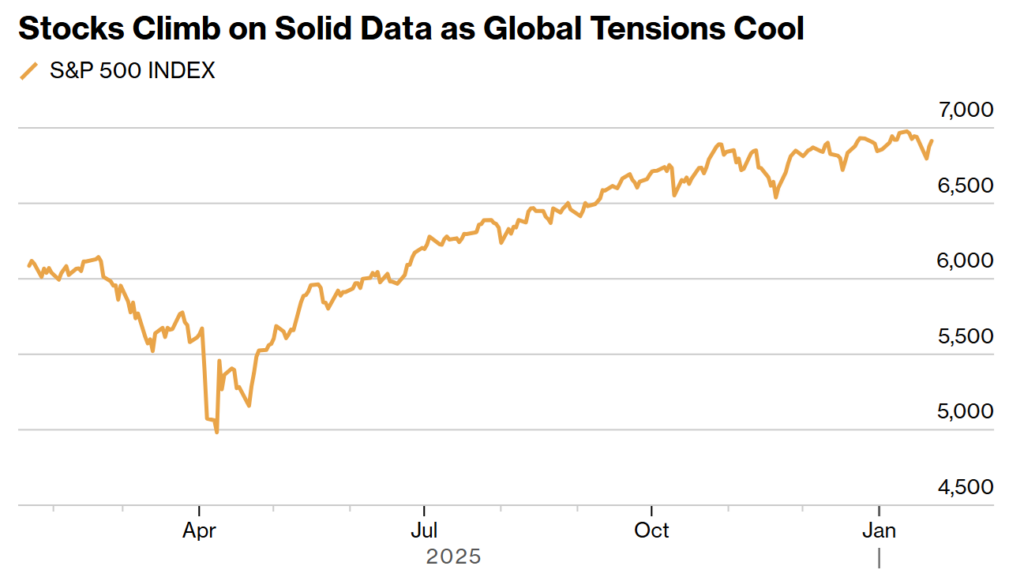
As tensions rose, Treasury yields jumped, and mortgage rates followed.
Equity markets fell, then bounced once Donald Trump reversed course. But yields only settled once the risk was clearly taken off the table.
This pattern tells you where the pressure really is.
The US government carries a debt load built in a zero-rate world.
With rates higher, every increase in long-term yields feeds directly into interest costs.
That is why the bond market has become the fastest way to discipline policy. Stocks can fall without breaking anything. Bonds cannot.
Investors understand this. So do policymakers, even if they do not say it out loud.
The illusion of comfort in foreign flow data
Though record foreign holdings of US bonds sound reassuring, they should be treated carefully.
Treasury data record where bonds are held, not who ultimately owns them.
European financial centers act as custodians for global capital, which inflates Europe’s apparent role as a buyer.
It does not tell you whether the final investor is German, Asian, or Middle Eastern.
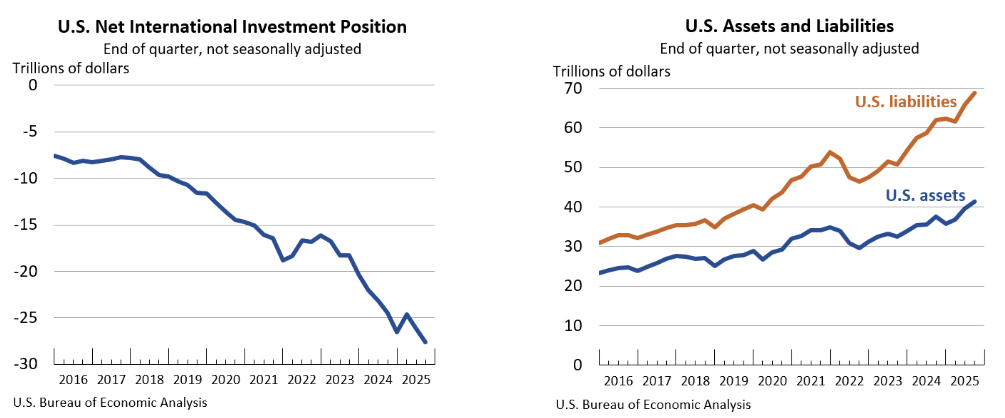
There is also a valuation issue. US asset prices rose through much of 2025, but a large share of the increase in foreign exposure came from higher prices, not new buying.
The balance sheet grew even when flows slowed.
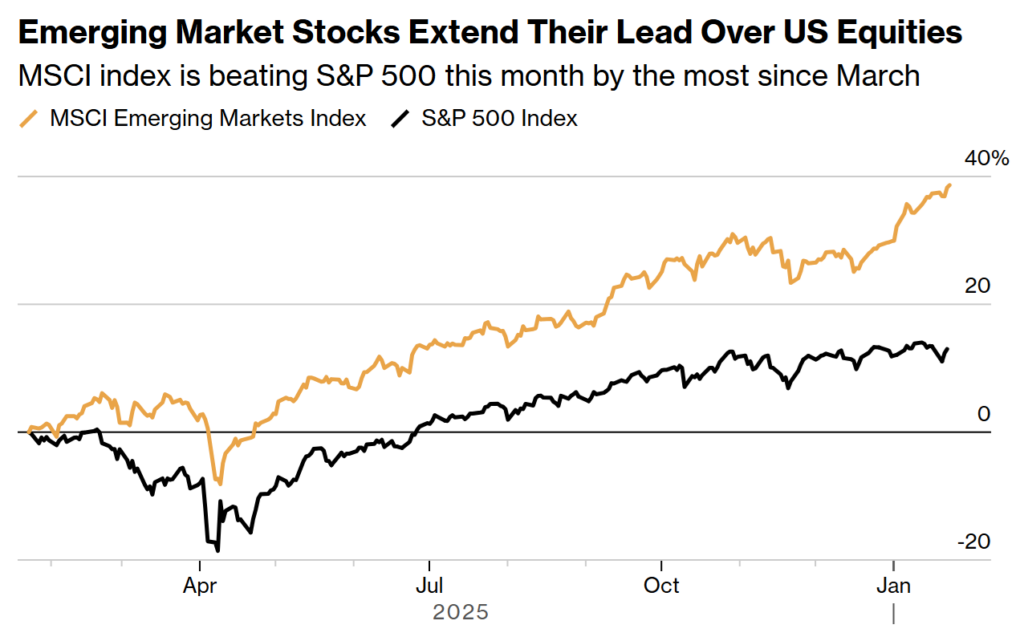
More revealing are short-term reactions. Weekly fund flow data show repeated episodes of selling in US equity funds during political stress, while flows into European bonds picked up.
Some long-term institutions reduced exposure as well.
For example, Nordic pension funds sold Treasuries, and China continued trimming its holdings.
This shows that investors are no longer treating US bonds as the only place to hide.
American credibility was the real asset
Traditionally, US bonds benefited from more than liquidity. They also benefited from belief.
That belief allowed the US to run persistent trade deficits and finance them cheaply. Foreign investors accepted low yields because they trusted the system behind the bond.
Scale, military power, alliances, rule of law, deep markets, and a long record of repayment all fed into that trust.
Those pillars still exist, but some look weaker than they did.
Relative economic size has changed. On a purchasing power basis, the US is no longer the largest economy.
Fiscal deficits are large and rising while interest costs are no longer suppressed.
Trade policy has become unpredictable. Pressure on the Federal Reserve has made policy outcomes harder to price.
Markets do not need to collapse to reprice risk. They only need uncertainty to last longer than expected.
Gold is the real story now
If investors were abandoning the dollar, currency markets would show it clearly. But they do not. Though the dollar has weakened at times, it has not collapsed.
Meanwhile, gold tells a different story.
Gold prices hit record highs as political risk intensified. Central banks increased purchases. According to Bloomberg, buyers cited concern over debt levels, trade tensions, and interference with monetary institutions.

Gold is not a replacement for the dollar. It cannot absorb global trade or credit. What it offers is distance. No central bank can change its supply, and no election can rewrite its rules.
When gold rises alongside stable currencies, it indicates hedging instead of panic, as investors are preparing for outcomes they once ignored.
What the US bond market is repricing
The world has not exited America. US bonds remain central to global finance. Liquidity is unmatched, and alternatives are limited.
What’s clear is that investors have started rotating. And the way they do that, by moving capital across borders, shows up first in US bonds, because bonds are where trust is priced most directly.
If future political shocks continue to push Treasury yields higher instead of lower, the message will be hard to dismiss.
Not because something broke, but because something shifted in how risk is measured.
US bonds are still the backbone of the system. They are no longer treated as frictionless. That is the signal worth paying attention to.