
When most people think of investing, their minds will jump to the stock market.
But there’s another key player in investment that quietly powers economies while providing important stability for portfolios: bonds.
Although generally less well understood by investors than shares, the global bond market is enormous. It’s currently valued at around $140 trillion (£105tn) – more than the stock market at $124tn (£93tn).
Bonds play a fundamental role in the world economy as they provide crucial funding for both governments and companies. For investors, high quality bonds – such as those issued by the UK or US governments – are seen as a safe place to earn a return on their money.
Here, we look at what bonds are, their risks and rewards and why they play a vital function on the health of economies.
What are bonds?
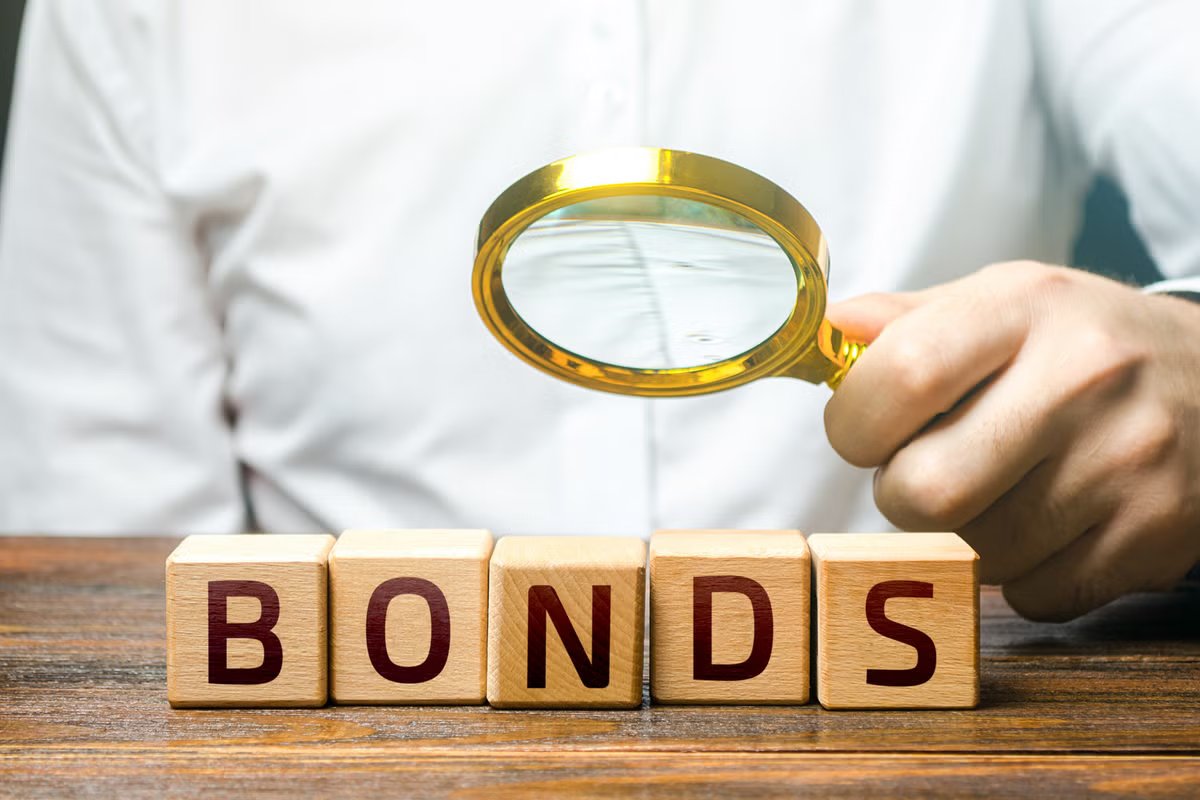
A bond is essentially an “IOU” note. When you buy a bond, you are lending money, usually to a government (government bonds) or company (corporate bonds).
In return, the borrower promises to repay the money you have lent in full after a set amount of time such as five, ten or even 30 years.
In the meantime, they must also pay you a fixed rate of interest for the duration of the agreed term (known as a coupon). This provides you with a predictable amount of income on your investment over a known timescale.
Dividends from shares, as a comparison, can rise and fall with the stock markets. Therefore, bonds mostly appeal to investors who are looking for a stable income and a predictable final return.
“Bonds are traditionally seen as ‘steady Eddies’ of the investment world,” said Jason Hollands, Managing Director at wealth manager Evelyn Partners. “They can appeal to lower risk investors and are often held alongside shares to help offset some of the risks of investing in equities.”

Get a free fractional share worth up to £100.
Capital at risk.
Terms and conditions apply.
ADVERTISEMENT
Get a free fractional share worth up to £100.
Capital at risk.
Terms and conditions apply.
ADVERTISEMENT

Once they’ve been issued, bonds can be bought and sold on a secondary market for below or above their original price. Their price moves according to perception of how likely it is the bond will be repaid, as well as interest rates set by central banks: when interest rates rise, bond prices fall and vice versa.
The yield of a bond is the amount of interest it pays to its owner, expressed as a percentage of the price. When the price of a bond falls, its yield therefore rises.
For example, you buy a bond for £1,000 and it pays you £50 per year in interest. This means your yield is five per cent. If you buy that same bond for £900 (because it got cheaper), you’ll still get £50 in interest so your yield is higher at 5.56 per cent.
What are the risks and rewards?
Government bonds are issued and backed by a country’s central government. In the UK, government bonds are known as gilts, while in the US they are known as treasuries. Bonds from developed countries are considered very low risk and as a result, typically offer low interest rates.
Hollands said: “Major G7 developed market economies like the UK and US are seen as virtually free of default risk, hence UK government bonds are known as ‘gilt-edged’ securities.
“The UK’s public finances may be challenging, but the chances of the UK government going bust and being unable to meet its obligations to borrowers is extremely low.”
Corporate bonds are issued by companies and are considered riskier than gilts or treasuries, as a company’s financial health can fluctuate and affect its ability to repay its debts. However, as is usually the case in investing, higher risk comes with higher potential reward.
The balance of these will depend on what type of company is issuing the bond. ‘Investment grade’ bonds are issued by large, stable companies (such as Microsoft or Apple) with strong financials. These are considered relatively safe and therefore come with lower yields. The quality ratings of bond issuers reflect their credit-worthiness and generally range from AAA (highest) to D (lowest).
‘High yield’ bonds (also known as junk bonds) are issued by companies with lower credit ratings and have a higher chance of default. These are attractive to investors willing to take on more risk for more potential return.
Why bonds are so important
Bonds are not just investment tools; they are core to how governments finance themselves and have enormous influence over the health of economies.

Governments generally spend more than they raise in taxes so they borrow money to fill the gap, usually by selling bonds to investors. Rising bond yields can increase borrowing costs for governments and slow economic growth.
Gilt yields recently hit their highest level in 30 years, according to Reuters, largely in response to Donald Trump’s tariffs sparking a sharp rise in treasury yields. The tariff war has prompted fears of a US recession, unusually making it seem riskier to lend to the US. In response, investors have sold treasuries in huge quantities, driving down their price and sending the yield higher, making future government debt more expensive to issue. This was seen as a driving force behind Trump being forced to step back from his initial tariff announcement, with a 90-day pause.
Hollands said: “When bond yields rise, as they have done in recent months, it is a serious problem for governments, as it puts the cost of borrowing up, meaning more of the public finances are spent on interest payments.”
Bond yields also have a ripple effect on the wider economy. Yields from bonds issued by stable governments like the UK and US serve as a benchmark for interest rates. When yields rise, it signals that borrowing costs are likely to increase. As a result, everything from mortgages to business loans can become more expensive.
Hollands said: “Lower bond yields are therefore good for the economy, making it easier and less costly for governments, companies and home buyers to borrow money, whereas higher bond yields can be attractive to those looking to lock-in a better return than cash savings rates.”
When investing, your capital is at risk and you may get back less than invested. Past performance doesn’t guarantee future results.