
Close Menu
Fund Focus News
    Facebook X (Twitter) Instagram
    Trending
    • SIP returns disappointing? Here’s when to stay invested and when to switch funds
    • No large-cap fund reached Sharpe ratio of 1; several mid and small caps delivered stronger risk-adjusted returns
    • SBI Funds Management IPO Day 2: Issue booked 1.03x so far. Check GMP, key dates, issue details. Apply or avoid?
    • This is the only international mutual fund accepting fresh SIPs after the latest suspensions
    • REIT-focused mutual funds on the anvil as dedicated indices make debut | Markets News
    • Leveraged chip ETFs test Korea’s market structure
    • SBI Funds IPO subscribed 68% on Day 1 – IPO News
    • 6 Best Fintech ETFs to Buy | Investing
    Facebook X (Twitter) Instagram
    Fund Focus News
    • Home
    • Bonds
    • ETFs
    • Funds
    • Investments
    • Mutual Funds
    • Property Investments
    • SIP
    Fund Focus News
    Home»Bonds»Why are investors turning to bonds? Experts weigh in – KVNU
    Bonds

    Why are investors turning to bonds? Experts weigh in – KVNU

    August 14, 2024


    Stock market turmoil earlier this month prompted some investors to ditch stocks in favor of an alternative typically viewed as safer but less exciting: bonds.

    The renewed popularity of bonds follows months of heightened interest, since investors have sought to lock in high yields in anticipation of interest rate cuts at the Federal Reserve, experts told ABC News.

    Lower interest rates would push bond yields downward and raise the value of pre-existing bonds obtained at a higher rate of return.

    A surge in bonds has also coincided with a perception among some investors that equities have become overpriced, experts said.

    “Investors have been interested in locking in higher yields before interest rates go down,” Reena Aggarwal, A professor of finance and director of the Georgetown Psaros Center for Financial Markets and Policy, told ABC News.

    Bonds are essentially loans made by investors to corporations or governments. The price of a bond moves in the opposite direction as its yield, or the amount of interest accrued by a bondholder. In other words, when bond yields go down, bond prices go up.

    Yields are heavily influenced by interest rates set by central banks, since the cost of borrowing determines how much interest an investor can charge a government entity or corporation in exchange for his or her loan.

    Starting in 2022, a series of interest rate hikes at the Fed sent bond yields surging. That meant investors could obtain relatively high rates of return at low prices, Adam Lampe, CEO of Mint Wealth Management, told ABC News.

    “For the first nearly 20 years of my career, bonds were boring,” Lampe said. “In the last couple years we were able to buy a lot of bonds at discount.”

    At the outset of this year, however, the Fed forecasted three interest rate cuts, citing progress in its fight to bring down inflation. But price increases accelerated over the early months of 2024, prompting the Fed to all but abandon those cuts.

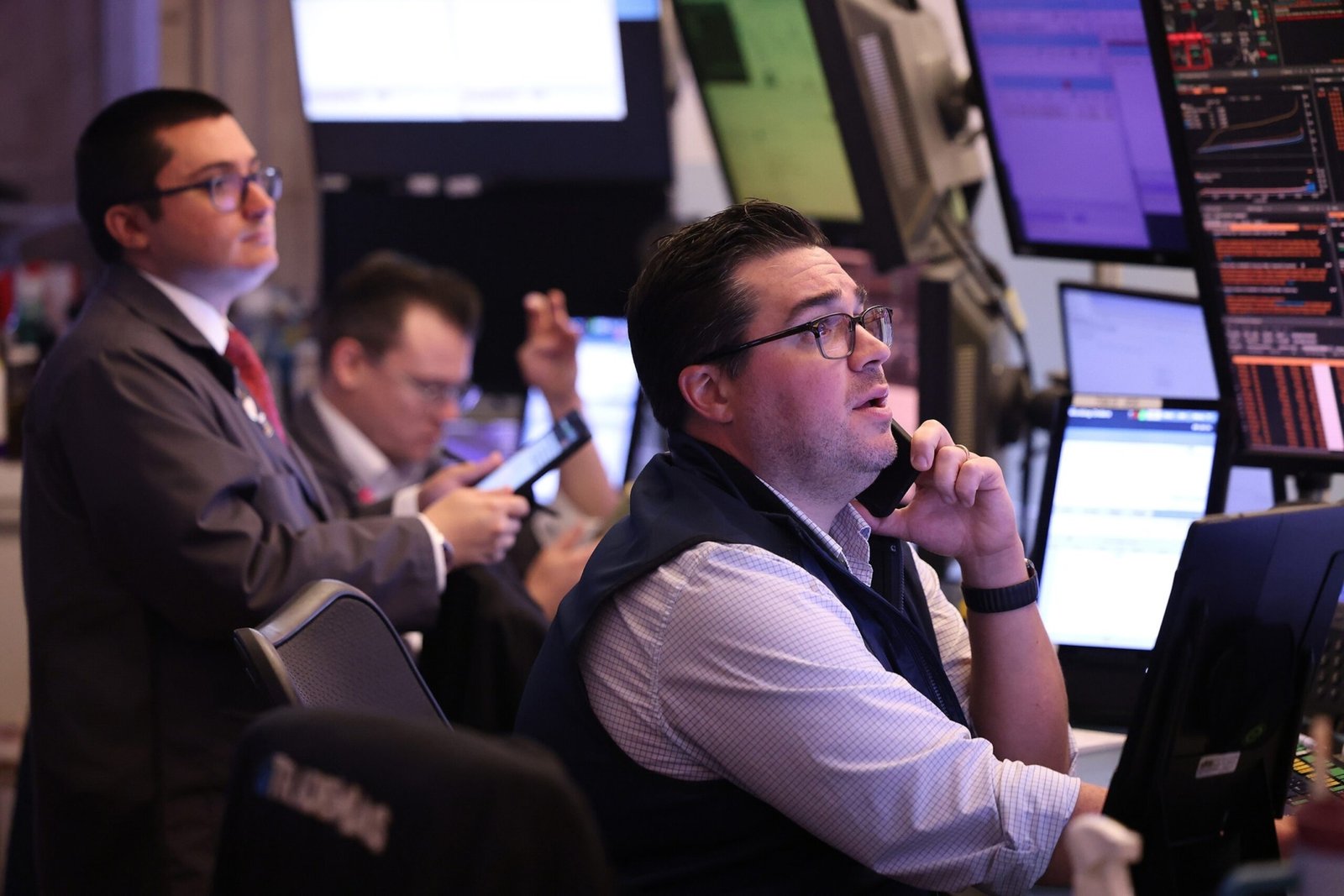
    Traders work on the floor of the New York Stock Exchange during morning trading August 12, 2024 in New York City.

    Michael M. Santiago/Getty Images

    In recent months, good news in the inflation fight has brought the Fed back to the brink of an interest rate cut. The expectation of a coming interest rate has added urgency to the bond market, Lampe said.

    “The window is closing very quickly,” Lampe added. “We’re at the peak, so bond values have the potential to go down.”

    The chances of an interest rate cut at the Fed’s next meeting in September are all but certain, according to the CME FedWatch Tool, a measure of market sentiment. Market observers are split roughly down the middle about whether the Fed will impose its typical cut of a quarter of a percentage point or opt for a larger half-point cut.

    “The more that rates are cut, bond prices will go up higher but bond yields will go down lower,” said Aggarwal.

    Bonds also offer investors a relatively safe option in the event of a possible recession, some experts said.

    A disappointing jobs report earlier this month raised concern that the economy may be slowing down faster than previously known.

    The unemployment rate has soared this year from 3.7% to 4.3%. That trend has triggered a recession indicator known as the “Sahm Rule,” which says that a rise of 0.5 percentage points in the unemployment rate within a 12-month period typically precedes a recession.

    Bonds provide investors with fixed, predictable returns, sheltering them from a potential downturn in the stock market if economic performance cratered, Yiming Ma, a finance professor at Columbia University Business School, told ABC News.

    “The economy is slowing down and the risk of a downturn is going up,” Ma said. “That is usually when investors want to seek something safer.”


    Source link

    Share. Facebook Twitter Pinterest LinkedIn Tumblr Telegram Email

    Related Posts

    Wealth manager dumps UK bonds over fears Andy Burnham ‘will do a Liz Truss’

    July 14, 2026

    Should You Buy 30-Year Government Bonds?

    July 13, 2026

    Britons would buy government war bonds… if they came with tax perks

    July 13, 2026
    Leave A Reply Cancel Reply

    Top Posts

    The Shifting Landscape of Art Investment and the Rise of Accessibility: The London Art Exchange

    September 11, 2023

    Charlie Cobham: The Art Broker Extraordinaire Maximizing Returns for High Net Worth Clients

    February 12, 2024

    The Unyielding Resilience of the Art Market: A Historical and Contemporary Perspective

    November 19, 2023

    SIP returns disappointing? Here’s when to stay invested and when to switch funds

    July 15, 2026
    Don't Miss
    Mutual Funds

    SIP returns disappointing? Here’s when to stay invested and when to switch funds

    July 15, 2026

    A few years of disappointing SIP returns are often enough to make investors question whether…

    No large-cap fund reached Sharpe ratio of 1; several mid and small caps delivered stronger risk-adjusted returns

    July 15, 2026

    SBI Funds Management IPO Day 2: Issue booked 1.03x so far. Check GMP, key dates, issue details. Apply or avoid?

    July 15, 2026

    This is the only international mutual fund accepting fresh SIPs after the latest suspensions

    July 15, 2026
    Stay In Touch
    • Facebook
    • Twitter
    • Pinterest
    • Instagram
    • YouTube
    • Vimeo
    EDITOR'S PICK

    Paramount Skydance’s Latest Bid for WBD Backed by Arab Wealth Funds

    December 2, 2025

    The Synergy of Mutual Funds and Self-Directed Investing: A New Era in Personal Finance

    August 6, 2024

    How to Avoid Overdiversification in Mutual Funds?

    October 15, 2025
    Our Picks

    SIP returns disappointing? Here’s when to stay invested and when to switch funds

    July 15, 2026

    No large-cap fund reached Sharpe ratio of 1; several mid and small caps delivered stronger risk-adjusted returns

    July 15, 2026

    SBI Funds Management IPO Day 2: Issue booked 1.03x so far. Check GMP, key dates, issue details. Apply or avoid?

    July 15, 2026
    Most Popular

    🔥Juve target Chukwuemeka, Inter raise funds, Elmas bid in play 🤑

    August 20, 2025

    💵 Libra responds after Flamengo takes legal action and ‘freezes’ funds

    September 26, 2025

    ₹9000 monthly SIP can help you retire at 45 with ₹2 lakh monthly pension

    May 5, 2026
    © 2026 Fund Focus News
    • Get In Touch
    • Privacy Policy
    • Terms and Conditions

    Type above and press Enter to search. Press Esc to cancel.