
Close Menu
Fund Focus News
    Facebook X (Twitter) Instagram
    Trending
    • Most Retirees Have Never Heard of These 2 ETFs — Their Portfolios Suffer Because of It
    • Active ETFs Surge Past Passive, and These Are in the Lead
    • What Are Leveraged and Inverse ETFs? Risks, Rewards, and Key Strategies
    • SBI Mutual Fund Files IPO Papers with SEBI, Plans to offer 20.37 Crore Shares Via OFS
    • Which ETFs Can Replace a $70k Salary on Dividends Alone?
    • Trump Card Turns Markets on a Dime as Stocks, Bonds Stage Substantial Recovery
    • A Simple Guide to Building a Rs. 1 Crore Corpus Using SIP
    • Mid-cap, small-cap mutual fund AUM jumps to ₹8.26 lakh crore, clocking up to 40% CAGR in 5 years; SIP inflows rise 15% YoY amid volatility
    Facebook X (Twitter) Instagram
    Fund Focus News
    • Home
    • Bonds
    • ETFs
    • Funds
    • Investments
    • Mutual Funds
    • Property Investments
    • SIP
    Fund Focus News
    Home»Bonds»Why China’s risky bond rally has put PBOC on the offensive to optimise yields
    Bonds

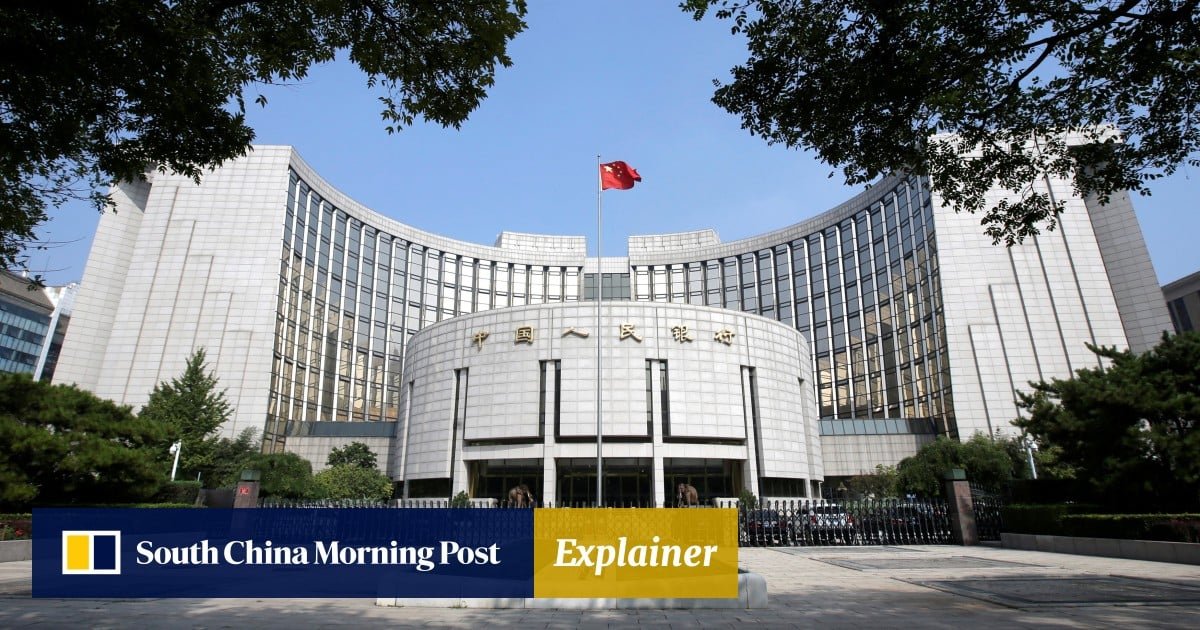
    Why China’s risky bond rally has put PBOC on the offensive to optimise yields

    August 14, 2024


    The rate continued to fall, dipping below 2.1 per cent this month before PBOC intervention sent it back up to 2.25 this week.

    Why are Chinese investors snatching up sovereign bonds?

    Government debt has become increasingly popular with Chinese investors on the back of the country’s sluggish economic recovery and amid market expectations of further interest rate cuts.

    When economic growth remains slow, the general public has a strong preference for low-risk financial assets in their investment portfolio, with government bonds being typical examples, in contrast to parking money in places such as the sluggish stock market.

    While home buying used to be a major investment channel for Chinese people, the nation’s enduring property crisis has nullified that option. And the falling deposit rates offered by banks have also left investors few alternatives with attractive returns.

    As strong demand for government bonds pushes up the prices, their yields decrease. A bond’s yield is the return an investor can expect to receive each year over its term to maturity.

    [Financial institutions] are basically shorting the yuan and the Chinese economy

    PBOC’s Financial News

    Why does PBOC want to see a stronger long-bond yield?

    In an effort to build a strong central bank mechanism, the PBOC is currently downplaying quantity-based tools – such as the amount of credit – and moving toward price-based tools, which include yield-curve controls.

    Beijing believes the current long-bond yield curve is not an accurate reflection of China’s economic outlook in the long term. The PBOC has said that it is determined to maintain a positive sloping yield curve for long bonds.

    Regulators in China hope to prevent a situation where a low long-bond yield and pessimism about the future state of China’s economy – and in turn expectations for further interest rate cuts – would reinforce each other, resulting in a downward spiral.

    The reasonable range for the 10-year government bond yield should be 2.5 to 3 per cent, according to a May report by the Financial News, a newspaper managed by the PBOC.

    “From the perspective of stabilising the exchange rate and expectations, financial institutions snapping up government bonds means they expect the interest rates will get lower and lower in the future,” the report said.

    “They are basically shorting the yuan and the Chinese economy, increasing the pressure of capital outflows.”

    What did PBOC learn from the collapse of Silicon Valley Bank?

    The PBOC is concerned about potential financial risks associated with bond investments, wary that the bond market bubble could burst once the country’s economy recovers and interest rates start to rise, with lessons gleaned from the collapse of Silicon Valley Bank.

    The regional US bank had piled money into US Treasuries before the Federal Reserve raised interest rates to quell the inflation spike following the Covid-19 pandemic stimulus. As a result, the value of the old bonds it held fell sharply as the current 10-year Treasury bond offered a much higher yield, which led to a bank run on its deposits and eventually its collapse in 2023.

    In its latest monetary policy report, the PBOC said that “the return on some wealth-management products, particularly bond-based products, is significantly higher than the return on the underlying assets”.

    This is mainly achieved through leverage, which exposes investors to the interest rate risk, it said.

    “When market interest rates rise in the future, the net value retracement of related asset-management products would also be substantial,” the report added, referring to a temporary pullback in the price of such financial instruments.

    What has the PBOC done to cool the long-bond rally?

    The Chinese central bank has not shied away from warning about the risks of an overheated bond market while pushing back against the bond rally of late.

    On July 1, the PBOC announced that it would borrow government bonds from some primary dealers so it could sell them in the open market when necessary.

    And the fight has amped up in August as the PBOC reportedly increased secondary-market intervention, including guiding large state banks to sell sovereign bonds.

    The moves helped push the 10-year government bond yield up to 2.25 on Monday after it had nearly touched 2 per cent, but that is still markedly down from the PBOC’s aforementioned reasonable range. The last time the yield exceeded 3 per cent – now considered the high end of that range – was October 2021.

    Last week, the National Association of Financial Market Institutional Investors – an affiliate of the PBOC – announced an investigation into four rural banks in Jiangsu province that were accused of manipulating government bond prices in the secondary market.

    Regulators have also significantly slowed down the approval process for new bond funds and asked some fund companies to document their existing bond-fund durations, while at least four Chinese brokerages have reduced or even cut transactions of sovereign debt, according to Bloomberg reports.

    The PBOC may eventually need to lower interest rates further to support the economy and boost domestic inflation

    Goldman Sachs

    What stands in the PBOC’s path to victory?

    Big challenges remain, as weak credit demand, still-low inflation expectations, and depressed consumer and business confidence are not supportive of a sizeable rise of interest rates in China, said a note from Goldman Sachs on Saturday.

    “The PBOC’s intervention does not change the supply-demand balance of the [Chinese government bond] market in the medium to long term,” it said. “We expect interest rates to trend lower in the medium term, as the PBOC may eventually need to lower interest rates further to support the economy and boost domestic inflation.”

    The PBOC will be victorious in its efforts only when stronger domestic demand leads to reflation, said Larry Hu, chief China economist at Macquarie Capital.


    Source link

    Share. Facebook Twitter Pinterest LinkedIn Tumblr Telegram Email

    Related Posts

    Trump Card Turns Markets on a Dime as Stocks, Bonds Stage Substantial Recovery

    March 23, 2026

    Bank of Maharashtra Pays ₹8 Crore Interest on Basel III Tier II Bonds

    March 23, 2026

    European shares skid to four-month low as Middle East conflict intensifies – The Irish Times

    March 22, 2026
    Leave A Reply Cancel Reply

    Top Posts

    Fannie, Freddie Placing Large Bids for Mortgage-Backed Bonds

    March 22, 2026

    The Shifting Landscape of Art Investment and the Rise of Accessibility: The London Art Exchange

    September 11, 2023

    Charlie Cobham: The Art Broker Extraordinaire Maximizing Returns for High Net Worth Clients

    February 12, 2024

    The Unyielding Resilience of the Art Market: A Historical and Contemporary Perspective

    November 19, 2023
    Don't Miss
    ETFs

    Most Retirees Have Never Heard of These 2 ETFs — Their Portfolios Suffer Because of It

    March 23, 2026

    © bigjom jom / Shutterstock.com Many retirees focus on ETFs that generate high cash…

    Active ETFs Surge Past Passive, and These Are in the Lead

    March 23, 2026

    What Are Leveraged and Inverse ETFs? Risks, Rewards, and Key Strategies

    March 23, 2026

    SBI Mutual Fund Files IPO Papers with SEBI, Plans to offer 20.37 Crore Shares Via OFS

    March 23, 2026
    Stay In Touch
    • Facebook
    • Twitter
    • Pinterest
    • Instagram
    • YouTube
    • Vimeo
    EDITOR'S PICK

    What You Need to Know Before You Begin

    October 24, 2024

    Down 68% From Its All-Time High and at a 4-Year Low, Is It Finally Time to Buy This Beaten-Down Growth ETF?

    July 13, 2024

    Boring Week For Bonds and Next Week Isn’t Much More Promising

    October 11, 2024
    Our Picks

    Most Retirees Have Never Heard of These 2 ETFs — Their Portfolios Suffer Because of It

    March 23, 2026

    Active ETFs Surge Past Passive, and These Are in the Lead

    March 23, 2026

    What Are Leveraged and Inverse ETFs? Risks, Rewards, and Key Strategies

    March 23, 2026
    Most Popular

    🔥Juve target Chukwuemeka, Inter raise funds, Elmas bid in play 🤑

    August 20, 2025

    💵 Libra responds after Flamengo takes legal action and ‘freezes’ funds

    September 26, 2025

    ₹10,000 monthly SIP in this mutual fund has grown to ₹1.52 crore in 22 years

    September 17, 2025
    © 2026 Fund Focus News
    • Get In Touch
    • Privacy Policy
    • Terms and Conditions

    Type above and press Enter to search. Press Esc to cancel.