
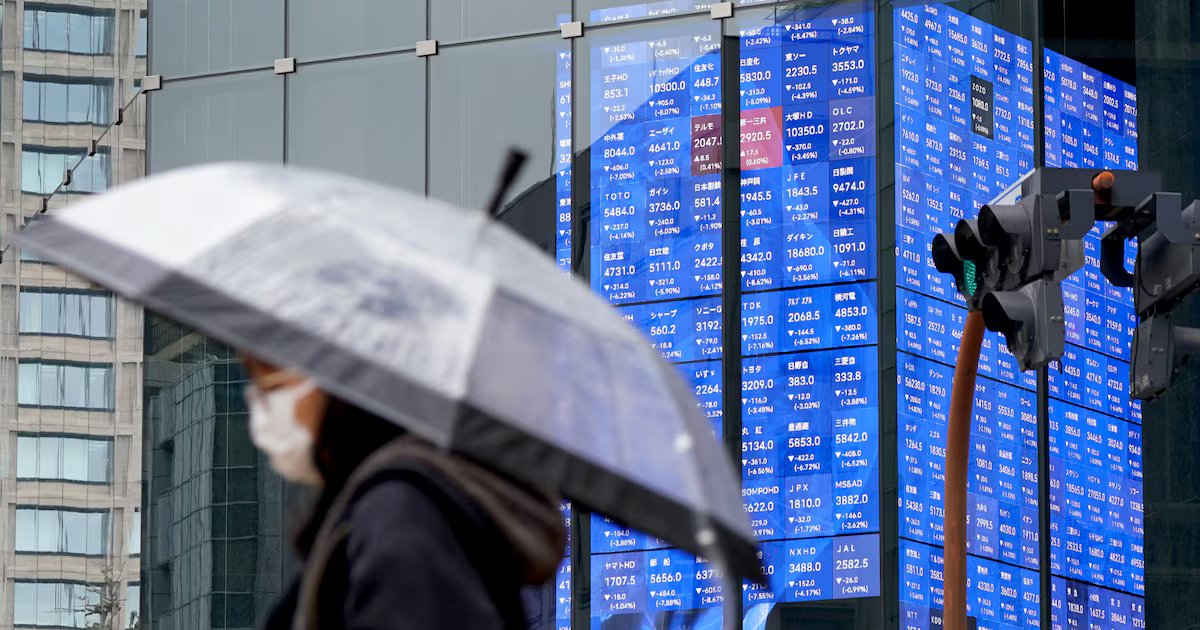
A sell-off in stocks, gold and bonds deepened as the US and Iran hardened their rhetoric and signalled a potential escalation to their conflict, which is entering its fourth week.
European shares fell to a four-month low on Monday, led by the defence sector, as a spike in crude prices prompted investors to factor in potential inflation pressures.
The pan-European STOXX 600 was down 1.6 per cent shortly after 8am. The index had logged its third consecutive weekly loss on Friday.
In Dublin, the Iseq index was down by almost 2 per cent in early trading.
All sectors were in the red, with industrials being the biggest drag in the benchmark index, as markets took a hit after Iran threatened to attack Israeli power plants and facilities supplying US bases in the Gulf if US president Donald Trump carries out his threat to “obliterate” Iran’s power network.
Europe’s benchmark STOXX now lags the US benchmark S&P 500 as the region is highly dependent on oil imports via the Strait of Hormuz. The index has dropped roughly 11% so far this month.
The waterway’s closure has reignited inflation concerns, leading investors to now price in at least two 25-basis-point rate hikes by the European Central Bank this year, according to data compiled by LSEG, up from zero earlier in the year.
Asian shares fell for a third day and were set to enter a correction, while bonds sold off as the prolonged war threatened to stoke inflation, slow growth and push central banks to consider interest-rate hikes.
Futures contracts indicated Asian losses would to the US. Gold slid for a ninth day to around $4,360 (€3782.98) an ounce, underscoring the broad-based retreat across assets.
Rhetoric escalated during the weekend with US president Donald Trump issuing a 48-hour ultimatum to Tehran to reopen the Strait of Hormuz – crucial for the flow of oil and gas from the Middle East – failing which the US will “obliterate” Iran’s power plants.
The Islamic Republic responded that any such attack would prompt it to shut the waterway indefinitely and target US and Israeli energy infrastructure across the region.
While the reaction in stocks was more pronounced, the response to the latest escalation in rhetoric was more muted in oil markets. Brent crude, one of the world’s two main oil price benchmarks, was volatile at the start of Monday’s session before edging up 0.6 per cent to trade around $113 a barrel. Brent and WTI (West Texas intermediate) have both surged more than 70 per cent this year.
Global markets have been rattled by the conflict in the Middle East, with stocks and bonds selling off in tandem last week as concerns about inflation and slower economic growth intensified. That’s also weighing on policymakers, with Federal Reserve Chair Jerome Powell saying the central bank needs to see more progress on inflation before cutting rates again.
The sell-off in the US accelerated on Friday as traders started anticipating that the Fed may shift to hiking interest rates this year as oil prices threaten to deliver a fresh inflation shock.
Markets are bracing for similar moves from central banks in Japan, Europe and the UK, even as the war also dampens the outlook for economic growth globally.
Bond markets have also been impacted amid concerns about inflation and higher interest rates. US yields are perched at their highest in months after a third straight week of bond losses. Short-term notes led last week’s rout.
Elsewhere, silver fell for a fifth consecutive day. A Bloomberg gauge of the dollar edged up 0.1 per cent. – Reuters, Bloomberg