
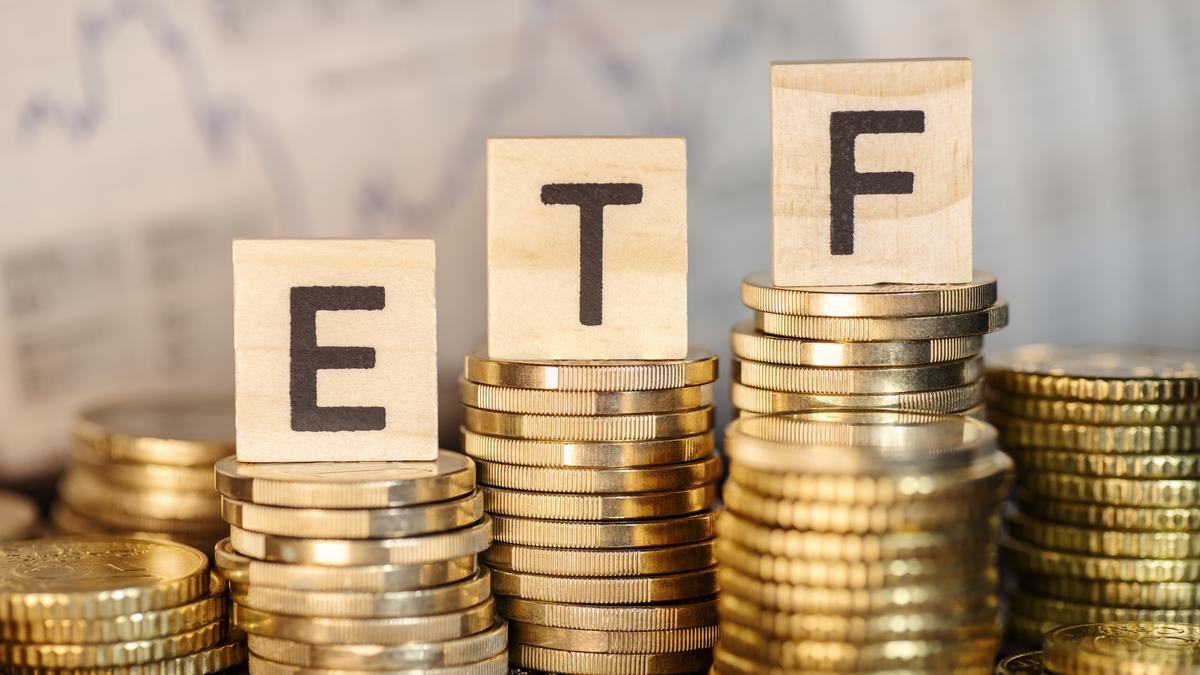

An ETF offers investors a way to participate in a basket of investments through a single tradable unit.
| Photo Credit: Getty Images/iStockphoto
What if I say that you can gain exposure to 50 or 500 stocks, a basket of commodities or even a few sectors in one click? This is what an Exchange Traded Fund (ETF) offers. ETFs are traded on stock exchanges just like shares, allowing investors to buy a basket of securities in a single transaction and thereby “reduce the impact of poor performance” by any one company, unlike investing in a single share. But before jumping to buy the ETFs, it’s crucial to understand how they work?
An ETF offers investors a way to participate in a basket of investments through a single tradable unit. Depending on its mandate, it might mirror a benchmark index such as the Nifty or Sensex, or provide exposure to assets such as gold, silver and bonds. ETF products can also focus on sectors such as defence, pharmaceuticals, FMCG, technology and banking. Currency ETFs are available in overseas markets, though such products are not currently available to Indian retail investors. Therefore, buying units of ETFs offers an investor a proportionate exposure to the underlying basket of equities. In the case of an index ETF, the aim is simple: to stay as close as possible to the performance of the benchmark, rather than attempt to beat it.
Unlike a traditional mutual fund or index fund, an ETF trades throughout the market hours on the stock exchanges. You can place an order through a broker whenever the market is open, and its spot price keeps changing in response to the value of its underlying assets. Thus, to buy ETFs, a demat and trading account are essential. This stock-like feature also gives ETFs greater flexibility: besides holding them for the long term, eligible investors can short-sell or buy them using margin, subject to applicable rules and regulations of your broker. Besides the ETF’s expense ratio, investors should also factor in transaction-related costs such as brokerage, where applicable, and the bid-ask spread. Statutory charges such as Securities Transaction Tax (STT) may also apply depending on the ETF and transaction.
Most index ETFs follow a passive investment approach. Instead of trying to identify stocks that could outperform the market or the benchmark itself, the ETF is designed to mirror a predetermined index. The fund manager’s job is largely to keep the portfolio aligned with the benchmark. It reduces the dependence on a fund manager’s stock-picking ability and, because there is less active buying and selling, can also help keep costs lower.
Another attraction is cost. Since a passive ETF does not rely on continuous stock selection by a fund manager, its management expenses are generally lower than those of actively managed funds. The bigger advantage is diversification: a Nifty 50 ETF, for instance, gives exposure to all the constituents of the index instead of putting the entire investment into one company.
Dividends received from the underlying companies also form part of the ETF’s returns; depending on the scheme structure, they may be distributed or reflected through reinvestment. But an ETF will not always deliver exactly the index’s return. The difference between the ETF’s performance and that of its benchmark is known as tracking difference, while tracking error measures the consistency of this difference over time, which can arise from expenses, transaction costs, cash holdings, dividend timing, corporate actions and changes in index constituents. Generally, a lower tracking error indicates that the ETF is following its benchmark more closely. When an index is rebalanced and companies are added or removed, the ETF adjusts its underlying portfolio to reflect those changes, that is, the investor does not have to buy or sell the individual stocks. Thus, ETFs can be a simple, cost-efficient way to diversify and participate in market returns.
(The writer is an NISM & CRISIL-certified Wealth Manager and certified in NISM’s Research Analyst module)
Published – September 14, 2026 06:30 am IST