

Canadian dividend ETFs provide different approaches to income, ranging from low-cost, diversified funds to strategies focused on dividend growth or high yields.
BNN Bloomberg spoke with Tony Dong, founder of ETF Portfolio Blueprint, about how fund fees, screening methods and sector exposure can affect risk and performance.
Key Takeaways
- Canada’s ETF industry has surpassed $1 trillion in assets under management, with 158 of its 2,025 funds explicitly including dividends in their names or mandates.
- BMO’s ZDIV uses a multifaceted index methodology designed to limit individual stock and sector concentration while charging a 0.10 per cent management fee.
- Hamilton’s CMVP screens for companies with consecutive years of dividend growth, shifting its emphasis toward financial strength and less cyclical operations.
- The high-yield screen used by iShares’ XEI creates a value tilt and greater exposure to financial and energy companies, which have recently outperformed.
- Dividend ETF investors should assess whether a fund’s fees, screening methodology and sector concentration align with their income needs and risk tolerance.
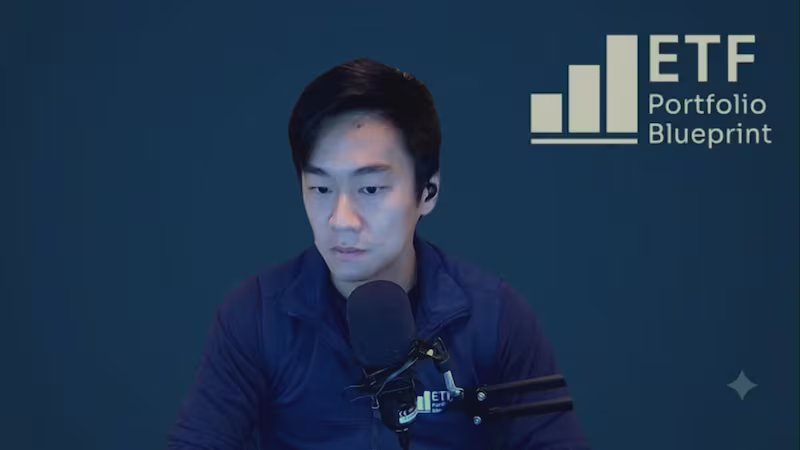
Read the full transcript below:
ROGER: Time now for the ETF Report, and today we are focusing on dividend ETFs, covering three different strategies for a range of investment needs. Joining us now to unpack it all is Tony Dong, founder of ETF Portfolio Blueprint. Tony, thanks, as always, for joining us.
TONY: Thanks for having me, Roger.
ROGER: OK, I mean, we’re talking about that magic trillion-dollar mark that we, I think, we have — we hit it and we just crossed it, right? What’s the trend as we go past a trillion when it comes to ETFs?
TONY: Sure. A lot of these recent launches have been single-stock ETFs out there, but the last time I pulled the data, as of July 14, looking at CIBC Canada’s ETF market screener, that was $1 trillion across 2,025 funds. Now, of those, 7.8 per cent, or 158, explicitly had “dividend” in their name and mandate, and these were kind of the ETFs that really built the Canadian ETF ecosystem and still have a lot of staying power with retail investors.
ROGER: And have they ever faded? Are they always just that rock-solid, running along here over on the side?
TONY: There was a bit of a bifurcation. So, iShares had a lot of the original ones, a lot of legacy players such as CDZ, XDV and XEI. Some of these were competitively priced at launch but are now pretty expensive. For instance, CDZ’s management fee is 0.6 per cent. So, there was a bit of a lull until recent years, where we had some newer entrants from, say, Hamilton and from BMO that either waived management fees in their first year or just charge lower fees outright using newer, lower-cost indexes.
ROGER: All right, so, I mean, lots of challenges out there to try and find the ones that work for you. Which dividend ETFs are you liking right now? And let’s get into some of them. I guess I’m going to probably ZDIV. We’ll start with that.
TONY: Yeah, yeah. ZDIV is the new one for BMO, tracking MSCI IMI, which stands for Investable Market Index. I like these indexes better than some of the older high-yield dividend strategies because they tend to be more multifaceted. Instead of just focusing on the headline yield, there are considerations paid to sector and individual caps. This mitigates some of the issues we’ve seen with legacy products such as VDY from Vanguard. I actually quite like that ETF as well. It has a low price, 0.22 per cent management expense ratio, and has excellent total returns due to its bank concentration, which has paid off. But the problem is that there is little in the way of additional screens for payout sustainability or sector and stock caps, so you get weird situations like Royal Bank gets 15 per cent of VDY, whereas ZDIV’s methodology is able to sidestep that. On the dividend-growth side, you have some notable new competitors against CDZ from Hamilton. That would be CMVP and SMVP, which screen for consecutive years of dividend growth, with a methodology that, again, makes them less top-heavy. There was a first-year fee waiver, but that’s since expired, even though they’re still much cheaper than CDZ is.
ROGER: All right, and with ZDIV, the MER is 0.1 per cent. It’s, yeah, a good, solid number.
TONY: Yeah, yeah. So, 0.1. Like, your yield with a dividend ETF is going to be reduced by the fee. So, all else being equal, keeping that low is going to help keep more of your money in your pocket if you’re withdrawing it or if you’re reinvesting it for total returns.
ROGER: And any concerns with the AUM for it, judging by — it’s pretty small.
TONY: No, I’m not really concerned about new launches. So, for AUM, one metric I tend to look at is, after the first year, is it at $50 million or so? That tends to be the rough point for ETF longevity. Now, it can differ because providers with large lineups, like BMO, are able to have a few loss leaders offset that, right? They have some established strategies which are generating that. That allows them to try some new things out there. Now, ZDIV is competing against an existing BMO product, an actively managed dividend ETF in the form of ZDV, just minus the I. That one is more expensive, almost three times as much, and it doesn’t use an index. So, I think it’s good for investors to have these lower-cost options instead of just, you know, being forced to use an actively managed strategy because we know not everybody likes that.
ROGER: All right, and CMVP. What are some of the strengths there that you’re liking?
TONY: Yeah, so CMVP is really interesting because in the Canadian, in the Canadian dividend market, if you don’t screen for dividend growth, you end up overweighting dividend yield, and that leads you to concentration in two sectors, which would be financials and energy. Nothing wrong with those; they’re mainstays of the TSX. They’ve contributed a lot to the outperformance year to date. But again, like, overconcentration is something you want to worry about. By screening for dividend growth, you shift the focus from companies that just simply try to give you as much cash back as possible to companies that are growing their payouts over time. Generally, that requires a good balance sheet, strong free cash flow, less cyclical operations, and that can emphasize some of the more underrepresented sectors in the TSX more, such as consumer staples and even consumer discretionary.
ROGER: All right, and its three-year return. Just looking at some of the numbers, 49. It trails XEI. Let’s talk a little bit about XEI. Why are we seeing strength there?
TONY: Value has outperformed in the Canadian market by far, and XEI’s high-yield dividend screen is going to give it a lot of bias toward your energy, like Suncor and Enbridge. It’s going to give a lot of bias to the banks. CMVP, less so there. Again, the style makes — the style makes the performance. And one thing that I would like to remind investors of is that when you’re buying a high-dividend-yield screen, you can look at it as almost an inadvertent way to screen for value stocks. As we know, dividend yield is calculated by the payout as the numerator, share price as the denominator. All else being equal, when the share price falls and that, and that payout stays, the yield goes higher. So, in many ways, high-dividend-yield ETFs become a value strategy, and in environments where we see the value factor outperform, you can expect dividend strategies to outperform. Dividend growth, on the other hand, is more toward quality on the Canadian side. That’s been lagging recently.
ROGER: And just one last: with XEI, any concern about the concentration in financials and energy?
TONY: No, not really. It’s what you should expect if you’re going to be buying XEI. We know the Canadian market, the TSX 60, is already biased toward financials and energy. If you only screen for dividend-paying companies, especially those with a high yield, you end up getting rid of a lot of stuff like the railways, which have dividends but aren’t high. You get rid of stuff like Loblaw, which has, again, has a dividend, but it isn’t high. But in and of itself, XEI is still much less concentrated than something like VDY, which, again, is 15 per cent Royal Bank and 10 per cent TD.
ROGER: OK, we have to wrap it up there, Tony. But thanks, as always, for joining us.
TONY: My pleasure. Thank you for having me.
ROGER: Tony Dong, founder of ETF Portfolio Blueprint.
—
This BNN Bloomberg summary and transcript of the Aug. 11, 2026 interview with Tony Dong are published with the assistance of AI. Original research, interview questions and added context was created by BNN Bloomberg journalists. An editor also reviewed this material before it was published to ensure its accuracy and adherence with BNN Bloomberg editorial policies and standards.