
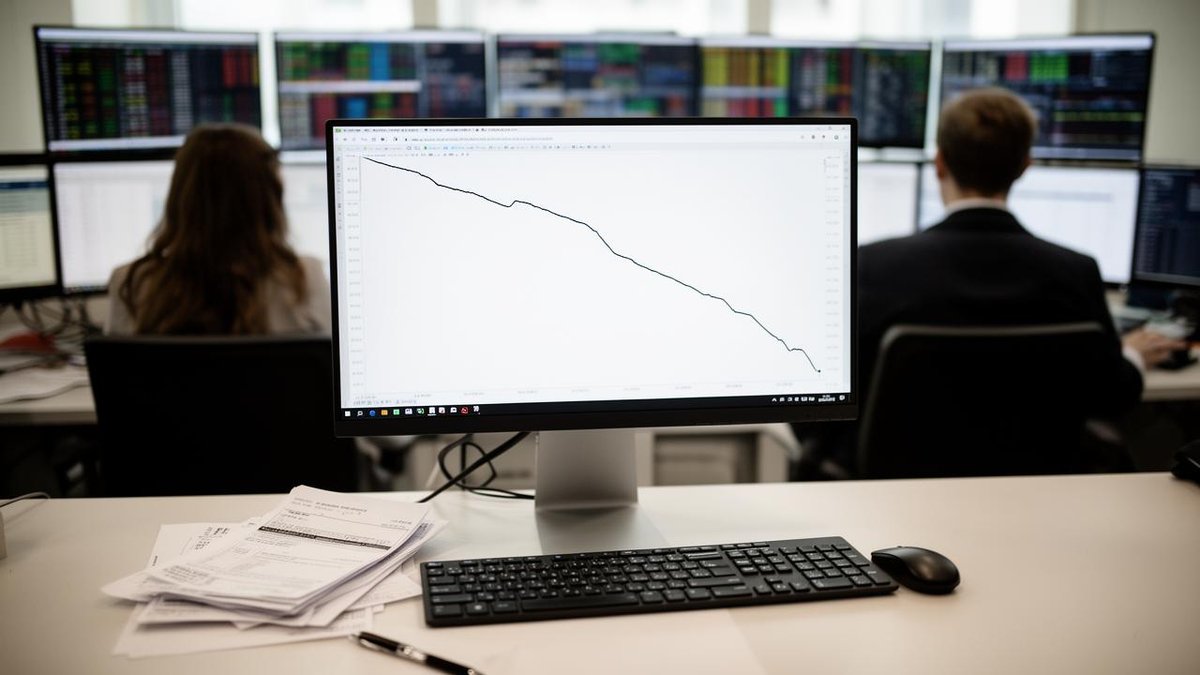
As South Korea’s stock market swings violently between rallies and routs, covered-call exchange-traded funds (ETFs) once touted as a defensive alternative are instead inflicting heavy losses on investors. Assets under management have grown more than 70% in a year, yet the structural limits of these products have been laid bare: they take losses similar to plain index ETFs during sharp selloffs and lag in recovery during sharp rebounds.
According to the Korea Exchange, total net assets of covered-call ETFs listed in South Korea rose 73.9% to 26.1425 trillion won (approximately $19.5 billion) as of Nov. 24 from 15.0373 trillion won (approximately $11.2 billion) at the end of last year. The number of products also increased to 64 from 52. Covered-call ETFs using South Korean equities as underlying assets led the growth, with net assets more than tripling to 12.7771 trillion won (approximately $9.5 billion) from 3.7963 trillion won (approximately $2.8 billion).
Fund inflows accelerated alongside the market’s second-half slump. According to Koscom’s ETF CHECK, individual investors net-bought 882.7 billion won (approximately $657.3 million) of “KODEX 200 Target Weekly Covered Call” over the past three months. Over the same period, “TIGER Dividend Covered Call Active” and “KODEX 200 Covered Call Active” attracted 728.1 billion won (approximately $542.1 million) and 674.1 billion won (approximately $501.9 million) of retail money, respectively.
The problem is performance. From Oct. 28, when the KOSPI retook the 6,000 level, through Nov. 24, the prices of “KODEX 200 Target Weekly Covered Call” and “KODEX 200 Covered Call Active” fell 18.6% and 20.1%, respectively. Given that “KODEX 200,” which tracks the KOSPI 200 index directly, fell 17.8% over the same period, the products marketed as defensive actually fell further.
Even counting monthly distributions, the picture does not improve. The two products paid distributions of 266 won (approximately $0.2) and 136 won (approximately $0.1) per share over the period. Assuming those payouts were reinvested, returns were -17.1% and -18.5%, respectively, still in double-digit loss territory.
The structural weakness of covered-call ETFs becomes clearer when volatility reaches extremes. On Nov. 6, when the KOSPI plunged 6.02%, “KODEX 200” fell 6.62%, while “KODEX 200 Target Weekly Covered Call” and “TIGER 200 Covered Call” dropped 6.33% and 6.58%, respectively, posting similar losses. Conversely, on Nov. 24, when the KOSPI surged 6.32%, “KODEX 200” rose 6.63%, while “TIGER 200 Covered Call” gained only 5.33%. The figures confirm an asymmetric structure in which investors absorb the full downside but capture only part of the upside.
| Category | Nov. 6 (KOSPI -6.02%) | Nov. 24 (KOSPI +6.32%) |
|---|---|---|
| KODEX 200 | -6.62% | +6.63% |
| KODEX 200 Target Weekly Covered Call | -6.33% | – |
| TIGER 200 Covered Call | -6.58% | +5.33% |
Note: The Nov. 24 change for KODEX 200 Target Weekly Covered Call was not provided in the source data.
A covered-call strategy involves holding stocks while selling call options to generate funds for distributions. Typically, the premium received for selling options rises with volatility, but when share prices plunge, that income alone cannot offset the losses. Because call options are sold again at the lower post-selloff price, the funds cannot fully enjoy the gains even when the market rebounds sharply. That is why principal recovery lags that of ordinary equity ETFs as sharp swings repeat.
The recent market environment plays to these weaknesses. With South Korean and global markets whipsawed by uncertainty over the artificial intelligence (AI) industry, Nvidia shares jumped 31.5% in a single day on news of CEO Jensen Huang’s return, only to fall more than 5% the next day, a pattern that has repeated. In South Korea’s market, sidecar trading curbs were triggered for four consecutive sessions through Nov. 25, with no sign of volatility easing.
Experts advise investors not to let their guard down when chasing high monthly distribution rates. Shim Su-yeon, a senior research fellow at the Korea Capital Market Institute, said, “High-volatility underlying assets can offer high option premiums, but the price fluctuation risk of the underlying assets themselves is proportionally large.” She added, “It is desirable to assess investment performance by looking at total return, including changes in net asset value, rather than judging solely by monthly distributions or headline distribution rates.”
Ultimately, critics say the yardstick for covered-call ETF performance should be total return, not distributions. Because the structure sacrifices upside potential in advance to secure distribution funds, investors should bear in mind that principal recovery can be delayed even after reinvesting payouts in a market prone to sharp swings. The simultaneous rise in assets and deterioration in returns shows that the “defensive” label does not guarantee actual loss protection in volatile markets.