

Get stories like these delivered straight to your inbox. Sign up for The 74 Newsletter
For decades, public funds have been used to subsidize private schooling, but recent debates over the practice have been reinvigorated as the scope of these programs has soared.
Historically, the majority of this funding was only available to students who were low income, had special needs or attended poorly performing public schools.
Over the past three years, that’s shifted: Today, at least 33 states offer private school choice programs, and of those 12 are “universal,” meaning any student, regardless of income or need, can apply for government funding to subsidize private, religious and — in some cases — home schools.
Comprehensive analysis of the scale of these initiatives and their implications — both for students and state budgets — has been sparse. But a report released earlier this month by FutureEd, a research think tank based at Georgetown’s School of Public Policy, looks to change that.
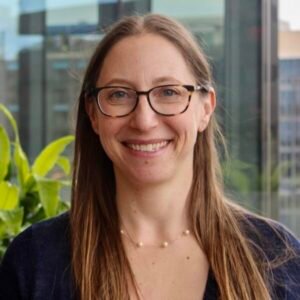
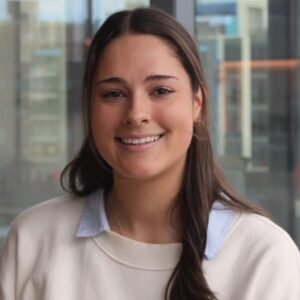
Policy Director Liz Cohen and analyst Bella DiMarco studied the evolution of established or emerging universal programs during the 2023-24 school year across eight states: Arizona, Arkansas, Florida, Iowa, Indiana, Ohio, Oklahoma, and West Virginia.
Their research comes on the eve of an election where school choice measures are on the ballot in three additional states and when disagreement continues to spark over whether these programs give freedom and choice to families who have been historically locked out of private schooling or are part of a larger movement meant to undermine and defund public schools.
FutureEd’s major finding about how universal choice has played out so far? “Policy design really matters,” Cohen said, in an interview with The 74.
While all of the studied programs are universal in that anyone can apply, whether families end up actually receiving money, how much they receive and what accountability measures the participating schools are held to varies greatly state by state.
They calculated that in total, 569,000 students received subsidies across these states, representing 55% of the students attending private schools with public funding that year and costing taxpayers an estimated $4 billion. About 40% of the nation’s 50 million elementary and secondary students are now eligible.
Here are five key takeaways.
“Universal” is not necessarily universal, and no two states’ policies look the same.
“We talk about [universal programs] as such a monolithic thing,” said DiMarco. “I expected there to be more similarities between the programs and to see more similarities in the data. But that just wasn’t necessarily the case.”
In Ohio for example, families receive funding on a sliding scale based on need, private schools can’t charge low-income families more than what they receive from the state and participating private schools must use the same graduation requirements.
On the other end of the spectrum, in Florida and Arizona no student who applies for funding is turned down and participating private schools don’t need to be accredited.
“If you listen to the sort of politically charged descriptions of these initiatives you get one fairly stilted perspective— both from proponents and opponents of these,” said Nat Malkus, the deputy director of education policy at the right-leaning American Enterprise Institute. “And when you look at them piece by piece, there’s a good bit of daylight between the arrangements from one city to the next.”
But there are a few overarching themes, some of which shouldn’t come as a surprise.
All states give participating families similar amounts of money, with the average award amount coming in at around $7,000, which is approximately 90% to 100% of state per-pupil funding.
Most states require some sort of accountability testing — but not all. And most of the students who received the funding across all eight states were already attending private schools.
For example in Arkansas, 64% of students who received funds through the Education Freedom Act in its first year, the 2023-24 school year, were already enrolled in private schools. The majority were students with disabilities.
“So much of the attention in general has been paid to the fact that the majority of kids are already in private school,” said Cohen. “But that’s actually the expected outcome if you are giving money to kids to go to private school, and anyone can get it.”
She said the bigger question moving forward is examining if that pattern will persist beyond the first wave of funding.
Josh Cowen, education policy expert and author of The Privateers: How Billionaires Created a Culture War and Sold School Vouchers, said he doesn’t anticipate the demographics of participating students to shift much over time, meaning he isn’t expecting an exodus of low-income students from struggling public schools to private school alternatives..
“Put me down for projecting that the next version of this [report] is going to find something very similar and even more stark… [because] no policy that isn’t directly targeted toward at-risk children or families, will remain primarily benefiting at-risk children or families.“
The income level of participating families is murkier than people think: Well-to-do families are signing up, but so are more modest ones.
While these programs continue to serve predominantly lower- and middle-income families, the researchers found that participation among higher-income families increased last year, in every state where eligibility expanded and data was available.

“One of the big sort of headlines you keep seeing around these programs is that it’s all affluent families,” said Cohen. “And I just think the nuance to that is that that’s not actually accurate.”
While it’s true that there are many more affluent families than in previous means-tested programs, there are still significant numbers of lower-income families who are entering these programs. She pointed to Florida where 30% of families participating are low income.
DiMarco said they saw a lot of middle-income families taking advantage of the funds who were “sort of just above the line” under previous, means-tested programs.
Impacts of funding on state budgets remain unclear.
Because the majority of families who took advantage of this funding were not coming from public schools — and therefore not bringing their per pupil public funding with them — these subsidies represent a new state-level cost.
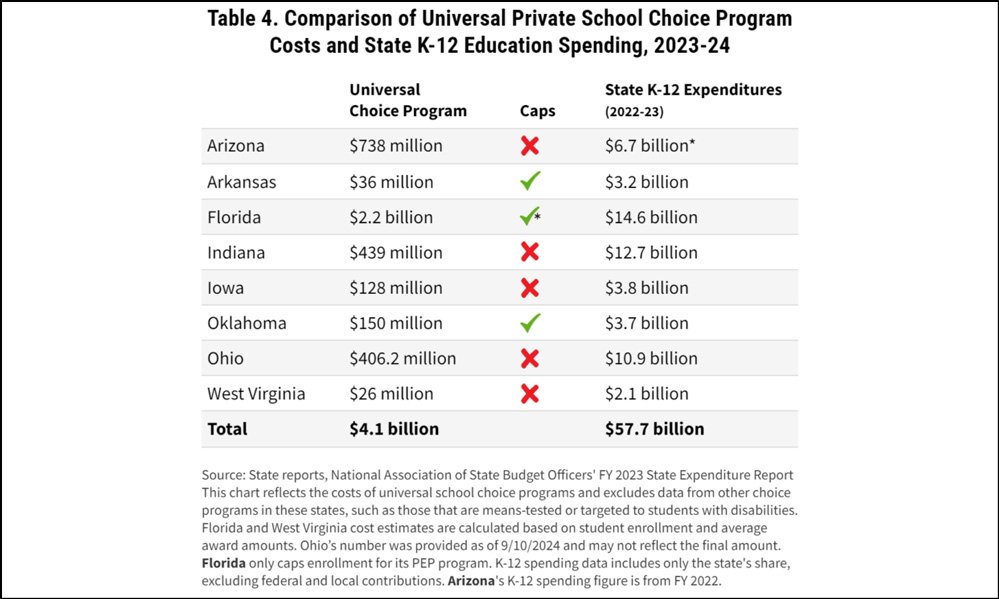
“They’re new expenses,” said Cohen, “which could ultimately down the road — if state lawmakers don’t really think this through — end up [putting] states in a position where they have to say, ‘We’re not going to build this highway … because we have to pay the bill on this private school choice thing.’”
Goals of the programs are rarely — if ever — clearly stated, making accountability tricky.
Some states, like Arizona and Oklahoma, have no standardized testing requirements or other performance metrics, making it, “nearly impossible to gauge how much learning is taking place under the state’s private school choice programs,” according to the report.
Other states do have more stringent requirements, although Florida is the only state the researchers studied which has mandated funding to evaluate academic performance of participating students.
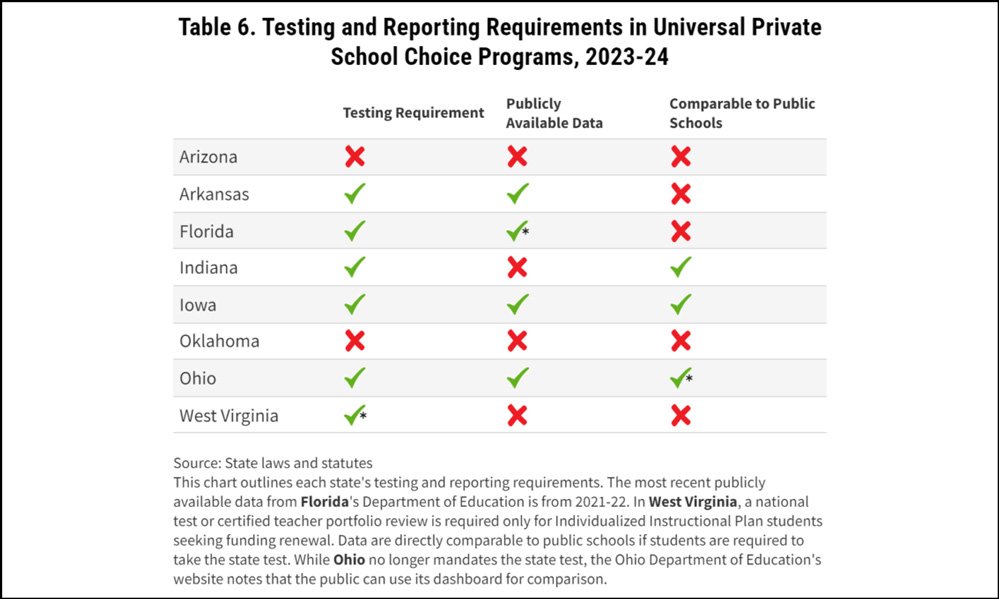
“The step it feels like a lot of these states skipped is identifying a clear goal for the program and then a clear metric of how you’ll know if you achieved your goal,” said Cohen. “And without stating those things up front, what are we even trying to measure?”
Malkus sees more of an effort to track student outcomes, though he emphasized additional data would help parents make better-informed choices.
“I don’t think the testing requirements are as strict as some people would like them,” he said, “but the idea that there’s zero accountability for these isn’t true either. It’s somewhere in the messy middle.”
Get stories like these delivered straight to your inbox. Sign up for The 74 Newsletter