
The final weeks of 2026 are being marked by talks and processes that will shape what Europe will look like in the next decade.
Heads of state and government and their representatives are discussing the Multiannual Financial Framework (MFF), the seven-year budget of the European Union, shaping how almost two trillion euros will be spent in the period 2028-2034.
Our organisations represent different thematic civil society coalitions working on all the different issues of the MFF package negotiations: associations spanning across sectors, from the EU to the national level, representing millions of people from all walks of life.
We are campaigning to ensure that people, from the busiest city to the furthest rural community, can physically meet, be heard and be empowered via AgoraEU, the new programme for culture, media & journalism and civil society.
We are coordinating within the Future of Europe Cohort, gathering some of the most representative organisations across the sectors covered by the programme; and we are taking a thousand organisations together on this journey.
The Erasmus+ Coalition joins these efforts. We are campaigning to ensure that Europe’s young people and its adult learners have access to the most renowned programme of the EU, the Erasmus+ programme, sharing messages that highlight the power of learning for social mobility, and promoting European values by means of cross-borders exchanges through learning.
Europe’s strength lies in the opportunities it creates for its people. The EUFunds4Social Coalition brings together social services, NGOs, public health and service providers, lifelong learning and social economy actors, workers, and social partners to defend investment in people and communities in the next EU budget.
Every euro invested in inclusion comes back many times over, in stronger communities and fairer societies. Our positions, including our open letter to EU leaders, call for a strong EU budget that protects social investment, guarantees rights and inclusion, gives a real say to people and organisations on the ground, and remains accessible to even the smallest organisations.
The EU is confronted with new challenges: however the old priorities have not vanished, but are still at the cornerstone of a secure Europe. Social cohesion, a healthy environment, quality and inclusive education and research, culture and protection of fundamental rights are key for Europe’s independence entering the next decade.
The negotiating box Council president Antonio Costa presented on 21 November does not unfortunately respond to these concerns: a cut of around 10 percent of the EU Commission proposal, with important budgetary reductions for cohesion, social policies, external action, industrial policy, education, culture and civil society.
That is why we back the European Parliament’s proposal for a strong MFF budget, coupled with an ambitious package of new own resources.
Civil society developed proposals for financing the EU-budget that would be easy to implement, fair in their distribution, would not touch the current fiscal base of member states, and would allow an ambitious size of the budget while limiting the national GNI-based contributions.
The merit of president Costa’s negotiating box is to highlight that further proposals for new own resources are possible: it is time to fully explore them.
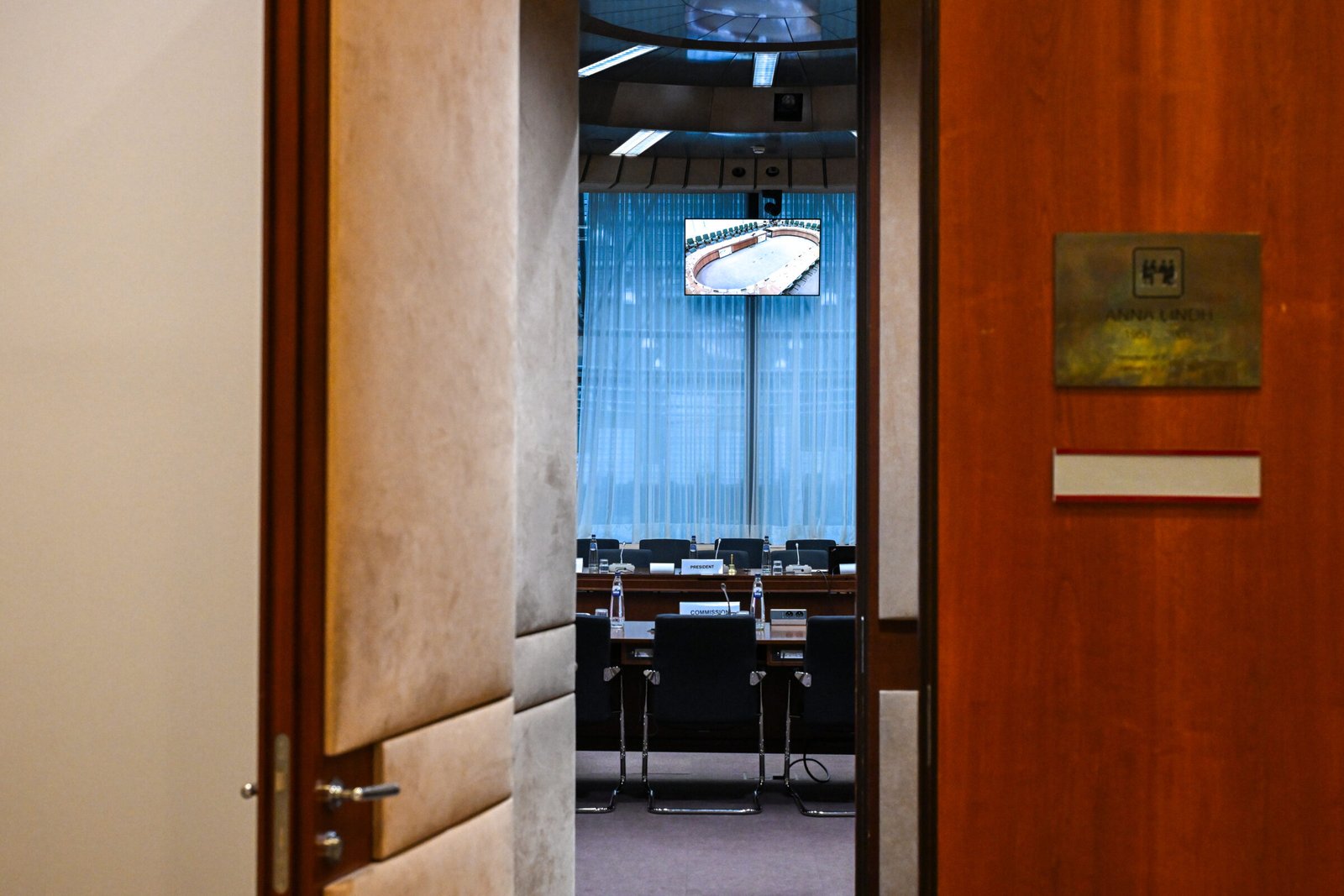
We are campaigning to ensure that citizens’ voices are heard: the negotiations cannot be a matter for a handful of people behind closed doors, but should be open to the millions of people who are going to be the most affected by these decisions. The people we represent.
We will gather on 9 December, from 1215 to 1330 in Place Schuman, to make citizens’ voices be heard, and we invite anyone who cares about the future of Europe to join us.
We urge European leaders to go beyond closed-door negotiations, listen to the voices of the millions of people and communities affected, and deliver a result that is up to the challenges ahead. Anything less than that would be a failure whose price our grandchildren will still pay.
This stakeholder article is paid for by a third party. All opinions in this article reflect the views of the author and not of EUobserver.