
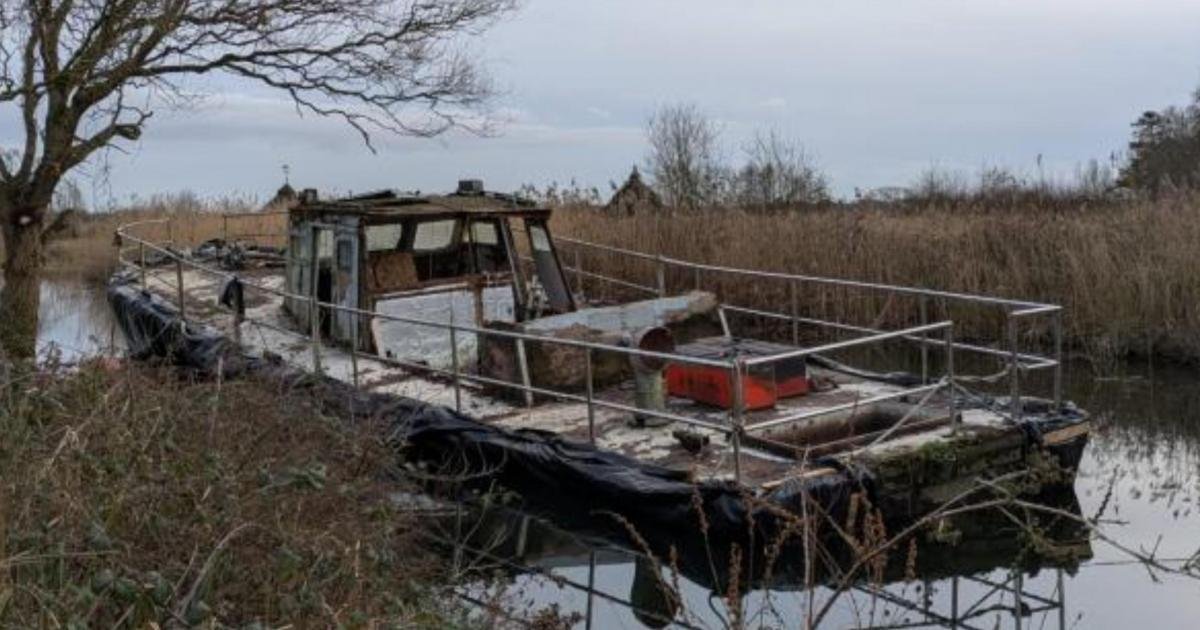
The 63-foot “whaleback” rescue boat, believed to be the last of its kind, was discovered half-sunk in the Norfolk Broads.
It was floated last year thanks to the work of project leader Steve Hale, from South Oxfordshire.
The team needs to raise £15,000 (Image: Steve Hale)
The mud-weighted boat was then transported three miles to Salhouse Broad, where it stays free of charge.
The goal of the charity, WWII Sea Air Rescue Trust, is to move the vessel by road to a drying site where restoration can begin.
They launched a crowdfunding campaign this time last year and have so far raised just over £12,500.
The boat was towed to Salhouse Broad (Image: Steve Hale)
Nick Schiller, who chairs the management team of the charity, said: “We still need around £15,000 before we can complete our goal.”
Since last year, the group has reinforced the hull of the boat, removed any noxious materials and installed pumps.
The plan is to lift it out of the water by crane before transporting the vessel to a boatyard in Lowestoft.
The boat has been reinforced since last year (Image: WWII Sea Air Rescue Trust)
It will then dry for around 18 months after the team has taken out all the mud and given it a clean.
“Before all the fun bits like restoring the boat, we have to get the money to lift it out,” Mr Schiller added.
Mr Hales was inspired to start this journey by his father, who joined the RAF Air Sea Rescue service in 1941.
Steve Hale’s father, Leading Aircraftsman G T Hale of the RAF Air Sea Rescue service (Image: Steve Hale)
The rescue service was tasked with saving downed aircrew across hostile waters.
Whaleback boats were essential for rapid response missions and rescued more than 14,000 Allied airmen.
The photo with Steve Hale’s father manning the gun turrett (Image: Steve Hale)
After its military service, this whaleback boat found new life in Gibraltar and Spain, operating as a fishing vessel, a suspected smuggler’s craft.
It was even a floating fish and chip shop reportedly frequented by Rod Stewart in Estepona.