
Close Menu
Fund Focus News
    Facebook X (Twitter) Instagram
    Trending
    • How much emergency fund should you build before you start investing?
    • SBI Mutual Fund IPO: India’s largest AMC with Rs 12.7 lakh crore AUM to list; check valuations, key risks – IPO News
    • Top Mutual Fund Schemes to Invest
    • RD vs FD vs Mutual Funds vs Stocks: What should you break first in an emergency?
    • Tata AMC launches Titanium equity long-short fund under SIF; key features, risks explained
    • Bandhan AMC adds gold to equity funds after SEBI gives green light: What it means for investors – Gold Pulse News
    • These bonds protect against inflation. How to optimize them for your portfolio
    • International Mutual Funds in 2026: Is Global Diversification Worth the Risk in a Volatile Market? – Money Insights News
    Facebook X (Twitter) Instagram
    Fund Focus News
    • Home
    • Bonds
    • ETFs
    • Funds
    • Investments
    • Mutual Funds
    • Property Investments
    • SIP
    Fund Focus News
    Home»Funds»RD vs FD vs Mutual Funds vs Stocks: What should you break first in an emergency?
    Funds

    RD vs FD vs Mutual Funds vs Stocks: What should you break first in an emergency?

    April 28, 2026


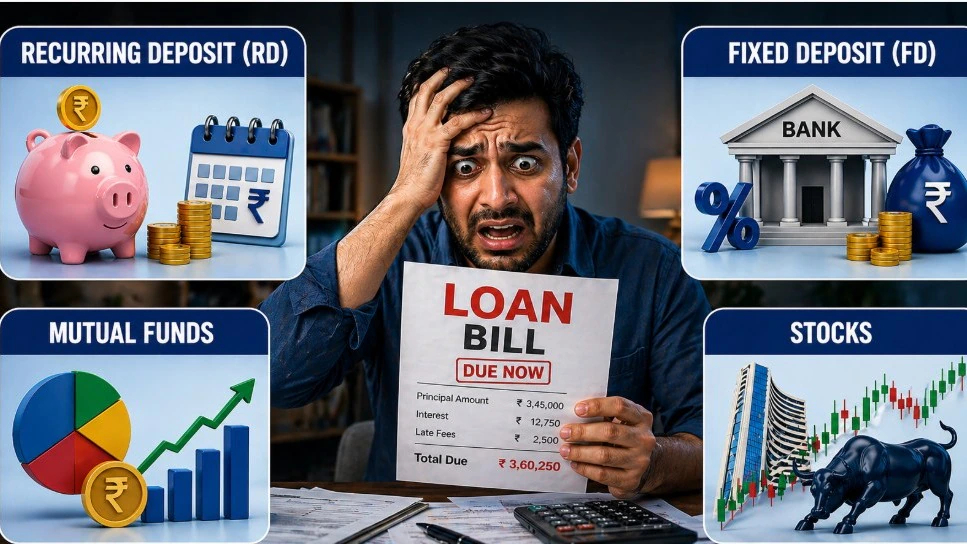
    In a financial emergency, the priority is clear: access funds quickly while minimising losses. Not all investments are equal in this regard. The order in which you liquidate assets — ranging from fixed deposits to equities —can significantly impact your long-term wealth. Financial planners recommend a structured “liquidity ladder,” where investors first tap the most liquid and least risky instruments, and avoid disturbing long-term, market-linked assets unless absolutely necessary.

    Start with the safest and quickest options

    The first line of defence should always be cash or savings accounts, followed by liquid or overnight mutual funds, which offer near-instant or next-day access with minimal risk. These instruments are specifically designed for emergencies and carry no exit penalties in most cases.

    If available, sweep-in fixed deposits also provide flexibility, automatically breaking only the required amount without closing the entire deposit.

    FDs and RDs

    If liquid funds are insufficient, Fixed Deposits (FDs) should be the next choice. Breaking an FD is relatively simple and typically results in a 0.5%–1% interest penalty, while the principal remains सुरक्षित. Funds are usually credited within 1–2 working days.

    Recurring Deposits (RDs) follow a similar structure. Premature withdrawal reduces the interest earned or applies a lower rate for the actual tenure. While slightly less flexible than FDs, RDs are still low-risk and reasonably liquid, making them suitable for emergency access.

    MUST READ: Are Indian equities and GIFT City becoming top picks for NRI investors?

    Mutual funds

    Equity or hybrid mutual funds should be tapped only after exhausting safer options. Redemption is straightforward and funds are credited within 1–3 days, but the key risk lies in market volatility. Selling during a downturn can convert temporary losses into permanent capital erosion.

    Additionally, some funds may impose exit loads, and taxation depends on holding period—short-term gains are taxed higher than long-term gains.

    Stocks: Last resort

    Direct equity should ideally be the last option. While shares can be sold quickly through trading apps, the risk of selling at depressed prices is high, especially during market stress. Even with India’s T+1 settlement cycle, funds may take a day to reflect, and capital gains tax applies.

    An alternative is a loan against securities (LAS), where investors can pledge shares and access 45–50% of their portfolio value without selling holdings.

    MUST READ: FD rates April 2026: SBI vs Bank of Baroda vs PNB — Which public sector bank offers better returns?

    Strategic takeaway

    The optimal order in an emergency is:

    Savings / Liquid funds
    Fixed Deposits
    Recurring Deposits
    Mutual Funds
    Stocks

    The underlying principle is simple — protect long-term growth assets and minimise losses.

    Experts also emphasise building a dedicated emergency fund covering 6–12 months of expenses, reducing the need to liquidate investments under pressure. In addition, options like credit cards or loans against FDs can provide temporary liquidity without disrupting core investments. In volatile markets, disciplined liquidation, not panic selling, can make the difference between a temporary setback and long-term financial damage.

    MUST READ NOW: Where are FD rates highest now? Comparing small finance banks with private, public sector banks


    Source link

    Share. Facebook Twitter Pinterest LinkedIn Tumblr Telegram Email

    Related Posts

    Investment trusts are outperforming funds – which is best for your portfolio?

    April 28, 2026

    Private Credit Funds Face Redemption Challenges And High Fees

    April 28, 2026

    All active funds ‘underperform’ over past year, data shows

    April 27, 2026
    Leave A Reply Cancel Reply

    Top Posts

    RD vs FD vs Mutual Funds vs Stocks: What should you break first in an emergency?

    April 28, 2026

    The Shifting Landscape of Art Investment and the Rise of Accessibility: The London Art Exchange

    September 11, 2023

    Charlie Cobham: The Art Broker Extraordinaire Maximizing Returns for High Net Worth Clients

    February 12, 2024

    The Unyielding Resilience of the Art Market: A Historical and Contemporary Perspective

    November 19, 2023
    Don't Miss
    Mutual Funds

    How much emergency fund should you build before you start investing?

    April 29, 2026

    Before you begin investing, there’s one financial step that deserves priority — building an emergency…

    SBI Mutual Fund IPO: India’s largest AMC with Rs 12.7 lakh crore AUM to list; check valuations, key risks – IPO News

    April 29, 2026

    Top Mutual Fund Schemes to Invest

    April 28, 2026

    RD vs FD vs Mutual Funds vs Stocks: What should you break first in an emergency?

    April 28, 2026
    Stay In Touch
    • Facebook
    • Twitter
    • Pinterest
    • Instagram
    • YouTube
    • Vimeo
    EDITOR'S PICK

    AIIB issues $300m digital bond using Euroclear infrastructure – Ledger Insights

    August 23, 2024

    Conserving the craft of investing

    July 15, 2024

    Mutual Funds: What Are Focused Funds? How They Work And Which Schemes Are Outperforming | Markets News

    March 2, 2026
    Our Picks

    How much emergency fund should you build before you start investing?

    April 29, 2026

    SBI Mutual Fund IPO: India’s largest AMC with Rs 12.7 lakh crore AUM to list; check valuations, key risks – IPO News

    April 29, 2026

    Top Mutual Fund Schemes to Invest

    April 28, 2026
    Most Popular

    🔥Juve target Chukwuemeka, Inter raise funds, Elmas bid in play 🤑

    August 20, 2025

    💵 Libra responds after Flamengo takes legal action and ‘freezes’ funds

    September 26, 2025

    ₹50 lakh retirement corpus: How to invest in SCSS, mutual funds, equities and other assets — CA offers tips

    April 16, 2026
    © 2026 Fund Focus News
    • Get In Touch
    • Privacy Policy
    • Terms and Conditions

    Type above and press Enter to search. Press Esc to cancel.